To train a dog not to run away, prevent escapes while you train, teach a recall, a wait at doors, and a yard boundary with rewards, then practice around growing distractions and match the plan to why your dog runs.
Training works on two things at once: what your dog is able to do when something tempting appears, and how much they want to leave in the first place. The reasons dogs run, from prey drive to fear, are covered in Why Do Dogs Run Away? Causes and How to Prevent It. This guide is the training plan: the skills to teach, the order to teach them in, how to know when your dog is ready for the next step, and what to change for each reason a dog runs.
Can You Train a Dog Not to Run Away?
Yes, training makes running away less likely, but no amount of training makes it impossible: VCA Animal Hospitals notes that a sudden clap of thunder or a gunshot can make even a trained dog bolt.
That is why training works best inside a safety net: secure gates, a leash or long line wherever your dog could reach a road, and current identification. The method matters too. The American Veterinary Society of Animal Behavior states that the evidence supports reward-based methods for all dog training, and every training step below is built on rewards rather than punishment.
Step 1: How Do You Stop Escapes While You Train?
Stop escapes while you train by making them as unlikely as you can: supervise your dog outside, keep them on a leash or long line beyond a secure area, check every gate and latch, and make sure their ID is current.
Dogs do what works for them in the moment, as the American Kennel Club puts it, which is why a successful escape tends to be repeated. Management prevents those rehearsals while training builds the habit you want:
- Supervise yard time. The AKC adds that the best way to keep a dog in the yard is to be there with them, and not to leave them out alone when you cannot watch.
- Close the gaps. Check that every gate latches securely, and add a second gate or an “airlock” where your dog tends to rush an opening.
- Use a long line outside secure areas. A line of about 15 to 30 feet attached to a harness gives your dog room to move while you keep control. It is there to stop a run, not to reel your dog in.
- Keep identification current. VCA recommends a microchip plus a collar or harness with a readable tag showing your phone number.
“The long line is the right tool and you should assume from day one that she knows it’s on. Dogs work that out fast — the weight of it, the sound of it going through the grass, the way you stand differently when you’re holding thirty feet of rope. So the dog who’s brilliant on the line isn’t necessarily a trained dog, she might be a dog who knows she’s attached to you. The way round it is to stop making the line the thing that changes. Clip it on and let it drag some sessions. Clip it on and do nothing with it. Put it on her in the house. You want it to be background furniture by the time it comes off, not an announcement.”
– Charlie Angel Chun Expert Trainer & Consultant (Behavioral Rehabilitation & Society Acclimation)
Step 2: How Do You Teach a Recall That Holds?
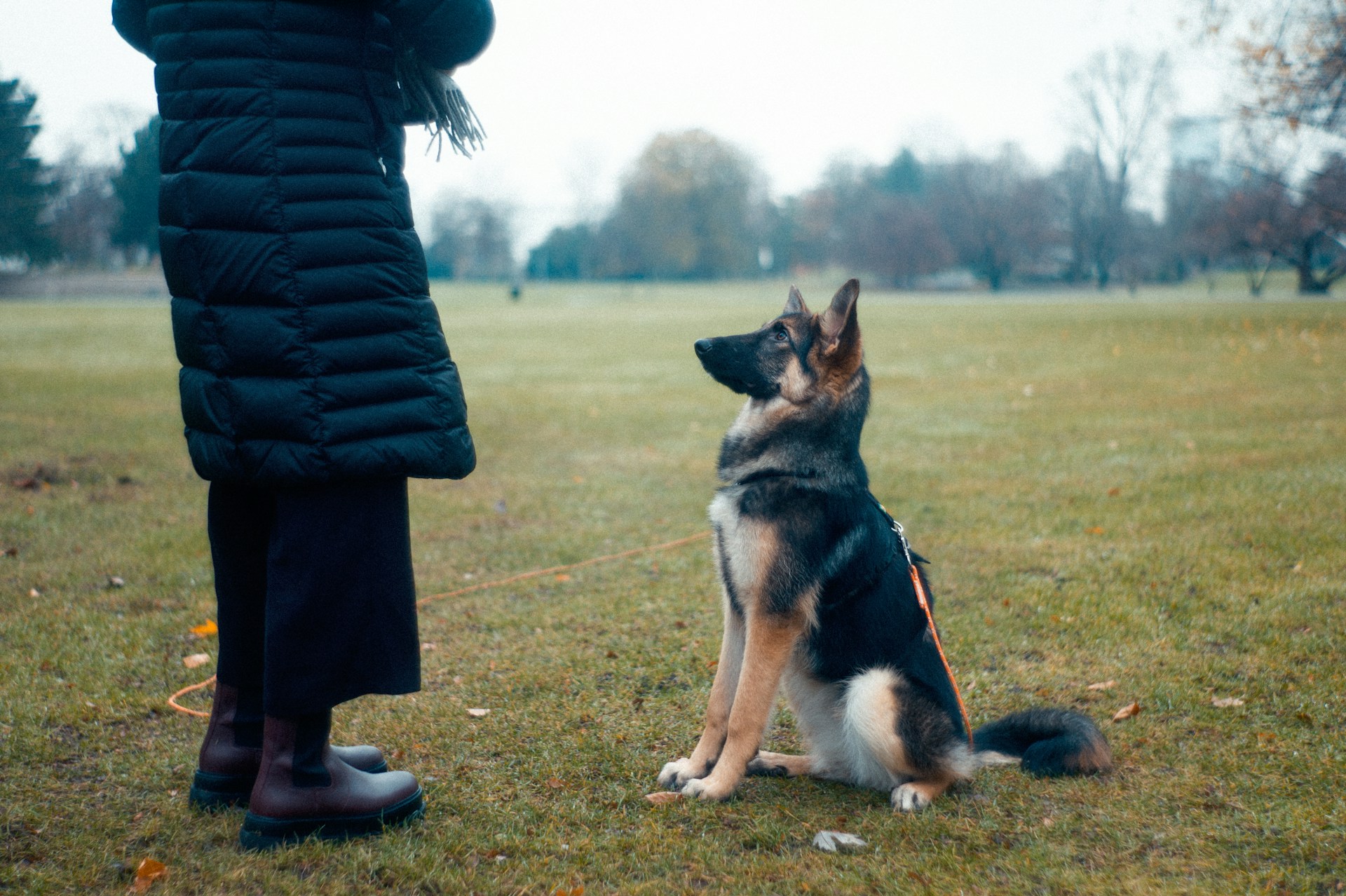
Teach a recall that holds by starting indoors with high-value rewards, making coming to you the best thing that can happen, and never punishing your dog when they arrive, however long they took.
The American Kennel Club recommends starting in a quiet, low-distraction place, using high-value treats and toys, and raising difficulty slowly, because moving too fast makes recall less reliable. Keep “come” for recall only, and say it once: if you have to repeat it, the setting may be too distracting or your dog may not know the skill well enough yet. Reward check-ins too, the moments your dog looks at you or comes close without being asked.
Two habits quietly ruin a recall. Calling your dog and then scolding them teaches them that coming back leads to trouble; VCA calls scolding after the fact counterproductive. Calling them away from play and then shutting them inside teaches them that coming ends the fun, so mix in recalls that end with a reward and more play. For emergencies, VCA suggests a separate, rarely used word followed by a handful of 10 to 20 treats scattered at your feet, practiced a few times a week so the word keeps its value. The full method, phase by phase, is in How to Train a Reliable Recall for Your Dog.
Step 3: How Do You Teach a Dog to Wait at Doors and Gates?
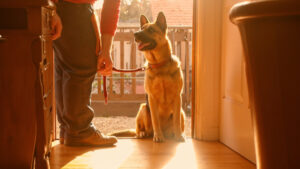
Teach a dog to wait at doors and gates by rewarding them for staying back while the door opens a little at a time, and letting them through only on a release word.
The American Kennel Club recommends starting at an inside door: open it a crack, close it again if your dog moves toward it, and only add the release cue once you can open the door fully while your dog stays back. Use a release word that does not come up in everyday conversation, such as “Break” or “Free”; “Okay” is said so often that it can release your dog by accident. Practice at every exterior door and gate, and keep a barrier or leash in place at the front door until the wait holds with the doorbell ringing.
Step 4: How Do You Teach a Dog Where the Yard Ends?
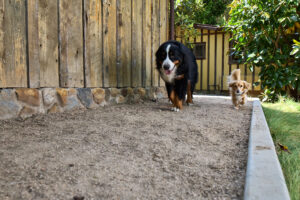
Teach a dog where the yard ends with boundary training: mark the edge with flags, walk your dog along it on a long line, and reward them every time they turn back from the line toward you.
The American Kennel Club suggests flags every 8 to 10 feet along the boundary and one detail that makes a big difference: reward the moment your dog turns back toward you, not the moment they look at the flag, so you reinforce leaving the edge rather than approaching it. Practice once or twice a day, add distractions on the far side of the line in small steps, and expect the process to take months. If your dog crosses, bring them back inside and reward the return rather than punishing the crossing. Stages, troubleshooting, and when to take the flags down are covered in Boundary Training for Dogs: The Complete Guide.
Step 5: How Do You Build Impulse Control Around Distractions?
Build impulse control by teaching your dog that holding back is what earns the reward, starting with “leave it” at home and the wait at doors, then practicing near the things your dog most wants to chase.
The American Kennel Club teaches “leave it” with a treat in a closed hand: your dog gets rewarded only when they back away from it, then the treat is moved to an open hand and finally to the floor. The same idea carries outside. On a long line, reward your dog for looking at a squirrel and then back at you, starting far enough away that they can still take food. Before these sessions, choose a sniffing walk over fetch or tug: fast games raise arousal, and the goal is a settled dog, not a worn-out one. For dogs whose chase drive is strong, Training High-Drive Dogs: Manage Prey Drive goes further.
Step 6: How Do You Know Your Dog Is Ready for the Next Level?
Your dog is ready for the next level when they respond to the first cue about 8 times out of 10 at the current level of distraction, without you repeating it and while still taking food.
Raise difficulty one factor at a time, using the three Ds: distance from you, duration of the behavior, and distraction. If you need to repeat a cue, or your dog stops taking treats, go back a level. The ladder below is a guide; the move-on rule is what matters, not the calendar.
“Eight out of ten is a good rule and I’d add a question to it: which two did she miss? Ten recalls in the yard where the only two failures came when next door’s cat was on the wall is not eighty percent. It’s a dog who comes every time nothing matters, and that’s the opposite of what you’re training for. So write down what was happening on the misses, not just how many there were. If they’re scattered across ordinary sessions, carry on — she’s still learning. If they cluster around one thing, that thing is your next level, and you want to be working at a distance from it where she can still get it right.”
– Charlie Angel Chun Expert Trainer & Consultant (Behavioral Rehabilitation & Society Acclimation)
| Level | Where you practice | Distraction | Move on when |
| 1 | Indoors | None | Your dog responds to the first cue about 8 times out of 10 |
| 2 | Yard, on a long line | Mild: a toy on the ground, a family member nearby | About 8 of 10 first-cue responses, still eating treats |
| 3 | Yard, on a long line | Moderate: people or dogs passing outside the fence | About 8 of 10 first-cue responses, still eating treats |
| 4 | New quiet places, on a long line | Mild to moderate, in unfamiliar surroundings | About 8 of 10 first-cue responses, still eating treats |
| 5 | Busier places, on a long line | High: wildlife, other dogs, joggers | About 8 of 10 first-cue responses; only then consider off-leash time in a secure area |
Expect this to take weeks or months. VCA notes that responding reliably around distractions can take many weeks or months of practice, that many puppies seem to forget their recall from around 14 to 16 weeks as they explore more, and that most dogs are not fully mature until 2 to 3 years of age. VCA’s test before letting go of the line is simple: if a squirrel ran across your dog’s path, could you stop them? If not, keep the leash on. What off-leash readiness looks like is covered in Off-Leash Training: When Is Your Dog Ready?.
How Do You Match Training to Why Your Dog Runs?
Match the training to the reason: a dog who runs toward something needs impulse control and a stronger recall, while a dog who runs away from something needs less fear, not more obedience.
| Why your dog runs | What the training focuses on | What else helps |
| Chasing wildlife, cats, or cars | “Leave it,” an emergency recall word, proofing at a distance from prey | A long line wherever prey may appear |
| Fear of noises or new things | Gradual desensitization and counterconditioning, not obedience drills | Keeping your dog indoors during storms and fireworks; a quiet, calm approach if they bolt |
| Being left alone | Building up time alone in small steps, below the point of distress | Help from a vet or behavior professional for severe cases |
| Boredom | Short daily training sessions as mental work | A daily walk and rotating puzzle toys, as the AKC suggests |
| Mating drive in intact dogs | Recall and boundary work, with extra supervision | A conversation with your vet about neutering |
| Open doors and gates | A wait at every door and gate | Self-latching gates, a second gate, a leash on before the door opens |
| Escaping has become a habit | Retraining from Level 1 with no further successful escapes | Strict management until the new habit holds |
Neutering helps with roaming but does not replace training. The Merck Veterinary Manual notes that castration has been shown to reduce roaming, mounting, and urine marking by half in 60% of male dogs and by 90% in 25% to 40%, so many neutered dogs still roam to some degree. For dogs who run when left alone, the training plan in Dog Separation Anxiety: Signs, Causes, and How to Help comes first.
What Should You Do If Your Dog Bolts During Training?
If your dog bolts during training, do not chase or scold them: get them back calmly, reward the return, then work out what made the step too hard and go back a level.
Chasing tends to turn a bolt into a game, the American Kennel Club notes, so stop, call once in a happy voice, and move away or crouch down so that coming to you looks better. A dog who ran in panic needs the opposite: stay quiet and low and let them come to you. Once your dog is back, praise them however long it took. Then look at what happened: the distraction may have been too close, the session too long, or the long line off too soon. Fix the management gap, return to the last level your dog passed, and rebuild from there. The owner habits that lead to repeat escapes are listed in Common Mistakes That Lead to Dog Escapes (and How to Avoid Them).
Can a GPS Dog Fence Help While You Train?
A GPS dog fence can add a boundary that works when you are not holding the line, but it is a layer on top of training that your dog has to learn before you rely on it.
No containment system can guarantee to stop a dog in full pursuit, so the same rules apply: a boundary set at least 20 feet from the road and the house, supervision while your dog learns, and recall work alongside. On the Halo Collar 5, which is for dogs at least 5 months old and 10 pounds, the fence stays turned off in the Halo App until you reach the boundary stage of the positive-association training program built with Cesar Millan. From then on, the collar gives a Warning roughly 7 to 10 feet before the line when your dog heads toward it, with sound, a voice command, vibration, or optional static feedback, and encouragement when your dog turns back; pairing the Warning with a “this way” cue keeps “come” for recall. The collar also needs to come off for at least 8 hours in every 24, so plan those hours for times your dog is indoors with the doors closed. The full method is in How to Train Your Dog on a GPS Fence.
When Should You Get Help From a Trainer?
Get help from a trainer if your dog still runs after several weeks of consistent management and training, or sooner if the running comes with fear, panic when left alone, or aggression.
Dog training is an unregulated industry, the American Kennel Club notes, so anyone can call themselves a trainer. Look for one who uses positive reinforcement; certification, such as through the Certification Council for Professional Dog Trainers, is optional but shows commitment to the profession. When fear, panic, or aggression is part of the picture, start with your veterinarian, who can rule out medical causes and refer you to a board-certified veterinary behaviorist.
Frequently Asked Questions
How long does it take to train a dog not to run away?
Most dogs need weeks to learn the basics and months before the skills hold around strong distractions. VCA notes that reliable responses around distractions can take many weeks or months, and the American Kennel Club describes boundary training as daily practice over several months.
Should you punish a dog for running away?
No. Punishing a dog when they come back teaches them that returning leads to trouble, so they may stay away longer next time. The American Kennel Club advises always praising a recall, even a slow one, and VCA calls scolding after the fact counterproductive.
Does neutering stop a dog from running away?
Not on its own. The Merck Veterinary Manual says castration in males has been shown to decrease roaming, mounting, and urine marking by 50% in 60% of dogs and by 90% in 25% to 40%, so it is a partial effect and does not replace recall, boundary training, and secure gates. Talk to your vet about whether and when to neuter.
At what age should you start training a dog not to run away?
Start recall and door manners as soon as your puppy comes home, with short, easy sessions. Expect a dip in adolescence: VCA notes that many puppies seem to forget their recall from around 14 to 16 weeks as they start exploring, which is a normal stage, not a training failure.
Can you train a dog to stay in an unfenced yard?
Boundary training can teach a dog where the yard ends, but it takes months, and a strong distraction can still override it. Until your dog passes high-distraction levels, keep a long line on or stay with them outside, and if your yard is near a road, add a physical fence or a GPS dog fence set at least 20 feet from the road, keeping in mind that no containment system can guarantee to stop a dog in full pursuit.
Training a dog not to run away comes down to preventing escapes while you train, teaching a recall, a wait at doors, and a yard boundary with rewards, and moving up only when your dog responds to the first cue around real distractions. Matching the plan to why your dog runs gives those skills the best chance of keeping your dog home.