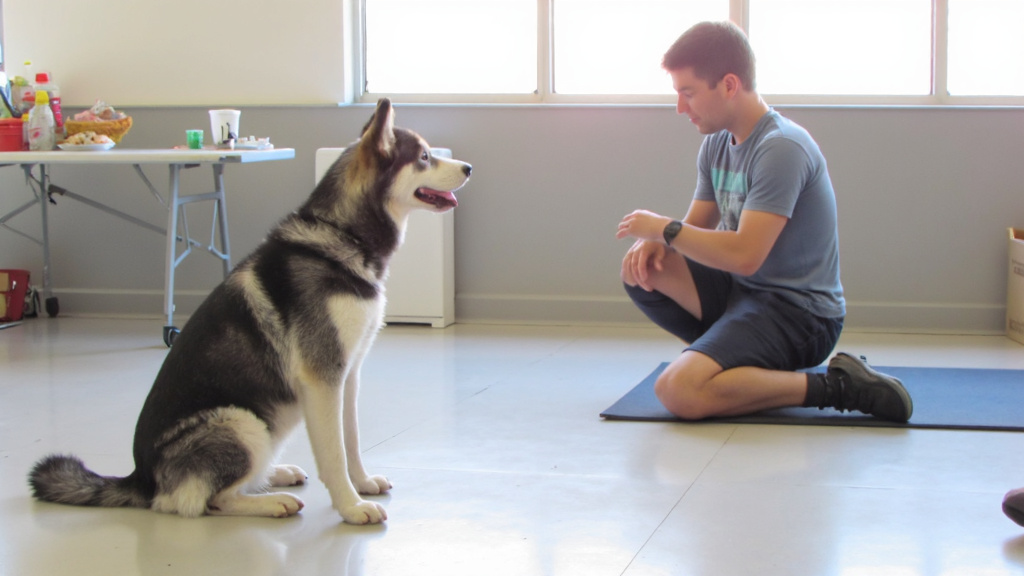
To teach a dog to stay, ask for a sit or down, say “stay,” reward in position after a second or two, and end with a release word; then build duration, distractions, and distance one at a time.
A dog who holds a position until you release them makes everyday life easier: grooming, greeting visitors, carrying in groceries, or keeping them out from underfoot at dinner. Stay builds on a cue your dog already knows, so if sitting on cue is not solid yet, start with The Importance of Teaching Your Dog to Sit and How to Do It. This guide covers the method step by step, how to tell when your dog is ready for a harder stay, and what to do when they get up too soon.
What Does “Stay” Mean for a Dog?
“Stay” means holding a position, such as a sit or a down, until you give a release word. VCA Animal Hospitals sums it up as “please don’t move until I invite you to move.”
A stay has a clear beginning and end: the cue starts it, the release word ends it, and your dog does not decide when it is over. That is also why it ends with a release word rather than “come.” Recall is a separate skill with its own training, covered in How to Train a Reliable Recall for Your Dog.
How Is Stay Different From Wait?
Stay means “stay in this exact position until I release you,” while wait means “hold on a moment,” as the American Kennel Club puts it, so they work best as two separate cues.
| Stay | Wait | |
| What it asks | Hold this exact position | Pause for a moment |
| Position | Fixed: sit, down, or stand | Any: sit, stand, or even walk away |
| How it ends | Always with a release word, after you return | With a release word, a new cue, or simply moving on |
| Typical use | Grooming, vet exams, meals, visitors | Doorways, gates, getting out of the car |
What Do You Need Before You Start?
Before you start, you need a dog who sits or lies down on cue, small high-value treats, a quiet room, a release word, and a few minutes.
- A reliable sit or down. A down is the better position for longer stays, VCA notes; if your dog does not lie down on cue yet, see How to Teach Your Dog to Lie Down in 6 Easy Steps.
- Small, soft treats your dog loves, so you can reward several times in a session.
- A quiet room with nothing more interesting than you.
- A release word that does not come up in everyday conversation, such as “Break” or “Free.” The American Kennel Club cautions that “Okay” is said so often that you may release your dog by accident.
- Short sessions. A few minutes at first, a few times a day, as VCA suggests; the AKC recommends five to ten minutes for puppies, ending on a success.
How Do You Teach a Dog to Stay, Step by Step?
Teach the release word first, then add the stay cue to a sit or down, reward your dog while they are still in position, and release them, building duration before distractions and distance.
Step 1: Teach the Release Word
With your dog in a sit or stand, toss a treat on the floor and say your release word as they step toward it. Repeat until the word reliably gets your dog moving. The AKC notes that once a dog understands the release word, they actually understand stay better, because the stay now has a clear end.
Step 2: Ask for a Sit or Down
Ask for the position you want your dog to hold. Start with whichever position your dog offers most easily; a down is the position VCA recommends for longer stays.
Step 3: Add the Cue and Hand Signal
As soon as your dog is in position, hold your hand out flat in front of you like a stop sign and say “stay” once. Say it in a calm, pleasant voice and do not repeat it, VCA advises.
Step 4: Reward in Position, Then Release
Wait a second or two, calmly give a treat while your dog is still in position, then say your release word. The AKC stresses rewarding the stay, not the release, or the release becomes more rewarding than the stay itself. If your dog gets up before the treat reaches them, take the treat away and ask for the position again in the same spot. If you use a clicker, click during the stay, not when your dog moves on the release.
Step 5: Build Duration
Add time a second at a time. Once your dog can hold for about 10 seconds, give treats every so often during the stay. The AKC recommends reaching at least 30 seconds before you add distractions or distance.
“Before you add time, have a look at what she’s sitting on. A sit-stay is hard work on tile or gravel — she’s balancing with her weight back on two points, and after thirty seconds that’s uncomfortable in a way it isn’t on carpet. I’ve had owners convinced their dog breaks at forty seconds for some training reason, and she breaks at forty seconds because her hocks hurt. Put the same dog in a down on a mat and she’ll hold for five minutes. So build duration somewhere comfortable, and let hard surfaces come later as their own step. You want her breaking because the exercise got harder, not because she needed to shift her weight.”
– Charlie Angel Chun Expert Trainer & Consultant (Behavioral Rehabilitation & Society Acclimation)
Step 6: Add Distractions
Each time you add a distraction, drop the duration back to a few seconds. Start small, such as clapping your hands, and work up to bigger ones, such as throwing a ball, raising the value of your rewards as the distractions get harder.
Step 7: Add Distance
When your dog can hold 30-second stays with distractions, take a single step back, return straight away, and treat. Then try two steps, and keep building until you can reach the edge of the room. Work in front of your dog first, then to the side and behind them, and save leaving the room for last. The AKC leaves distance until the end because moving away is a distraction in itself.
“Out of sight is its own skill, and most people arrive at it by accident. She holds beautifully while you’re standing across the room, you step into the hall for ten seconds, and she’s up before you’ve turned around — because what was holding her was you being there, not the word. So train it as a step of its own and start absurdly small: out the door, half a second, straight back in, pay her. Build that up before you ever leave her for a real reason. And go back and release her every time at first. A dog who gets left on a stay and then simply forgotten about learns that the stay ends whenever she decides it has.”
– Charlie Angel Chun Expert Trainer & Consultant (Behavioral Rehabilitation & Society Acclimation)
Step 8: Combine the Three Ds and Change Locations
Combine duration, distractions, and distance only after your dog manages each one separately, then take the stay to new rooms, the yard, and quieter outdoor places. Dogs do not generalize well, the AKC notes, so expect to make the stay easier again each time the location changes.
How Do You Know When to Make a Stay Harder?
Make a stay harder when your dog holds the current level without getting up about 8 times out of 10, stays calm, and still takes treats. Change only one of the three Ds at a time, and ease the other two while you do.
The American Kennel Club advises working on one D at a time: when you add distance, cut the duration back to a second or two and keep distractions low. The table shows where each D starts and the step that has to hold before the next one comes in.
| The D | Start with | Build in steps of | Ready for the next step when |
| Duration | 1 to 2 seconds | About 1 second at a time | Your dog holds at least 30 seconds |
| Distractions | Clapping your hands, with duration back to a few seconds | Slightly bigger distractions, better treats | Your dog holds 30-second stays with distractions |
| Distance | One step back, then return and treat | One more step, then the side, behind, out of the room | Your dog holds while you reach the edge of the room; then combine the three Ds |
An occasional break is normal: make the next try a little easier, as the AKC advises after a mistake, and if breaks keep coming, drop back a full level and progress in smaller steps.
What Should You Do When Your Dog Breaks the Stay?
When your dog breaks the stay, do not punish them: calmly ask for the position again in the same spot and make the next try easier, because a break usually means the step was too big.
The American Kennel Club puts it plainly: chances are you lured your dog up with your movement or asked for too much too soon. Go back to a shorter time, a closer distance, or a smaller distraction, and rebuild from there. Make sure your dog does not get a treat or attention for getting up; it is easy to reward the break by accident. If your dog keeps breaking at the same point, that D is the one to work on by itself.
What Are the Most Common Mistakes When Teaching Stay?
Common mistakes include rewarding the release instead of the stay, releasing your dog from a distance, raising two Ds at once, and nagging with the cue.
- Rewarding the release: the treat has to arrive while your dog is still in position.
- Releasing from a distance: always return to your dog before you release them. Released from across the room, your dog cannot be rewarded for staying and may learn that a certain distance means the stay is over.
- Raising two Ds at once: adding distance while keeping a long duration makes the step too big.
- Turning it into an endurance contest: many short, successful stays build the skill faster than one long one.
- Repeating the cue: say “stay” once. A quick reminder after a mid-stay treat is fine, but nagging teaches your dog the first cue does not count.
- Moving in a way that invites your dog to follow: stepping backward can lure them out of position, so start with small, slow movements.
- Training when your dog is excited: VCA suggests not using a cue when a dog is distressed, distracted, or excited; practice stay when they are calmer.
How Long Does It Take to Teach a Dog to Stay?
It depends on the level: a stay of a few seconds in a quiet room is the first milestone, while a stay that holds around real distractions can take weeks to months of practice.
VCA notes that it can take many months for a puppy to reliably follow a verbal cue, and several weeks or months before they can work through major distractions. Keep sessions to a few minutes, a few times a day, and end each one on a success.
How Do You Teach a Puppy to Stay?
Teach a puppy to stay with the same steps in smaller pieces: a stay of a second or two, one step away and straight back, and sessions of five to ten minutes.
Puppies can start simple training as soon as they come home, usually around 8 weeks old, according to the American Kennel Club. Practice when your puppy is calm rather than in the middle of a play burst, and practice walking away with your back turned as well as facing them, because that is how you will usually leave in real life. Expect plenty of breaks; they mean the step was too long for now, not that your puppy is being stubborn.
Where Does a Stay Help in Everyday Life?
A stay helps whenever your dog needs to hold still for a while: during grooming and vet exams, while a visitor comes in or you carry in groceries, and at mealtimes with guests.
VCA describes three versions: a sit-stay for short waits, such as waiting a turn to go outside, a down-stay for longer periods, and a stand-stay for grooming and veterinary exams. At doorways and car doors, a wait does the job better, together with a leash or a gate. A stay also does not keep a dog in an unfenced yard; teaching where the yard ends is a separate skill, covered in Boundary Training for Dogs: The Complete Guide.
Frequently Asked Questions
Is a sit-stay or a down-stay better?
For longer stays, a down is usually the better choice: VCA recommends a down-stay when a dog needs to stay in place for an extended period. A sit-stay works well for short waits.
What is a good release word for a dog?
Pick a short word you rarely say otherwise, such as “Break” or “Free,” and use it only to end a behavior. “Okay” is common, but the American Kennel Club cautions that it comes up so often in conversation that it can release your dog by accident.
Why does my dog stay at home but not at the park?
Dogs do not generalize well, so a stay learned in the living room does not automatically carry over to a park full of smells and other dogs. Treat each new place as a new level: shorter stays, less distance, and better treats, then build back up.
Should I say “stay” again during a long stay?
You can repeat the cue as a calm reminder after giving a treat mid-stay, the AKC notes, so your dog knows they are not finished. What to avoid is repeating it again and again when your dog is already getting up; make the next try easier instead.
Teaching a dog to stay comes down to a clear start and end: a cue, a reward while your dog is still in position, and a release word. Build duration, distractions, and distance one at a time, move up only when your dog holds the current level reliably, and treat every break as a sign to make the next step smaller.