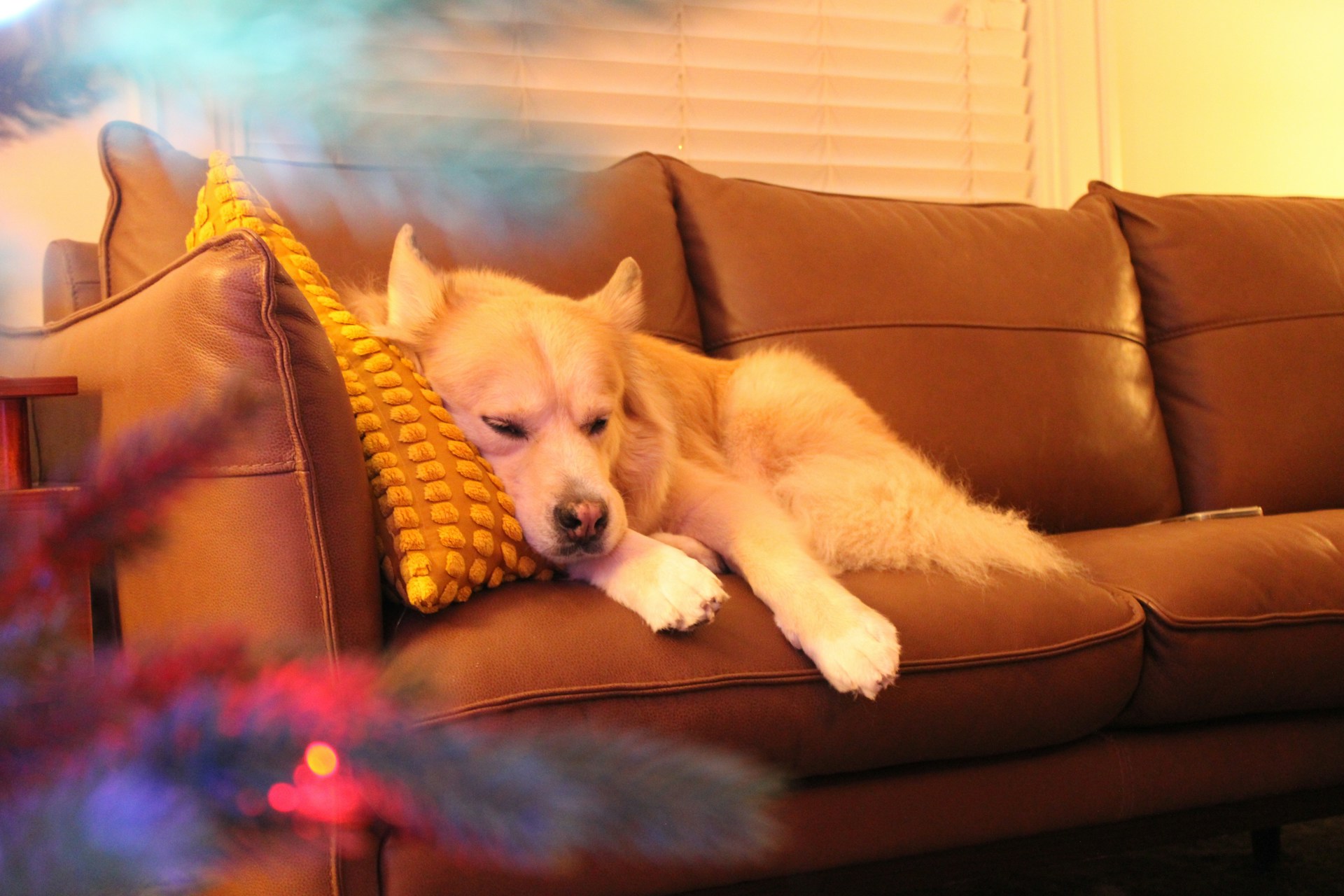
To keep your dog out of the litter box, put the box where your dog cannot reach it but your cat still can, scoop it daily, and use “leave it” as a backup: VCA names preventing access as the best way to correct the habit.
A dog in the litter box is a problem for both pets. Your dog can pick up parasites from cat feces, and your cat can start avoiding a box where they get cornered or disturbed, which the ASPCA notes can turn into a lasting house-soiling problem. This guide covers why dogs raid the box, when to call the vet, how to place the box so it works for your cat, what training can and cannot do, and how to choose between gates, covered boxes, and other options.
Why Do Dogs Get Into the Litter Box?
Dogs get into the litter box because the behavior is akin to scavenging, VCA Animal Hospitals notes: cat feces have enough appealing odor, texture, and taste to overcome the fact that they are waste.
Stool eating, called coprophagia, is usually a behavior rather than a medical problem, but VCA lists conditions to rule out first: anything that reduces nutrient absorption, upsets the gut, or increases appetite, such as diabetes, Cushing’s disease, thyroid disease, or treatment with certain medications. VCA describes a stool test for parasites as the minimum check. A 2018 UC Davis owner survey of dogs who eat dog stools, published in Veterinary Medicine and Science, also found that eating cat stools went together with eating dog stools, and that frequent stool eaters were more often described as greedy eaters.
Is It Dangerous if Your Dog Eats Cat Poop or Litter?
It can be: cat feces can carry parasites that infect dogs, and swallowed litter may cause a blockage, so call your vet if your dog ate litter, even if they seem fine.
- Roundworms and hookworms. The CDC notes that dogs can be infected by swallowing soil containing dog or cat feces with worm eggs or larvae. The Merck Veterinary Manual adds that monthly heartworm preventives also prevent roundworm infection and some also control hookworms, so ask your vet what your dog’s prevention covers.
- Toxoplasma. Cats are the only hosts that complete the parasite’s life cycle and the main source of infection for other animals, according to the Merck Veterinary Manual. Most healthy adult dogs show no signs, but in puppies the infection can cause serious illness.
- Litter. Swallowed material can block the gut. VCA lists vomiting, diarrhea, belly pain, loss of appetite, straining to pass stool or passing very little, and lethargy as signs of an obstruction, which can be life-threatening. The ASPCA advises contacting your vet or the ASPCA Animal Poison Control Center at (888) 426-4435 (US) whenever a pet has swallowed something potentially hazardous, even with no signs yet.
Where Should the Litter Box Go So Your Dog Can’t Reach It?
Put the litter box in a dog-free space your cat can still reach easily at any hour, such as a room behind a gate or door with a cat-sized opening, in a quiet spot away from the dog’s food and water.
The American Kennel Club recommends giving cats a permanent dog-free space, using baby gates or a cat door, with the litter box, water, a bed, toys, and a scratching post inside, keeping food and water away from the box. The box itself still has to suit your cat: Cornell University’s Feline Health Center notes that most cats want a spot that is quiet, private, away from their food, and accessible 24 hours a day.
| Option | How it keeps the dog out | What to check for your cat |
| Gate with a cat-sized opening, or a gate your cat can hop | Keeps most dogs out while your cat goes through or over | Your cat uses it easily, even when older or stiff, and a small dog or puppy cannot squeeze through |
| Door with a cat door or a door strap | The room stays closed to dogs too big for the opening | The opening is wide enough and your cat is not trapped inside with no second way out |
| Covered or top-entry box | The box is harder for a dog to reach into | Many cats prefer open boxes, and top entry is hard for older or arthritic cats |
| Raised spot, such as a sturdy shelf | The box is above your dog’s reach | Only for cats who jump easily; not for kittens, seniors, or cats with joint pain |
Covered boxes are a trade-off. The 2014 AAFP and ISFM house-soiling guidelines report that cats are equally divided between large covered boxes and uncovered ones but recommend open boxes where possible, and Cornell notes that most cats prefer an uncovered box with a 360-degree view. If you try a covered or top-entry box, keep an open box available until you are sure your cat uses the new one.
“Move the box in stages, and move it before you put the gate up. Cats are particular about this, and the failure I see is both changes landing on the same afternoon — new room, new barrier, and a cat who decides the whole arrangement is off and goes behind the sofa instead. Now you’ve got two problems and the dog was the easy one. So shift the box a few feet at a time over a week or two until it’s where you want it, check your cat is using it happily, and only then add the gate. It’s slower. It’s also the version that’s still working in a month.”
– Charlie Angel Chun Expert Trainer & Consultant (Behavioral Rehabilitation & Society Acclimation)
What Does Your Cat Need From the Litter Box?
Your cat needs a box they can reach without being cornered, with an escape route, kept clean every day, and enough boxes for the household.
- No ambush. The ASPCA notes that being cornered or trapped by a dog, or a loud noise or commotion, can upset a cat in the box. Place it where your cat can see who is coming and has more than one way out.
- Enough boxes. Cornell recommends one box per cat plus one, and the AAFP and ISFM guidelines suggest at least one box on each level of a multi-level home.
- Daily scooping. Remove waste at least once a day, as the AAFP and ISFM guidelines recommend; a box with less to find is also less tempting for your dog.
- Easy entry for seniors. Kittens, older cats, and cats with joint pain need low sides, Cornell notes.
If your cat starts going outside the box after a change, Cornell recommends a vet check first, and the ASPCA warns that avoidance can become chronic once a cat develops a preference for another surface or spot.
Can You Train a Dog to Leave the Litter Box Alone?
Training helps, but in an owner survey of dogs that eat dog stools it rarely stopped the habit, so treat “leave it” and supervision as a backup to blocking access, not a replacement.
In the 2018 UC Davis survey of owners whose dogs frequently ate dog stools, the reported success rate of training and commercial products was close to zero; rewarding “leave it” did slightly better than the rest, at about 4%. VCA Animal Hospitals likewise names preventing access, cleaning up, and supervision as the best way to correct the habit. Training is still worth doing for the moments a door is left open:
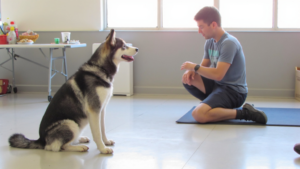
- Teach “leave it” at home. The American Kennel Club starts with a treat on the floor covered by your hand: mark and reward the moment your dog stops trying, using a different, better treat from your other hand, never the one on the floor.
- Practice near the box on a leash while your cat is in another room, starting at a distance where your dog still responds, and only use the cue when you expect your dog to listen, so they do not practice ignoring it.
- Interrupt and redirect. VCA suggests interrupting at the first sniff of stool and rewarding your dog with a special treat for coming to you.
- Skip punishment. VCA calls rubbing a dog’s nose in feces after a house accident outmoded, inhumane, and useless, and notes it may even encourage stool eating.
“That 4% number looks damning and it’s about the right figure, so use it properly rather than taking it as a reason not to bother. What training can’t do is beat a cat box in an empty house — she’s unsupervised, the reward is immediate, and nothing you taught her is in the room. What it can do is buy you the two seconds in the hallway when you’re standing right there and the door’s been left open. That’s a worthwhile thing to own. Just don’t let it be the plan. The plan is the gate, and the cue is what covers the day somebody forgets to shut it.”
– Charlie Angel Chun Expert Trainer & Consultant (Behavioral Rehabilitation & Society Acclimation)
If your dog fixates on the cat as well as the box, see Training High-Drive Dogs: Manage Prey Drive for impulse control around animals.
Can an Electronic Keep-Away Zone Help?
An indoor keep-away zone from a Bluetooth beacon, such as Halo’s Zone Beacon, can help where a gate does not fit: it cues your dog’s collar near the litter box, but it works only after training and only while your dog wears the collar.
With the Halo Collar 5, this is the job of the Zone Beacon (part of the Halo Beacons family, sold separately) in Keep Away mode. Halo’s Help Center explains that you set the range and the feedback type (sound, a voice command, vibration, or optional static feedback) in the Halo App, that your dog gets a Warning at the outer edge and Boundary feedback closer in, and that the range is dome-shaped, so a high setting can reach another floor. Only the collar responds, so your cat is not cued, but three points matter around a litter box:
- Choose a quiet feedback type, such as vibration, since a sudden noise near the box can put your cat off using it.
- Keep the range tight so it covers the box, not the hallway your dog uses or the spot where they eat or sleep.
- Treat it as a training aid, not a lock. The collar needs to come off for at least 8 hours in every 24, so keep the gate or door closed during those hours.
Should You Keep the Cat’s Food Away From the Dog Too?
Yes. Cat food draws dogs the same way the box does, so feed your cat where your dog cannot reach, such as on a counter, a cat tree, a windowsill, or in the cat’s own room.
The American Kennel Club suggests using your cat’s liking for height to give them a private place to eat, and keeping the cat’s food in the dog-free room works for both habits at once, as long as the bowls sit well away from the litter box. Keep the litter box away from both pets’ food and water bowls: Cornell and the AAFP and ISFM guidelines advise against placing food close to the box.
Frequently Asked Questions
Why does my dog eat cat poop?
Because the behavior is akin to scavenging and cat feces smell and taste appealing to dogs, according to VCA Animal Hospitals. If the habit comes with more hunger or stomach upset, ask your vet to rule out a medical cause.
What should I do if my dog ate cat litter?
Call your vet or the ASPCA Animal Poison Control Center at (888) 426-4435 (US), even if your dog seems fine. Watch for vomiting, diarrhea, straining or not passing stool, loss of appetite, belly pain, or lethargy, which VCA lists as signs of a possible blockage.
Can dogs get toxoplasmosis from cat poop?
Dogs can be infected with Toxoplasma, and cats are the main source of infection for other animals, the Merck Veterinary Manual notes. Most healthy adult dogs show no signs, but puppies can become seriously ill. Ask your vet if you are concerned.
Is a top-entry litter box a good idea if I have a dog?
It can keep a dog out, but it suits young, agile cats best. The ASPCA notes that older or arthritic cats may struggle with some box types and suggests low sides for them.
Keeping your dog out of the litter box comes down to access: a dog-free spot your cat can reach easily, a box scooped every day, and cat food out of reach. Training “leave it” helps with slips, and a call to the vet is the right move whenever your dog has eaten litter or a cat stops using the box.