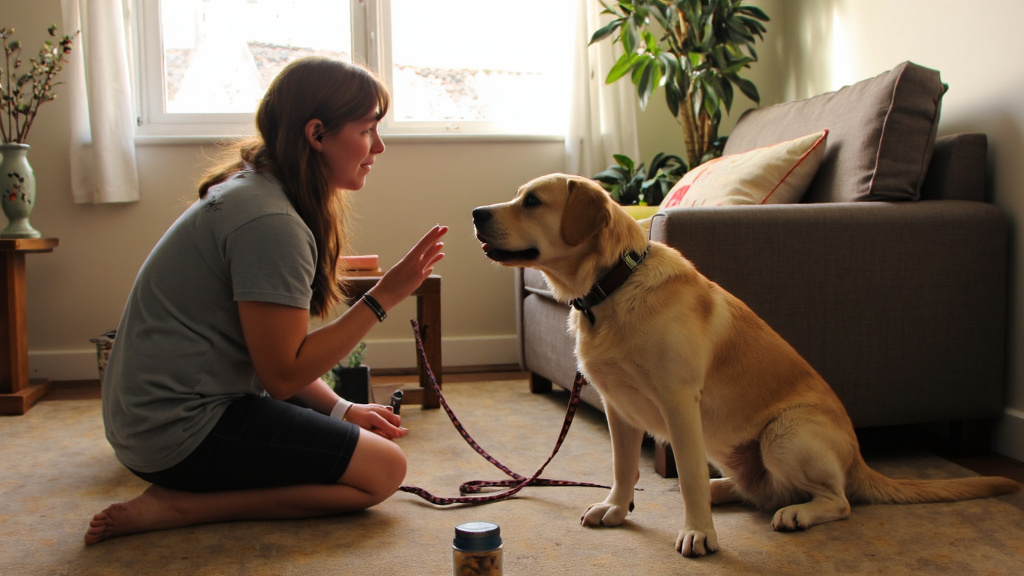
To train a dog at home, start in a quiet room, gather a few simple tools, teach one command at a time with rewards, build short lessons into your daily routine, and add distractions only once your dog has mastered each skill. Every dog owner hits a moment of frustration – a puppy nipping at heels or an adult dog ignoring a recall. Training at home doesn’t require professional certification; it requires a consistent approach. This guide walks through each step, how to handle common problems, and the tips that make the biggest difference.
How Do You Train a Dog at Home?
You train a dog at home with patience, consistency, and rewards: dogs learn from patterns and consequences, so the same cue has to mean the same thing every time, and the behavior you want has to pay off.
If you change the rules – allowing your dog on the couch one day but not the next – your dog can’t work out what you want. Create a predictable environment where each cue always means the same thing, and make sure everyone in the household uses the same words.
Why Reward-Based Training Works
Positive reinforcement means marking the behavior you want with a reward – a treat, a toy, or affection – the instant it happens, so your dog is more likely to offer it again. The American Veterinary Society of Animal Behavior (AVSAB) recommends reward-based training and advises against punishment-based methods, which are linked to fear and stress and can damage your bond with your dog.
Step 1: Pick a Quiet Place to Start
Start every new skill in a low-distraction spot, such as a quiet living room with the TV off and other pets elsewhere. If you try to teach a new command at the dog park, the environment competes for your dog’s attention and sets you both up to fail. Move to busier places only once your dog has mastered the command at home (Step 5).
Step 2: Gather the Right Gear
You need high-value treats, an optional clicker, a standard 6-foot leash, and a 15- to 30-foot long line. Having everything ready before a session prevents fumbling, which can break your dog’s focus. If you train with a Halo Collar, the app has its own step-by-step program – see Cesar Millan Training.
Rewards and a Clicker
Kibble often isn’t enough for new lessons. Use high-value treats like small pieces of chicken or cheese that your dog only gets during training. Many trainers also use a clicker – a small device that makes a sharp sound – to mark the exact moment of success, followed immediately by a treat; a short word like “yes” works the same way.
A Leash and a Long Line
A standard 6-foot leash is for close control and loose-leash walking; for pulling, see How to Stop a Dog From Pulling on the Leash. A long line of 15 to 30 feet, clipped to a well-fitted harness rather than a collar, lets you practice distance work and recall safely: your dog feels free while you keep control if they decide to chase a squirrel.
Step 3: Teach Sit, Come, and Place
Start with three commands that make daily life safer and calmer: sit, come, and place.
Sit
Hold a treat just above your dog’s nose and slowly move it back over their head toward their tail. As their nose goes up to follow the treat, their hips naturally lower. The moment their bottom touches the ground, mark it with “yes” or a click and give the treat. Repeat this 5 to 10 times per session until the movement becomes fluid, then add the word “sit” just before you lure.
“Get the treat out of your hand sooner than feels right. The lure is a brilliant way to show her what you mean and a terrible thing to still be doing three weeks later — because what she’s learned by then is that the shape of your hand means sit, and your hand is empty half the time in real life. Five or six repetitions and then try it with nothing in your fingers, same movement. She’ll usually do it. If she doesn’t, one more lured rep and try again. The sooner the food leaves your hand and goes in your pocket, the sooner you’ve got a dog who sits when you ask rather than a dog who follows a sandwich.”
– Charlie Angel Chun Expert Trainer & Consultant (Behavioral Rehabilitation & Society Acclimation)
Come
Coming when called is a safety skill. Start indoors with your dog on a leash. Back away excitedly, saying “come,” and when your dog reaches you, reward generously with treats and praise. Never call your dog to you for something unpleasant, like a bath or a nail trim, because that teaches them that “come” predicts bad things. The reward for coming to you should be better than whatever your dog left behind. For the full method, see How to Train a Reliable Recall (Come When Called).
Place
Teaching your dog to go to a specific mat or bed is useful for preventing jumping when the doorbell rings. Lure your dog onto the bed, reward them, and then use a release word like “free” to let them off. Gradually increase the time they stay on the bed before you release them; this builds impulse control.
Step 4: Build Training Into Your Daily Routine
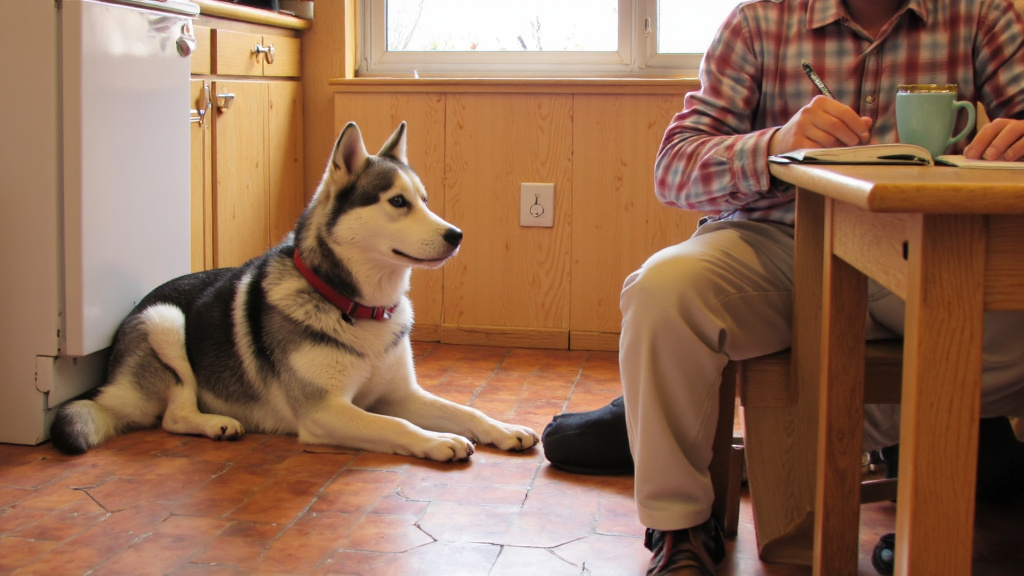
Weave short lessons into meals, walks, and play, so your dog practices all day rather than only in formal sessions. That way your dog learns to listen throughout the day, not just when you are holding a treat bag.
Mealtime as Training Time
Your dog is most motivated when hungry. Use breakfast and dinner to practice impulse control: ask for a sit and a wait before you put the bowl down. Your dog learns that calm behavior unlocks good things, which helps prevent jumping at feeding time.
Walks and Play
Every walk is a training opportunity. Stop randomly and ask for a “sit” at curbs to reinforce focus. During games of fetch, practice “drop it” before throwing the ball again. If they don’t drop it, the game stops. They quickly learn that cooperation makes the fun continue.
“Asking for things all day is good advice with one thing missing: she needs stretches where nothing is being asked of her. I’ve seen this done so thoroughly that the dog can’t settle — every walk is a test, every meal is a sit, and she’s scanning you constantly for the next job. That’s not a well-trained dog, that’s a dog who never gets to switch off. So work it into the day, yes, and then leave long gaps. Let her sniff a hedge for four minutes while you look at your phone. The off switch is a skill too, and it’s the one that doesn’t get practiced.”
– Charlie Angel Chun Expert Trainer & Consultant (Behavioral Rehabilitation & Society Acclimation)
|
Time of day |
Activity |
Skill focus |
|
Morning |
Before breakfast |
Sit and wait (impulse control) |
|
Midday |
Daily walk |
Heel and an automatic sit at curbs |
|
Afternoon |
Play session |
Drop it and come (recall) |
|
Evening |
Relaxation |
Place (settling while the family relaxes) |
Step 5: Add Distractions Gradually
Once your dog responds reliably at home, practice the same command in slightly busier places, one step at a time: the backyard, the front yard, a quiet street, then a park. Each new place is harder, so make it easier in other ways at first – stand closer, use better treats, and ask for shorter stays. If your dog stops responding, go back to the last place where they succeeded and progress more slowly. A command is solid when your dog responds the first time you ask, in several different places.
How Do You Fix Common Problems at Home?
To fix common problems, teach a replacement behavior and remove the payoff: a cue for quiet instead of barking, a chew toy instead of a shoe, and attention only when all four paws are on the floor. Addressing habits early makes them easier to change.
Barking
Teach a “quiet” cue. When your dog barks, acknowledge the alert, then say “quiet” and hold a treat to their nose; most dogs can’t sniff and bark at the same time. When they go quiet to investigate the treat, mark it with “yes” and reward. With repetition, the cue alone starts to bring quiet. For barking triggers and more methods, see How to Train Your Dog to Stop Barking.
Chewing
Destructive chewing often comes from boredom or teething. Remove temptations, provide better alternatives, and make sure your dog gets enough exercise. If you catch your dog chewing a shoe, calmly interrupt, trade the shoe for a high-value chew toy, and praise them when they engage with the toy.
Jumping on Guests
Jumping is usually a bid for attention, and pushing your dog off can feel like play to them. Instead, turn your back and cross your arms. Turn around and engage only when all four paws are on the floor, or ask for the place command when the doorbell rings. Everyone in the family, and guests, need to respond the same way.
What Are the Best Dog Training Tips for Home?
The best dog training tips for home are to keep sessions short, reward instantly, use one word per behavior, train when your dog is calm, and end on a success:
- Keep sessions short. A few minutes, a few times a day, works better than one long session.
- Reward instantly. Mark the behavior the moment it happens, then reward.
- One word per behavior. Use the same cue every time, and keep “come” for coming to you.
- Train when your dog is calm. Burn off energy with a walk or a game first.
- End on a success. Finish with something your dog does well, so the next session starts on a high.
Dog Training at Home FAQs
How long should training sessions be?
Short: a few minutes at a time, a few times a day. Stop while your dog is still keen, and fit extra practice into meals and walks.
Can you train an older dog at home?
Yes. Dogs can learn at any age; an older dog may need shorter sessions and more patience, especially if they have to unlearn an old habit.
Do you need a clicker?
No. A clicker helps mark the exact moment your dog gets it right, but a short, consistent word like “yes” does the same job.
When should you get a professional trainer?
If your dog shows aggression, intense fear, or makes no progress after a few weeks of consistent practice, work with a certified professional dog trainer, or ask your vet about a veterinary behaviorist.