Many new dog owners struggle with puppy potty training, often feeling as though they are taking one step forward and two steps back. The difference between a dog that masters house training quickly and one that struggles for months usually comes down to consistency and biology, not stubbornness.
By identifying the most common potty training mistakes and understanding your puppy’s physical limitations, you can replace frustration with progress. This guide breaks down the errors that sabotage success and provides a clear, biological approach to housebreaking your new companion.
Understanding Puppy Anatomy and Limitations
Before correcting behavior, owners must understand the physical reality of a young dog. A puppy operates much like a toddler without a diaper; they do not soil the rug out of spite, but rather because their physiology demands it.
The Bladder Clock
A puppy’s bladder capacity is directly tied to their age and activity level. As a general rule, a sleeping puppy can hold their bladder for one hour for every month of age, plus one. However, this rule evaporates the moment the puppy wakes up. Physical activity stimulates the metabolism and kidney function, drastically reducing holding time. For example, a two-month-old puppy playing vigorously may need to urinate every 15 to 20 minutes.
The Brain-Body Disconnect
Beyond bladder size, there is a neurological gap. In very young puppies, the neural pathways that connect the sensation of a full bladder to the brain are not fully developed. Often, the puppy does not realize they need to go until they are actively going. Punishing a puppy for this is akin to punishing an infant for a wet diaper; they simply lack the biological maturity to prevent it.
The Most Common Potty Training Mistakes
Even with the best intentions, owners often inadvertently encourage the very behaviors they are trying to stop. Avoiding these three pitfalls will immediately accelerate your training progress.
Granting Too Much Freedom
The single most damaging mistake is allowing a puppy unsupervised access to the home. If a puppy can wander into a guest room or behind a sofa, they will inevitably find a “safe” spot to eliminate. House training is effectively a management game; if you cannot see the puppy, you cannot prevent the accident. Freedom should be earned gradually, room by room, only after the puppy demonstrates consistent bladder control.
Using Punishment Incorrectly
Old-school methods, such as rubbing a dog’s nose in their mess, are not only cruel but counterproductive. Dogs lack the cognitive ability to connect a past action with present anger. If you scold a puppy for a puddle you found from an hour ago, the puppy learns that you are scary and unpredictable, not that peeing inside is wrong. This often leads to “submissive urination” or causes the puppy to hide their accidents in the future.
Ineffective Cleanup
Cleaning an accident with standard household sprays or ammonia-based products is a recipe for failure. To a dog’s sensitive nose, these cleaners mask the smell but do not remove the biological markers. The lingering pheromones act as a “bathroom sign,” drawing the puppy back to the same spot. You must use an enzymatic cleaner that breaks down the proteins in urine to completely erase the scent trail.
| Mistake | Why It Fails | The Fix |
|---|---|---|
| Rubbing Nose in Mess | Creates fear and anxiety; dog hides future accidents. | Interrupt calmly if caught in the act; ignore if found later. |
| Using Potty Pads Long-Term | Teaches that soft surfaces (rugs) are acceptable toilets. | Transition to outdoor grass as soon as vaccination status allows. |
| Returning Inside Immediately | Puppy learns that potting ends the fun outdoor time. | Use the “Two-Pee Rule” and play outside after they go. |
Proven Management Techniques

To stop accidents, you must control the environment until the puppy develops self-control. Implementing these structured techniques removes the opportunity for error.
The Tethering Method
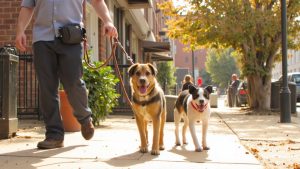
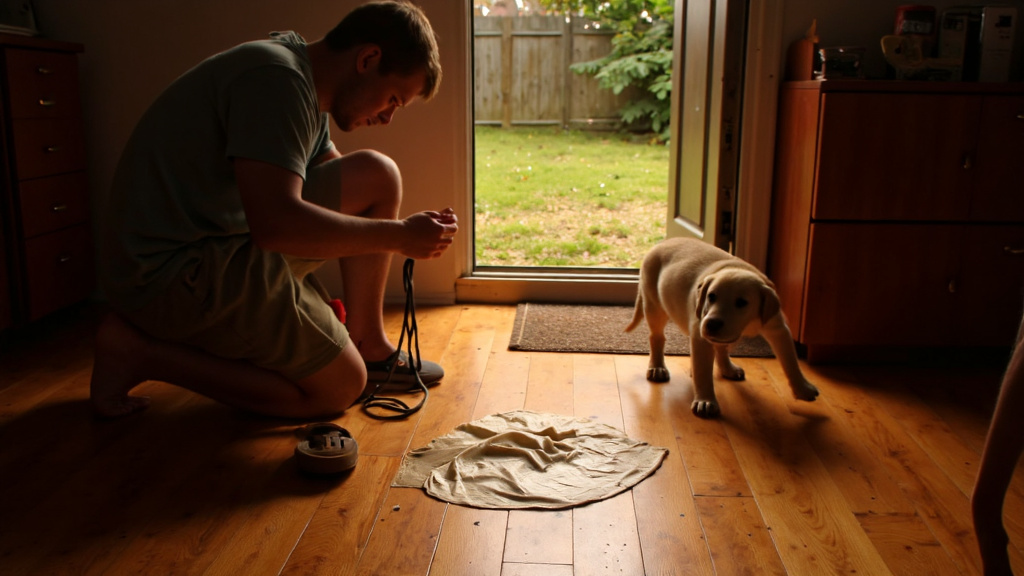
If you are not using a crate, the tethering method is your best defense. Attach a 6-foot leash to your puppy and clip it to your belt loop. This “umbilical cord” training ensures the puppy is never out of sight. You will notice the subtle signs of needing to go—sniffing, circling, or sudden restlessness—immediately, allowing you to rush them outside before the accident happens.
Strategic Crate Training
Dogs have a natural denning instinct and instinctively avoid soiling where they sleep. Crate training utilizes this biology to teach bladder control. The crate should be just large enough for the puppy to stand, turn around, and lie down. If it is too big, they may soil one corner and sleep in the other. Use the crate for naps and times when you cannot supervise directly.
The “Boring” Night Trip
Overnight accidents often happen because the puppy thinks 3:00 AM is playtime. When taking a puppy out at night, keep lights low, avoid speaking, and do not engage in play. Pick the puppy up, carry them to the spot, give the command, and immediately return them to the crate once finished. This teaches the puppy that night waking is strictly for business.
Handling The “Fake Out” and Regression

A common frustration occurs when a puppy spends twenty minutes outside sniffing leaves, only to come inside and immediately urinate on the carpet. This is not defiance; the puppy was simply too distracted outside to focus on their body’s needs. The techniques below will help you prevent indoor accidents if this issue arises.
The Reset Technique
If you take your puppy outside and they do not go within five minutes, do not bring them inside and let them roam free. Instead, bring them inside and place them directly in their crate or keep them tethered to you. Wait 10 to 15 minutes, then try outside again. Repeat this cycle until they eliminate. This prevents the “fake out” accident and teaches the puppy that outside time is for pottying first, playing second.
Managing Regression
It is normal for puppies to experience potty training regression, especially around 4 to 6 months of age. Teething, hormonal changes, or changes in routine can cause a relapse. When this happens, do not panic. Simply tighten your management protocols. Return to treating the dog like an 8-week-old puppy—more frequent breaks, more crate time, and 100% supervision—for a few days until the habit is re-established.
How the Halo Collar Supports Training
While establishing routines is manual work, modern technology can provide a safety net. The Halo Collar aids in housebreaking by establishing clear boundaries and safety, which reduces anxiety for both dog and owner.
Many puppies struggle to potty on a leash because they feel restricted. The Halo Collar’s GPS wireless fence allows you to create a safe, designated potty zone in your yard. This gives the puppy the feeling of freedom to sniff and find the perfect spot while ensuring they stay within safety limits. Indoors, Halo Beacons can be used to block off certain locations—such as carpeted rooms or areas where accidents are more likely to happen—helping guide your puppy toward more appropriate spaces.
Disclaimer: The Halo Collar is not designed for very young puppies. Formal training with Halo should only begin once a dog is old enough to understand guidance and safely use the system, which is usually around 5 months old.
Conclusion
Puppy potty training is a temporary phase that requires a long-term perspective. Accidents are not failures; they are data points indicating that your schedule or supervision needs adjustment. By utilizing management tools like crates and tethering, cleaning effectively with enzymes, and maintaining a consistent routine, you will navigate this stage successfully. Stay patient, stay consistent, and remember that every dog eventually learns to value a clean home as much as you do.
Need more help with your new companion? Explore our Dog Training resources for expert advice on obedience, behavior, and bonding.