Excessive barking can quickly transform a peaceful home into a source of stress, disrupting family dinners and straining relationships with neighbors. While vocalization is a natural communication method for dogs, nuisance barking often indicates boredom, anxiety, or reactivity that requires intervention.
Humane bark training collars offer a compassionate solution, utilizing smart sensors and benign interruptions rather than harsh punishment to guide your dog toward quieter habits.
Identify the Trigger Before Choosing the Tool
Before selecting a collar, it is vital to understand why your dog is barking. Humane collars work best as interrupters that break a dog’s fixation, but they are most effective when paired with an understanding of the root cause.
Alert Barking
This occurs when a dog sees a delivery driver or a squirrel. The dog believes they are doing a job. In this scenario, a bark collar acts as a reminder that the “alarm” is unnecessary, but it works best when combined with a command like “quiet” or “place.”
Boredom and Demand Barking
Dogs that bark at their owners for attention or bark continuously in the yard are often under-stimulated. While a collar can deter the noise, the underlying energy needs to be addressed through exercise or mental stimulation to prevent the behavior from manifesting in other ways, like chewing or digging.
Separation Anxiety
If your dog howls or barks only when left alone, this is often a panic response. In cases of true separation anxiety, a standard bark collar may increase stress. These dogs typically require desensitization training rather than automated correction.
Comparing Vibration, Citronella, and Sound Collars
Modern humane collars rely on “positive punishment”—adding a mild deterrent to reduce behavior—or “negative reinforcement.” The goal is to startle or distract the dog, not to inflict pain.
Vibration Collars
A vibration bark collar delivers a tactile buzzing sensation, similar to a smartphone vibrating against your skin. For many dogs, this strange physical sensation is enough to break their focus on the mailman. These are excellent for deaf dogs who cannot hear audible tones or owners who want a completely pain-free method.
Citronella Collars
These devices utilize a dog’s sensitive sense of smell. When the microphone detects barking, the collar releases a burst of citronella spray near the snout. The combination of the spraying sound, the wet sensation, and the strong citrus odor creates a powerful distraction. However, they require ongoing refills and can be messy.
No-Shock Audible Collars
No shock bark collars often rely on “beeps” or tones. Some provide a warning beep before a vibration, giving the dog a chance to self-correct. These are generally the mildest form of correction and are best suited for sensitive dogs with low drive.
The Science of Ultrasonic Bark Control

For owners who prefer a device that doesn’t touch the dog, ultrasonic controllers are a popular choice. These emit sound waves at approximately 25kHz—a frequency audible to dogs but silent to humans.
This method operates on the element of surprise. The high-pitched noise interrupts the barking pattern, causing the dog to pause and listen. Because the sound is annoying rather than painful, it discourages the dog from barking again.
However, ultrasonic devices have limitations. High-frequency sound waves do not travel through solid objects like walls or privacy fences. Therefore, a “birdhouse” style outdoor unit will likely not stop a dog barking inside the garage. Furthermore, biology plays a role; dogs with age-related hearing loss or floppy ears that obstruct the ear canal may not hear the sound clearly enough for it to be an effective deterrent.
| Correction Type | Sensation | Best Candidate | Considerations |
|---|---|---|---|
| Vibration | Buzzing / Haptic | Deaf dogs; Sensitive dogs | Thick fur may dampen the sensation. |
| Citronella | Scent + Sound (Spray) | Dogs driven by smell | Requires buying refills; wind can affect spray accuracy. |
| Ultrasonic | High-pitched Sound | Young dogs with sharp hearing | Ineffective on seniors or hearing-impaired dogs. |
Special Considerations for Small Dogs

Toy breeds and small dogs present a unique challenge. A device designed for a Labrador can be heavy and uncomfortable for a Chihuahua, potentially causing neck strain. When searching for the best bark collar for small dogs, physical weight is as important as correction type.
False Triggers
Small dogs often move quickly and shake their bodies more frequently than large breeds. A standard bark collar might mistake the vibration of a dog shaking off or the sound of tags jingling for a bark. Look for collars with advanced dual-detection sensors that require both the sound of the bark and the vibration of the vocal cords to trigger a correction.
Proportional Correction
A vibration intensity that tickles a Great Dane might terrify a Yorkie. High-quality collars for small dogs allow for granular sensitivity adjustments. Always begin on the lowest possible setting and slowly increase only if the dog ignores the interruption.
How the Halo Collar Approaches Barking
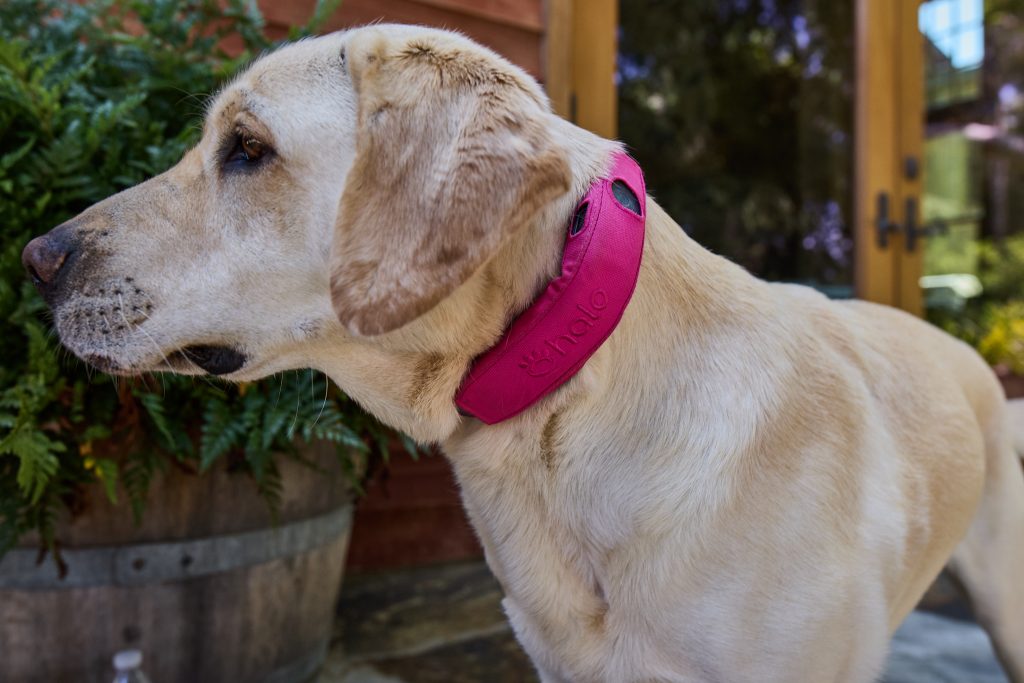
While traditional bark collars are reactive—waiting for the dog to mess up and then correcting them—the Halo Collar focuses on proactive communication and boundary management. It moves beyond simple noise suppression to address the dog’s overall state of mind.
Customizable Feedback vs. Automatic Correction
The Halo Collar allows you to tailor feedback to your dog’s specific needs. Instead of a generic beep, you can use Cesar Millan’s voice commands or a specific whistle tone. This helps differentiate between a “Warning” (you are near a boundary) and general communication, preventing the dog from becoming desensitized to a single noise.
Reducing Territorial Stress
Much excessive barking is territorial. Dogs bark because they are unsure where their job to protect ends. By using GPS fence technology to clearly define boundaries, the dog understands their safe zone. When a dog clearly understands their territory, their anxiety decreases, often leading to a natural reduction in nuisance barking.
Holistic Training
Included with the collar is a comprehensive training program. By working through the 30+ lessons, you build a relationship where the dog looks to you for guidance rather than reacting to every leaf that blows by. The Halo system emphasizes that a tired, mentally stimulated, and well-guided dog is naturally a quiet dog.
Conclusion
There is no “one size fits all” button for silence. The most effective approach combines the right humane tool with patience and consistency. Whether you choose a vibration collar for a sensitive pup, a citronella collar for a stubborn sniffer, or the comprehensive training system of the Halo Collar, the goal remains the same: clear communication.
By shifting from punishment to guidance, you not only solve the noise problem but also deepen the trust between you and your pet. Ready to explore more comprehensive training solutions? Visit our dog training resources for professional guidance on addressing barking and other behavioral challenges.