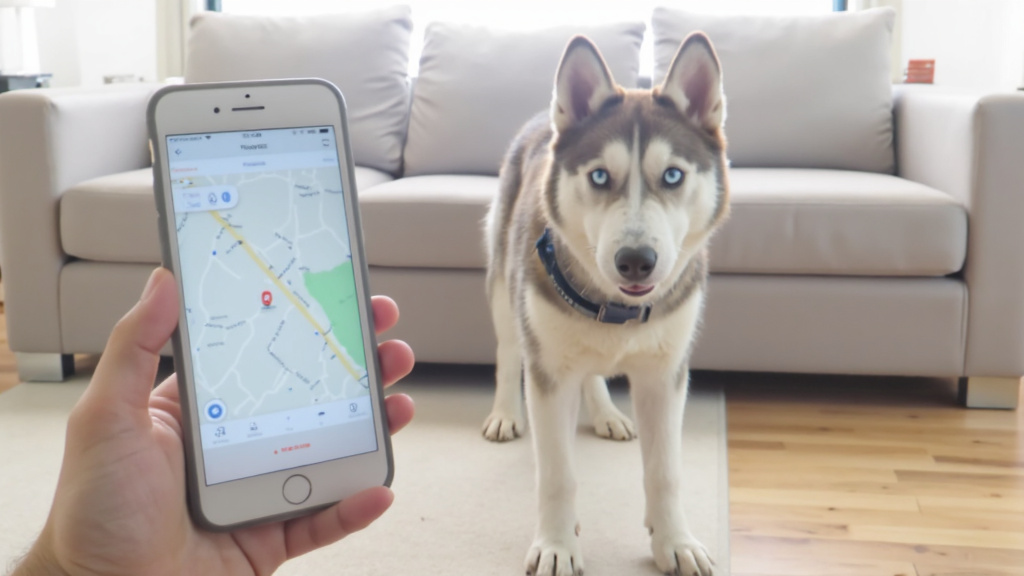
Today, modern technology has transformed dog safety, offering unprecedented peace of mind through advanced tracking solutions. From dog walking apps to sophisticated GPS tracking collars, these innovations allow you to monitor your dog’s location and activity in real-time.
Whether you are exploring remote hiking trails or navigating busy city neighborhoods, smart tracking technology ensures you can give your dog freedom while maintaining complete confidence in their safety.
How Do Dog Walking Apps and GPS Trackers Work?
GPS dog trackers operate much like the navigation system in your smartphone, but with added layers of redundancy to ensure reliability. They combine multiple technologies to create a comprehensive location network that pinpoints your dog’s exact position.
The Triangulation of Data
The process begins with GNSS (Global Navigation Satellite Systems). Your dog’s tracker receives signals from satellites orbiting Earth to calculate specific coordinates. Modern systems access multiple satellite constellations such as GPS, GLONASS, Galileo, BeiDou, and others, to improve accuracy and reliability.
However, satellite signals can struggle in dense urban canyons or under thick forest canopies. To solve this, modern trackers utilize cellular networks (like AT&T or Verizon) to triangulate position and transmit data back to your phone. Finally, Wi-Fi networks provide precision when the dog is indoors or close to buildings. This multi-layered approach ensures that if one signal fades, another picks up the slack.
From Device to Dashboard
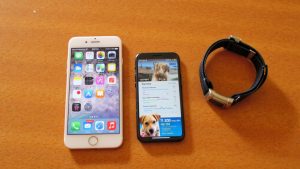
Quality dog walking apps display this data not as a static dot, but as a live, moving picture. With certain devices, you can even track your dog’s specific path, speed, and distance from you. The frequency of these updates varies significantly between products, ranging from once per second to multiple times per second, which impacts the smoothness and accuracy of real-time tracking.
Why Microchips and ID Tags Are No Longer Enough
For decades, the standard for pet safety was a metal ID tag and a subcutaneous microchip. While these tools remain important, they function as “reactive” safety measures. They rely entirely on strangers to help. A microchip is useless unless someone catches your dog and takes them to a vet to be scanned. Similarly, tags can fall off, rust, or become illegible over time.
GPS tracking fills the critical gap between losing your dog and someone else finding them, shifting the dynamic from passive hope to active recovery. In a situation where a dog is frightened and hiding, they may not approach a stranger to check a tag. A GPS tracker allows you to locate a hiding dog immediately, without waiting for a phone call that might never come. In the modern world, relying solely on analog identification is a gamble with your pet’s safety.
Enhancing Trust with Dog Walkers and Sitters
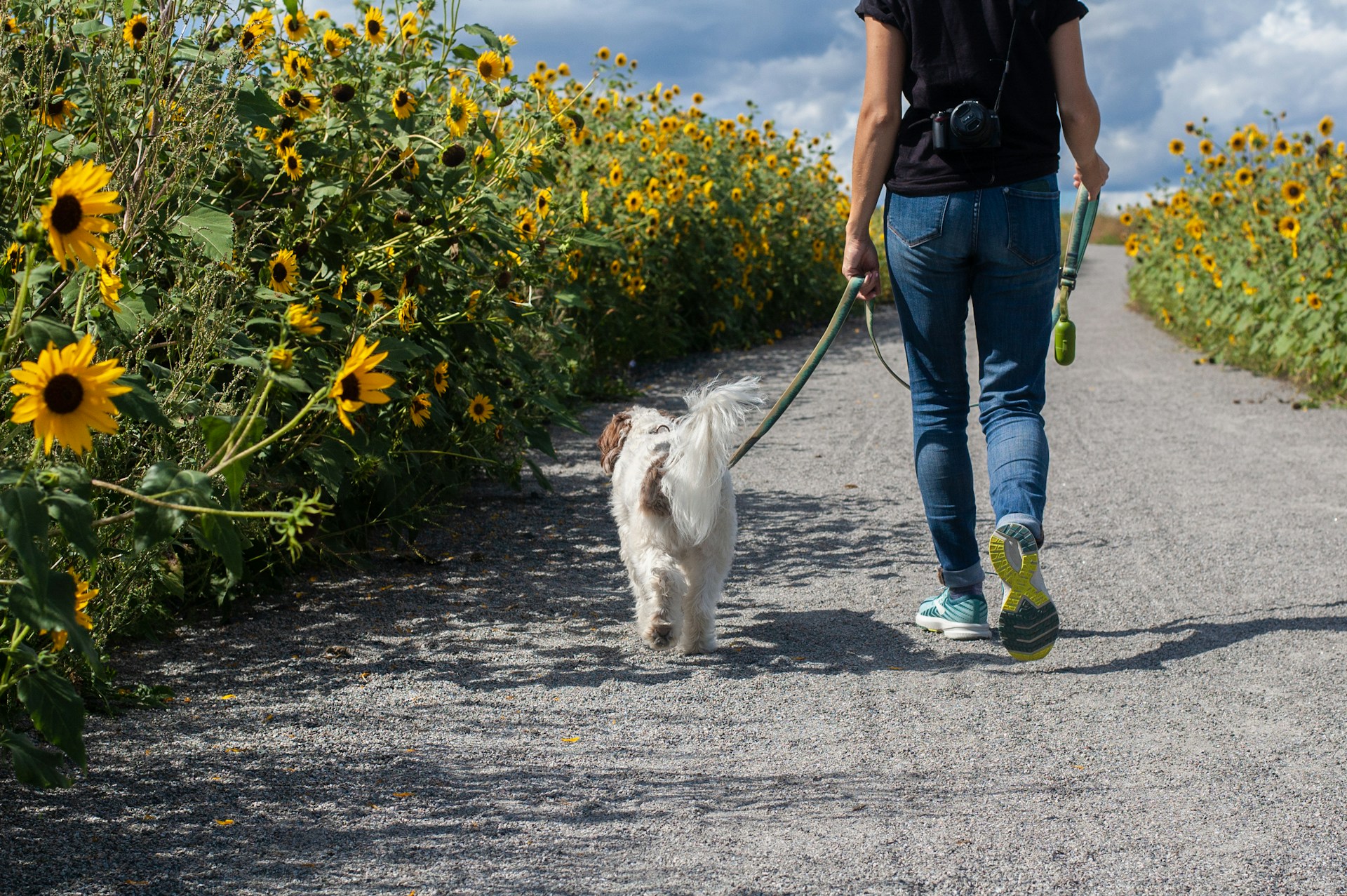
Many pet parents rely on professional dog walkers to keep their companions active while they are at work. However, handing over the leash requires a massive amount of trust. GPS tracking technology adds a layer of accountability and transparency to this relationship.
By equipping your dog with a smart collar, you can verify that they are getting the exercise they need. With certain devices, you can even view the exact route taken, the duration of the walk, and the distance covered. This ensures you are getting the service you paid for. More importantly, it provides a safety net. If your dog gets loose because a leash is dropped or traditional walking equipment fails while you’re away, real-time alerts and live location tracking allow you and the walker to respond immediately and bring your dog home safely.
Understanding GPS Accuracy in Real-World Dog Walking Conditions
When evaluating GPS tracking collars for dog walking, it’s essential to understand that performance varies dramatically between ideal conditions and real-world scenarios. Most GPS accuracy claims are based on “open sky” testing in wide-open fields, but dogs don’t spend their days exclusively in open fields.
A well-designed system should be able to handle signal acquisition indoors, sudden movement, and dense environments. The Halo Collar exemplifies a design built for real-world conditions, helping clarify which features matter most when comparing options.
The Indoor-Outdoor Transition Challenge
Dogs typically start their walks from inside the home, where GPS signals are weak or entirely blocked. After spending time indoors (particularly more than 4 hours), many GPS devices face a “cold start” issue. Without current satellite data, achieving an accurate position fix can take 25-30 seconds. During this time, if your dog runs ahead on a walk, the device may not be tracking their actual location.
Advanced systems address this through Assisted GPS (A-GPS), which downloads satellite positioning data over the internet while the device is indoors. For example, the Halo Collar uses A-GPS via Wi-Fi or cellular connectivity to refresh satellite data before a walk begins. This enables position fixes in approximately 2-3 seconds rather than half a minute, which is critical when starting a walk or when a dog suddenly bolts.
Position Update Rate: The Hidden Performance Factor
One of the most important yet overlooked specifications is how frequently the GPS calculates your dog’s position. A dog at full sprint can cover 30 feet in a single second. Consider how this impacts tracking accuracy:
- 1 Hz (once per second): The system checks position every 30 feet of movement during a sprint
- 4 Hz (four times per second): Position updates every 7-8 feet
- 20 Hz (twenty times per second): Position updates every 1.5 feet
Higher update rates mean smoother tracking on your phone’s map and more accurate route recording. They also reduce the lag between where your dog actually is and where the app shows them to be, which is essential for safety during walks in unfamiliar areas.
For example, the Halo Collar provides up to 20 location updates per second, far exceeding the performance of most consumer GPS collars and illustrating what high-resolution, safety-grade tracking looks like in practice.
The Impact of Power-Saving Modes
Some GPS collars use aggressive power-saving strategies, putting the GPS chip to “sleep” after 20-30 seconds of inactivity to extend battery life. This means that when your dog suddenly starts moving again, the device must “wake up” before it can track effectively. This delay can range from several seconds to half a minute, which can be critical in time-sensitive situations.
For example, if your dog is calmly walking beside you and then suddenly dashes after a squirrel, the collar may not immediately track the movement. Always-on GPS systems remove this risk entirely by delivering uninterrupted location awareness. The Halo Collar exemplifies this approach, continuously tracking your dog without the sleep or power-saving interruptions found in many other collars.
Accuracy Near Buildings and Trees
Urban and suburban walks can present unique challenges. GPS signals can reflect off buildings (a phenomenon called multipath interference), causing position drift. In testing conditions, this drift can range from a few feet to over 200 feet, depending on the device and environment.
Dual-frequency GPS systems (utilizing both L1 and L5 satellite bands) perform significantly better in these conditions. The L5 band’s wider bandwidth helps reject reflected signals, maintaining accuracy near structures, while single-frequency systems are more susceptible to these errors. The Halo Collar’s dual-frequency GPS demonstrates how this technology maintains accurate tracking near homes, fences, and tree cover, the environments where dogs are walked most often.
Key Features for Dog Walking Safety

When selecting a GPS tracking collar for dog walking, prioritize these technical features that directly impact real-world performance:
Real-Time Connectivity Options
Choose collars with multiple connectivity options. Bluetooth, for example, delivers quick, battery-efficient updates whenever you’re within range (typically 30 to 100 feet). Wi-Fi provides updates at home without using cellular data, while LTE/cellular connectivity keeps tracking active wherever your phone has service. The best systems switch seamlessly between these networks depending on availability.
Battery Life and Charging Speed
Realistic battery life for always-on GPS systems typically ranges from 24 to 48 hours. Be wary of significantly longer claims, as they often rely on aggressive power-saving modes that pause tracking or reduce update frequency, which can delay location accuracy if a dog suddenly gets loose. The Halo Collar is designed differently, maintaining always-on GPS tracking during active use rather than cycling the GPS on and off. Combined with fast charging (1 hour for Halo Collar 5), this approach prioritizes continuous awareness when it matters most while ensuring the collar is quickly ready for the next walk.
Durability and Fit
Walking collars must withstand daily wear, weather exposure, and active movement. Look for water resistance ratings of IPX7 or higher and durable materials like Biothane for the collar strap. Systems like the Halo Collar are designed for real-world use, combining waterproof construction with secure mounting to prevent shifting during movement. The GPS unit should be lightweight relative to your dog’s size (under 5% of body weight) and securely fastened to prevent excessive movement during walks.
Activity Tracking and Health Monitoring
Modern GPS collars increasingly incorporate activity tracking features that transform them from simple location devices into comprehensive wellness tools. These systems use internal sensors to monitor your dog’s movement patterns, providing insights into their daily exercise and rest cycles.
Understanding Activity Metrics
Quality activity tracking goes beyond simple step counting. Advanced systems analyze movement intensity, duration of rest periods, and overall activity patterns. This data helps you ensure your dog is getting appropriate exercise for their breed, age, and health status. For example, a Border Collie requires significantly more daily activity than an English Bulldog, and personalized tracking helps you meet these specific needs.
Detecting Health Changes Early
Consistent activity monitoring can reveal changes in behavior that might indicate health issues. A sudden decrease in activity level, changes in sleep patterns, or unusual restlessness can be early indicators of pain, illness, or injury. Having concrete data allows you to provide your veterinarian with specific information about behavioral changes rather than vague impressions.
Final Words: Making an Informed Choice
Choosing a GPS tracking collar for dog walking is ultimately a safety decision. System reliability is measured not by marketing claims, but by performance under real-world conditions such as indoor activation, sudden movement, dense neighborhoods, and unexpected escapes.
When evaluating your options, focus on these core questions:
- Update rate: How many times per second does the device calculate position?
- Assisted GPS: Does it refresh satellite data over the internet for fast, reliable startups?
- Always-on vs. sleep modes: Is GPS tracking continuous, or does it pause to save battery?
- Dual-frequency capability: Does it use both L1 and L5 bands for improved accuracy near buildings and trees?
- Connectivity options: Does it seamlessly transition between Bluetooth, Wi-Fi, and cellular networks?
- Real-world validation: Is performance tested in everyday environments, not just open fields?
Advanced systems like the Halo Collar exemplify what to look for, combining always-on GPS, up to 20 location updates per second, multi-layer connectivity, and real-world testing to deliver consistent, real-time awareness during walks and off-leash activity.
The evolution of dog walking technology has shifted the paradigm from “hoping for the best” to “knowing they are safe.” By understanding the technical factors that impact real-world performance, you can select tools that provide genuine safety improvements rather than just marketing promises.
Ready to enhance your dog walking safety knowledge? Explore comprehensive dog safety resources for expert guidance on keeping your dog protected in any situation.