If your dog is missing right now, do one thing before anything else: stay calm and check your dog’s GPS tracker or mark the exact spot they were last seen. The first 24 hours are the most important window in any lost-dog search, and roughly 90–93% of lost dogs are recovered – most of them within a mile of home and within the first day. Panic costs time, and time is the one resource that matters most here. This protocol walks you through exactly what to do, hour by hour, from the first five minutes through the first full day, so your search is fast, systematic, and built around how a frightened dog actually behaves.
What to Do First When Your Dog Goes Missing
The moment you realize your dog is missing, take these first steps in order:
- Check your dog’s GPS tracker, if they wear one, for a live location.
- Mark the exact spot they were last seen.
- Stay calm and do not chase – chasing makes a scared dog run.
- Search close to home first, on foot, calling gently.
- Alert neighbors and post to local lost-pet networks.
What Are the Odds of Finding a Lost Dog?
The odds are strongly in your favor: most lost dogs are found, and most are found quickly. Consolidating the survey data across recovery organizations gives a clear, encouraging picture:
- Around 90–93% of lost dogs are eventually recovered.
- Roughly 70–80% are found within about 1 mile of where they went missing.
- Most are reunited within the first 24 to 48 hours.
- Dogs typically stay within 1 to 3 miles of the spot they were lost during the first day.
Those recovery figures cover every route home, and the great majority are owners finding their own dog close by rather than a shelter reuniting them later. Shelter return rates are much lower – which is exactly why the first day, spent searching your own neighborhood, matters more than any other part of the process.
The takeaway is simple: a fast, calm, well-organized search in the first day is what converts those favorable odds into your dog back home.
The 24-Hour Lost Dog Protocol, Hour by Hour
This protocol is built around the clock, because the right action changes as the hours pass. Work through each window in order – the open boxes make it easy to print this section and check off steps as you go.
The First 5 Minutes – Do Not Bolt After Them
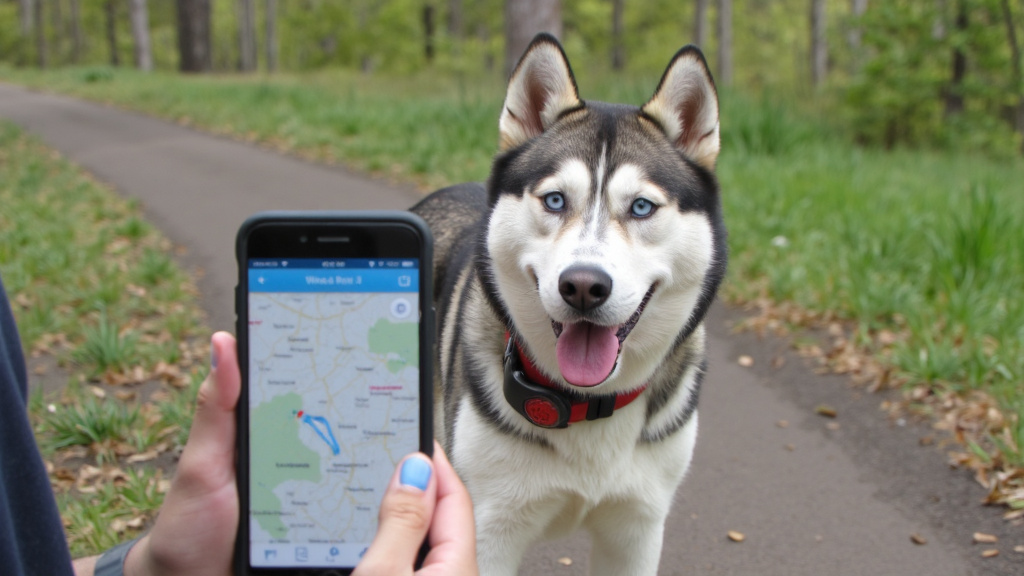
In the first five minutes, your instinct will be to run after your dog – resist it. A frightened dog reads a chasing human as a threat and runs faster and farther, so the calm opening move protects your best chance. If your dog wears a collar with real-time GPS tracking, open the app first: with coverage you get a live position, and without it you get the last point the collar reported – which is still a far better starting circle than a guess.
☐ Stop and breathe; do not chase.
☐ Check your GPS tracker app for a live location, or the last one recorded.
☐ Mark the exact spot and time your dog was last seen.
☐ Grab high-value treats, a leash, and your phone.
The First Hour – Search Close and Mark the Spot
Within the first hour, search outward from the last-seen spot on foot, because most dogs are still very close. Whether to call depends on what kind of leaving this was. A dog who simply wandered off will usually come to a calm, happy voice, so use the tone you would use for dinner rather than a frantic one. A dog who bolted in panic is a different case: they are not processing their name, and a person calling and moving toward them is one more alarming thing in the street. For a panicked dog, go quiet – walk slowly, stop often to listen, and let scent and food do the work instead. Bringing another resident dog along helps in both cases, since a familiar companion can draw a hiding dog out.
☐ Search your home, yard, and immediate surroundings first.
☐ Walk the neighborhood calling gently; pause often to listen.
☐ Bring a calm resident dog if you have one.
☐ Place a worn item of your clothing or your dog’s bed at the last-seen spot.
Hours 1–3 – Canvass the Neighborhood and Lure with Scent
Over the next few hours, widen the search and use scent to pull your dog back toward home. Familiar smells are one of the most reliable lures. You will have left something at the last-seen spot already; now put a second scent marker outside your own door, so both ends of the route smell like home – a blanket, a worn t-shirt, anything that has been against your dog or against you. Food works too, and is worth using deliberately rather than avoiding – a frightened dog in survival mode is looking for exactly that. It will also attract wildlife, so pair any feeding spot with a camera or check it at first light rather than scattering food around the neighborhood. Talk to everyone you pass and ask them to call you with any sighting.
☐ Knock on doors and give neighbors a clear photo and your number.
☐ Leave a second familiar-smelling item outside your own door.
☐ Set one feeding spot near the last-seen location, with a camera on it if you have one.
☐ Ask permission to check garages, sheds, and under decks.
☐ Keep a written log of every sighting, with time and location.
Hours 3–12 – Go Wide: Networks, Shelters, and Flyers
By this stage, broadcast your search across every network at once. Post a clear, recent photo with the last-seen location and your phone number to local lost-pet pages, Nextdoor, and dedicated apps, and file lost reports with every nearby shelter and animal control office. Contact your microchip company to flag your dog as lost and confirm your contact details are current, since most shelters scan every animal that arrives.
☐ Post to Facebook lost-pet groups, Nextdoor, and a lost-pet alert service.
☐ File lost reports with all shelters and animal control within roughly 20 miles.
☐ Call your microchip company and confirm your registration is current.
☐ Print and post simple, bold flyers – around 100 within a half-mile radius.
Hours 12–24 – Sustain, Log Sightings, and Expand the Radius
In the final stretch of the first day, sustain the effort and let confirmed sightings steer your radius. Most dogs are found within the first day, but a calm, skittish, or far-ranging dog may push beyond the initial mile, so expand your search where sightings point and revisit shelters in person rather than by phone. Keep your tracker app open; if your dog wears one, you can track a dog that gets loose in real time whenever they are back in coverage.
☐ Re-canvass at dawn and dusk, when scared dogs move most.
☐ Expand the search radius toward confirmed sightings.
☐ Visit nearby shelters in person and check their intake daily.
☐ Designate someone to stay home in case your dog returns.
How a Lost Dog Thinks: Panic, Survival, and Recovery
Lost dogs move through three predictable mental phases, and matching your tactics to the phase makes your search far more effective. Knowing which phase your dog is in tells you whether to expect frantic running or cautious hiding.
- Panic phase (0–24 hours): running on adrenaline, your dog may bolt and cover real distance, often not responding to their name. Stay calm and avoid chasing.
- Survival phase (1–5 days): your dog goes to ground, hides during daylight, and moves at dawn and dusk to find food and water. Use scent, food, and quiet, patient searching.
- Recovery phase (5+ days): hunger begins to override fear, and your dog grows more social and willing to approach people. Keep flyers and sightings fresh.
“The bit people find hardest to say out loud afterwards is that she looked straight at them and kept going. It feels like being disowned. What’s actually going on is that a dog running like that isn’t taking much in – she’s not hearing her name, and the person shouting it is one more thing moving in a frightening street. It isn’t a verdict on you or on your relationship with her, and it passes. Once she’s calmed down she’ll want to find you. Knowing that beforehand won’t stop it hurting. It might stop you running after her.”
– Charlie Angel Chun Expert Trainer & Consultant (Behavioral Rehabilitation & Society Acclimation)
Where Lost Dogs Go by Breed and Temperament
Where a lost dog heads depends heavily on their breed group and temperament. Use these tendencies to prioritize where you search first.
| Breed group / type | Behavior and where to look |
|---|---|
| Sighthounds (Greyhound, Whippet) | Run far and fast, following movement; check open ground and tall grass well beyond the first mile. |
| Scent hounds (Beagle, Bloodhound) | Travel nose-down following trails, often unresponsive to calls; follow likely scent paths. |
| Herding dogs (Collie, Shepherd) | Seek high vantage points and may try to herd other animals; check hills and open fields. |
| Terriers | Go to ground into small spaces; check culverts, sheds, and industrial areas. |
| Retrievers and friendly dogs | Drawn to people and water; check parks, ponds, and where people gather. |
| Shy or skittish dogs | Hide close and stay silent, or bolt far; search quietly and avoid crowds that spook them. |
High-drive dogs in particular can range surprisingly far; if that is your dog, our guide to managing high-drive breeds covers how to handle that energy safely once they are home.
What NOT to Do When Your Dog Is Missing
Some well-meant instincts actively reduce your chances, so knowing what to avoid is as valuable as knowing what to do. Each mistake below has a calmer opposite that works better.
- Do not chase. Running toward a scared dog makes them flee; instead crouch, turn sideways, and call gently – or walk toward home so they follow.
- Do not call frantically. A panicked voice reads as danger; use the calm, happy tone your dog associates with good things.
- Do not wait to start. Hoping your dog wanders back wastes the most valuable window; begin searching immediately.
- Do not assume theft. The large majority of lost dogs are nearby, not stolen, so search locally first.
- Do not take flyers down too soon. Keep them up and your posts fresh until your dog is truly home.
Already Found Your Dog? Make Sure It Never Happens Again
The best time to prevent the next escape is the moment after this one ends. Once your dog is safely home, turn the relief into a plan, because escapes that go unaddressed tend to repeat. Most start with a known cause and an avoidable gap:
- Diagnose the cause – understanding why dogs escape lets you fix the real trigger.
- Close the gaps – the common escape mistakes like unlatched gates and weak recall are quick to fix.
- Add a boundary that communicates – see how a GPS fence prevents escapes before they happen.
A GPS fence closes the loop between prevention and recovery: it guides your dog back at the boundary, and its built-in tracking means that if your dog ever does get out, you start the next search already knowing where they were. No containment system is a guarantee against a dog at full sprint, but starting the search from a map rather than a guess changes the first hour more than anything else on this page. Shop Halo Collar 5 – $524.
Frequently Asked Questions
Do lost dogs usually come back on their own?
Some dogs find their way home, but you should never rely on it – an immediate, organized search is what recovers the large majority of lost dogs within the first day.
Should you chase a lost dog?
No – chasing makes a frightened dog run faster and farther; instead stay calm, crouch low, and call gently, or walk toward home so your dog follows.
How far do lost dogs travel in 24 hours?
Most lost dogs stay within about 1 to 3 miles of where they went missing during the first 24 hours, and roughly 70 to 80% are found within a mile.
What is the most important thing to do when a dog goes missing?
Act immediately and calmly – mark the last-seen location, check any GPS tracker, and start a close, systematic search rather than waiting or panicking.
My dog’s tracker shows an old location – is it useless?
Far from it. A last-known point still tells you where your dog was and which direction they were heading, which narrows the search from a whole neighborhood to a circle you can walk. Start there, work outward, and keep the app open – the moment your dog passes back through coverage, the map updates.