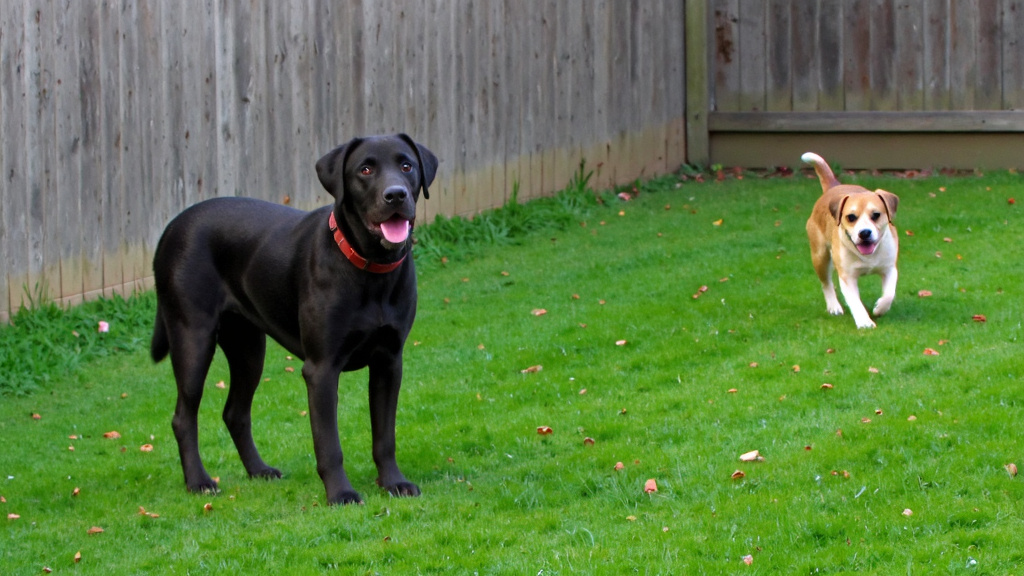
There are four main types of dog fences: physical fences (wood, chain link, vinyl), underground electric fences (buried wire with a receiver collar), GPS satellite fences (virtual boundaries via a smart collar), and wireless radio fences (circular zones from a base transmitter). Each type uses a different technology, costs a different amount, and works best in a different situation. Choosing the right one depends on your property, your budget, your dog’s behavior, and whether you need portability.
A physical fence costs $1,000 to $15,000+ installed and stays at one property. An underground electric fence costs $200 to $2,500 installed and stays at one property. A GPS fence collar costs $400 to $600 and travels with the dog to any location. A wireless radio fence costs $100 to $400 and creates a circular zone around a plug-in transmitter. The right choice is not the most expensive or the most advanced – it is the one that matches your specific needs.
This guide compares all four fence types across the attributes that matter: cost, installation, property requirements, portability, accuracy, training, and long-term value.
What Are the Main Types of Dog Fences?
Dog fences fall into four categories based on how they create and enforce a boundary:
- Physical fences use a visible barrier (wood, metal, vinyl, chain link) to physically block the dog from leaving the property.
- Underground electric fences use a buried wire that transmits a radio signal detected by a receiver collar. The collar delivers a warning tone and optional static correction when the dog approaches the wire.
- GPS satellite fences use satellite positioning to define virtual boundaries stored in a smart collar. The collar delivers graduated feedback (tone, vibration, optional static) when the dog approaches the boundary. No wire, no installation, portable.
- Wireless radio fences use a plug-in transmitter that creates a circular radio signal zone. The receiver collar detects the signal boundary. Simple setup, but limited to circular areas around the transmitter.
How Do Dog Fence Types Compare?
Choosing the right dog fence means balancing cost, installation effort, and containment reliability. Whether you need a permanent physical barrier to keep stray animals out or a portable GPS system for travel, here is a quick side-by-side look at how the four main options compare:
| Feature | Physical Fence | Underground Electric | GPS Fence | Wireless Radio |
| Boundary type | Visible barrier | Buried wire | GPS coordinates | Radio signal zone |
| Installation | Professional (days–weeks) | DIY or pro (1–2 days) | None (app setup) | Plug in transmitter |
| Boundary shape | Any (follows fence line) | Any (follows wire) | Any (draw in app) | Circular only |
| Accuracy | Exact (physical) | ~3–6 ft from wire | <2 ft (Halo) to ~15 ft | ~5–10 ft from edge |
| Portable? | No | No | Yes – any location | Semi (move transmitter) |
| GPS tracking? | No | No | Yes – real-time | No |
| Training required? | No | Yes (2–4 weeks) | Yes (2–4 weeks) | Yes (2–4 weeks) |
| Keeps other animals out? | Yes | No | No | No |
| Subscription? | No | No | Yes ($5–$15/mo) | No |
| Min. property size | Any | Any | ~900 sq ft+ | ~1/4 acre circle |
| Upfront cost | $1,000–$15,000+ | $200–$2,500 | $400–$600 | $100–$400 |
| Best for | Homeowners; predator areas | Custom shapes; permanent homes | Renters; travel; large properties | Small yards; budget |
How Does a Physical Dog Fence Work?
A physical dog fence is a continuous vertical barrier – wood, chain link, vinyl, aluminum, or wrought iron – installed around the property perimeter to physically prevent the dog from leaving.
Physical fences require no training, no collar, and no technology. They work immediately upon installation and provide two-way protection: they keep the dog in AND keep other animals, people, and hazards out. This is the only fence type that prevents wildlife, stray dogs, or intruders from entering the yard – a critical advantage in areas with predators (coyotes, bears, mountain lions).
Cost: $10 to $35 per linear foot installed. A quarter-acre lot requires approximately 400 linear feet of fencing, totaling $4,000 to $14,000. Chain link is cheapest ($10–$15/ft); wood is mid-range ($15–$25/ft); vinyl and wrought iron are highest ($25–$35/ft). Ongoing costs include maintenance, staining/painting (wood), and occasional repairs.
Limitations: Physical fences are permanent, expensive, require permits in many municipalities, may conflict with HOA regulations, and can be defeated by dogs that jump, climb, or dig. They do not travel with the dog – you cannot take a physical fence to a campsite or a relative’s property. For containment without a physical fence, see keep dog in yard without fence.
How Does an Underground Electric Dog Fence Work?
An underground electric fence uses a wire buried 2 to 6 inches below the surface around the property perimeter, connected to a transmitter inside the home. The wire emits a radio signal that a receiver collar detects as the dog approaches. When the dog enters the signal zone, the collar delivers a warning tone. If the dog continues, the collar delivers a static correction at a preset level.
Underground systems allow custom boundary shapes that follow property lines, driveways, and landscaping features. The wire can be routed around gardens, pools, and structures to create keep-out zones. Because the signal comes from a physical wire, the boundary is consistent and not subject to GPS drift or satellite signal interference.
Popular brands include PetSafe (YardMax, Stay + Play), DogWatch, and Pet Stop. Professional installation ranges from $1,000 to $2,500 depending on yard size and terrain. DIY kits start at $200 to $500. No subscription fees. Receiver collars are lightweight (1 to 3 ounces) and fit dogs as small as 5 pounds.
Limitations: Underground fences require installation (digging or trenching), are permanent to one property, cannot be taken to other locations, and do not provide GPS tracking. The wire can be damaged by landscaping, construction, or tree roots. The fence does not keep other animals out. Highly motivated dogs can run through the correction zone, especially if the stimulation level is not calibrated correctly.
How Does a GPS Dog Fence Work?
A GPS dog fence uses satellite positioning to define a virtual boundary stored in a smart collar. The collar calculates the dog’s position relative to the boundary and delivers graduated feedback – warning tone, vibration, optional static – when the dog approaches the boundary line.
GPS fences require no wire, no installation, and no permanent modification to the property. Boundaries are drawn in a smartphone app and downloaded to the collar. The same collar that works at home works at a campsite, a vacation rental, or a friend’s unfenced yard. GPS fences also provide real-time location tracking, activity monitoring, and – in the case of the Halo Collar – a structured training program.
The Halo Collar 5 uses dual-frequency GPS with 6 satellite constellations (151 satellites), achieving <2-foot boundary accuracy. Position updates 20 times per second. Patented Direction-Based Feedback responds to the dog’s trajectory, not just position. The collar costs $524 with plans starting from $9.99 per month.
Other GPS fence brands include SpotOn (~$600, ~15 ft accuracy) and PetSafe Guardian 2.0 (~$350, newer model with improved accuracy).
Limitations: GPS fences require a subscription for cellular connectivity and app features. Battery life is 20 to 70 hours (shorter than underground systems because the collar runs GPS, cellular, and containment continuously). Minimum property size is approximately 900 square feet (Halo). Very dense tree canopy or deep urban canyons can reduce GPS accuracy. The fence does not keep other animals out. For a deeper look at how GPS fencing and geofencing alerts differ, see geofencing for pets.
How Does a Wireless Radio Dog Fence Work?
A wireless radio fence uses a plug-in transmitter that emits a radio signal in a circular zone around the unit. A receiver collar detects the signal boundary and delivers a warning tone and optional static correction when the dog approaches the edge of the circle.
The most common wireless radio fence is the PetSafe Stay + Play, which creates a circular boundary with a radius of up to 105 feet (covering approximately 3/4 acre). Setup takes minutes – plug in the transmitter, put the collar on the dog, and the boundary is active. No installation, no wire, no app.
Limitations: Wireless radio fences create only circular boundaries. If your yard is rectangular, L-shaped, or irregular, the circle will either leave portions unprotected or extend into areas where you don’t want containment (the street, a neighbor’s yard). The signal can be disrupted by metal structures, large appliances, and terrain changes. There is no GPS tracking, no activity monitoring, and no custom boundary shapes. Range is limited to the transmitter’s power – large properties require multiple transmitters or a different system.
How Much Does Each Dog Fence Type Cost?
Total cost of ownership depends on upfront price, installation, and ongoing fees. The table below shows realistic 3-year costs for each fence type on a standard quarter-acre suburban lot.
| Cost Category | Physical Fence | Underground Electric | GPS Fence (Halo) | Wireless Radio |
| Device / materials | $4,000–$14,000 | $200–$2,500 | $524 | $100–$400 |
| Installation | Included above | $0 (DIY) to $1,000+ | $0 (app setup) | $0 (plug in) |
| Monthly subscription | $0 | $0 | From $9.99/mo | $0 |
| Maintenance (3 yr) | $500–$2,000 | $50–$200 | $0 | $20–$50 |
| 3-year total | $4,500–$16,000 | $250–$3,700 | ~$884 | $120–$450 |
GPS fences fall in the mid-range for total cost but provide the highest feature density: containment + tracking + activity monitoring + training program + portability. The Halo Collar’s 3-year total of approximately $884 includes everything – no additional devices, no installation fees, and no maintenance costs.
Which Dog Fence Type Is Right for Your Property?
Match the fence type to your situation:
- You own your home, have predator concerns, and want keep-out protection: Physical fence. It’s the only option that prevents other animals from entering the yard.
- You own your home, want a hidden boundary for an irregularly shaped yard: Underground electric fence. Custom boundary shapes, no visible barrier, no subscription.
- You rent, travel with your dog, or need containment at multiple locations: GPS fence. Portable, no installation, works anywhere with satellite coverage.
- You have a small, open yard and want the simplest, cheapest option: Wireless radio fence. Plug in, put on the collar, done.
- You want containment + GPS tracking + activity monitoring in one device: GPS fence collar. The Halo Collar combines all three in a single collar with a built-in training program. For a broader look at how virtual GPS fencing works, visit the feature page.
- You have a large property (2+ acres): GPS fence (unlimited boundary size at the same collar cost) or underground electric fence (wire cost scales with perimeter length).
- You need a fence for a puppy: Physical fence for immediate safety, then introduce a GPS fence collar at 5 to 6 months once the puppy meets weight and maturity requirements.
Quote: “The mistake I see most often isn’t buying the wrong fence—it’s buying a fence for the wrong reason. An owner buys a GPS collar because it’s cheaper than wood fencing, but their actual problem is coyotes in the yard at dusk. A GPS fence keeps the dog in. It doesn’t keep the coyote out. Another owner spends $12,000 on cedar privacy panels for a 5-acre property when the dog only uses 0.25 acres and the real need was portability for weekend camping trips. The first question isn’t ‘Which fence is best?’ It’s ‘What exactly am I protecting against?’—and the answer determines the category before you ever look at a price tag. “
Dog Fence FAQs
What is the best dog fence for a large property?
GPS fence collars provide the best value for large properties because the boundary size does not affect the collar price. A GPS fence covers 1 acre or 100 acres at the same device cost ($524 for the Halo Collar). Physical fencing on a 2-acre property costs $12,000 to $42,000. Underground wire costs scale with perimeter length. For owners of large, rural, or irregularly shaped properties, GPS fencing eliminates the cost-per-foot problem entirely.
Can you use a GPS fence without a subscription?
Most GPS fence collars require a subscription to power the GPS, cellular data transmission, and app features that make the fence functional. Without the subscription, the collar cannot communicate position data or send alerts to your phone. Some GPS fence brands (DogWatch SkyShepherd, Dogtra Pathfinder 2) offer basic containment without a subscription, but they sacrifice real-time tracking, app-based fence management, and cloud features.
Are electric dog fences safe?
Yes, when used correctly. Both underground electric fences and GPS fence collars deliver static stimulation at levels comparable to a TENS unit used in human physical therapy – uncomfortable but not painful or harmful. Safety depends on correct collar fit (two fingers between contact points and skin), appropriate stimulation level (the lowest level that produces a behavioral response), and proper training (2 to 4 weeks of graduated introduction). Modern GPS fence collars like the Halo Collar offer tone-only and vibration-only modes that require no static stimulation at all.
What is the cheapest dog fence option?
Wireless radio fences are the cheapest option at $100 to $400 with no subscription. DIY underground fence kits start at $200 to $500. GPS fence collars start at $350 to $600 plus a monthly subscription. Physical fences are the most expensive at $4,000 to $15,000+ installed. The cheapest option is not always the best value – a $150 wireless fence that only creates a circular boundary may not solve the problem, while a $524 GPS fence that provides containment, tracking, and portability may prevent a single emergency vet visit that costs more than the collar.
Do GPS fences work in rural areas?
Yes. GPS fences depend on satellite signal (available virtually everywhere with open sky) and cellular coverage (available to approximately 99% of the US population). In very remote areas without cellular coverage, the GPS fence boundary still works – fence data is stored in the collar and containment continues – but real-time tracking and phone alerts are unavailable until cellular service resumes. The Halo Collar uses all-carrier LTE, which provides the broadest rural coverage of any GPS fence collar.