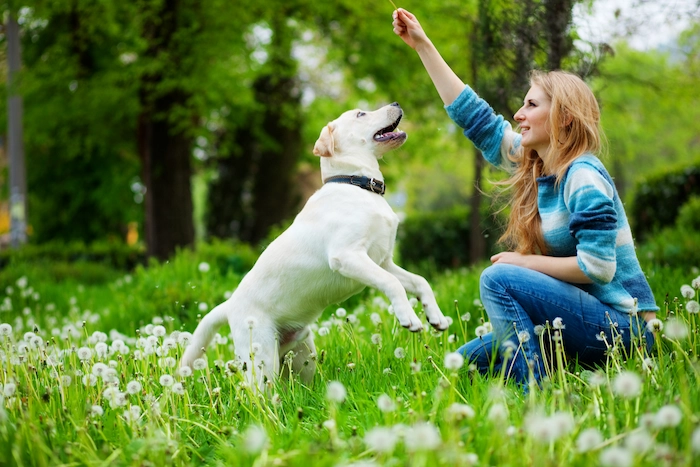
Cesar Millan, a self-taught dog-training expert who’s written several best-selling books, believes it’s essential to start puppy training early. Starting early gives you the distinct advantage of forming behaviors rather than fixing them. Plus, training puppies as early as possible allows you to build a strong bond and establish yourself as the pack leader from the beginning.
If you’re considering getting a puppy (or have gotten one recently), having the best training methods in your arsenal from day one is critical. Below, we’ll share Cesar Millan’s training techniques so you can train your puppy like a pro.
Wireless GPS Dog Fences
As much as you think of your dog as part of the family, the way it naturally views you is a little different. Dogs are instinctually pack animals and rely on their pack leader to tell them what they’re supposed to do. Essentially, your puppy is designed to be a follower and needs you to be a leader.
What does it take to be a pack leader? First, you need to have calm, assertive energy at all times. You must be strong, stable, and consistent in your interactions with your new puppy. By demonstrating these characteristics, you’ll feed into how a dog’s mind naturally works. This also helps build trust and communication with your puppy because it knows what to expect at all times.
Of course, affection is also essential to your puppy’s psychology and overall well-being. However, the mistake many new dog owners make is placing affection ahead of obedience and exercise when the latter two need to come first.
Preparing for Puppy Training
Before you pick your new puppy up, you’ll need to set your home up for it. Remember that puppies are similar to human babies in that they get into things that could hurt them. Create a safe space by locking up anything poisonous, removing any sharp or dangerous objects, and setting up an area for the puppy. Its area should include toys, a bed, and a crate (if you plan on crate-training your dog).
You’ll also want to ensure you’ve got the right training tools and accessories ahead of time. Most importantly, you’ll want to find an excellent collar and leash. We suggest the Halo Collar since it not only identifies your dog and allows you to walk it but also aids in their training thanks to the built-in wireless GPS fence and audible beeping capabilities.
Another critical step in preparing for a puppy coming home is establishing a consistent routine and schedule you can stick to. Schedule realistic times that you’ll feed, train, exercise, and crate your puppy. This lets it know what to expect from day one.
How to Potty Train a Puppy
Before you dive into more advanced skills, your puppy needs a simple, clear plan for where and when to go to the bathroom. Potty training is one of the first ways you show leadership: you control the routine, the timing, and the access to space, so your puppy doesn’t have to guess.
- Use a consistent potty schedule
Puppies thrive on repetition. Take your puppy to the same potty spot:
- First thing in the morning
- After meals
- After naps and play sessions
- Before bed
A simple rule of thumb: many puppies can hold their bladder for about their age in months plus one hour (for example, a 3-month-old might need a break every 3–4 hours). Use the same cue each time, like “go potty,” and stay calm and quiet while they sniff and choose a spot.
- Reward the right behavior in the right place
The moment your puppy finishes going in the correct spot, mark it with calm praise and a small reward. Timing matters—your puppy needs to connect going outside with good things happening. Scolding after an accident indoors only confuses them; instead, quietly clean up and focus on getting them out a little sooner next time.
- Use crate training to support potty training
Crate training is one of the most powerful tools you can use for potty training, because most dogs naturally avoid going where they sleep. A balanced routine of:
potty break → play or short walk → quiet time in the crate
helps your puppy learn to settle between outings and makes accidents less likely. At night, a crate near your bed makes it easier to hear when your puppy truly needs a break and to guide them outside quickly.
Internal link suggestion: Link a phrase like “crate training tips for puppies” or “our crate training guide” to your crate article.
- Keep night-time trips calm and business-only
For the first few weeks, your puppy may need one or more potty breaks during the night. Set an alarm based on their age instead of waiting for them to cry. When you take them out, keep it boring: no play, no long cuddles—out, potty, praise, back to bed. This teaches that night-time is for sleeping, not starting the day early.
- Stay patient through the normal setbacks
Even with a great routine, accidents will happen. From Cesar Millan’s perspective, your job is to stay calm and consistent: same schedule, same potty spot, same rules every day. When your energy is stable and the routine is predictable, your puppy relaxes and learns much faster.
Over time, you can connect this early structure to more freedom—using tools like Halo’s GPS Wireless Dog Fence once your puppy is old enough—so the rules about where to go and where to play stay clear both inside and outside your home.
Cesar Millan’s Five Key Puppy Training Techniques
Ready to begin your dog’s formal training? Use these five key puppy training techniques, according to Cesar Millan, to get started on the right foot.
Technique 1: Establishing Rules, Boundaries, and Limitations
Your dog will thrive on clear rules, boundaries, and limitations. It can’t be stressed enough that your dog needs to know what’s expected from it. The best way to do this is to use positive reinforcement and stick religiously to the same schedule so your dog learns its routine. Initially, you can use treats to reward positive behavior. However, you should eventually wean your pup from treats as it masters its skills.
Technique 2: Mastering the Walk
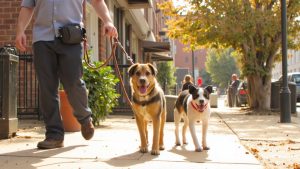
Mastering the walk is important for two reasons: It expands your dog’s energy and it can help establish you as the pack leader. You should be teaching your dog how to walk on a leash from the day it comes home and consistently take it for walks at the same time every day without fail. The length of walk needed to expend your dog’s energy varies based on breed and personality.
Train your dog to walk behind you to establish yourself as the pack leader. This shows you’re in complete control of the situation instead of the other way around. Additionally, walk in and out of the door first.
Technique 3: Socialization and Exposure
An aggressive dog is one that hasn’t been properly socialized or exposed to a range of situations. Socialization and exposure are crucial elements of your puppy’s training because they teach it how to behave in various environments.
Ideas for socializing and exposing your puppy include:
- Regular trips to the dog park
- Bringing your dog with you in your vehicle or to outdoor dog-friendly places
- Having people in your home early on
- Arranging for dog play dates
- Running the vacuum and other appliances that make a lot of noise
- Taking your dog to the beach
Any scenario that exposes your dog to new sounds, smells, people, or animals is helpful. But remember to do this slowly so your dog feels confident instead of fearful in new situations.
Technique 4: Basic Obedience Training
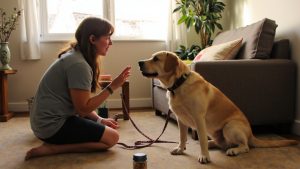
Start basic obedience training right away. Not only does this help establish you as the pack leader but it sets the foundation for all future training. Essential commands include “sit,” “stay,” “come” and “leave it.” Use positive reinforcement to drive this training home, and be consistent in how you teach.
Technique 5: Preventing and Correcting Common Behavioral Issues
Beginning to teach your dogs early should prevent common behavioral issues. If your dogs have begun displaying unwanted behaviors such as chewing, barking, or jumping, correcting them is done the same way as preventing them.
All problem behaviors can be addressed through consistency, exercise, and leadership. The most important step here is exercise since many common behavior issues result from boredom or having too much pent-up energy. Use positive reinforcement to show your dog what good behavior is.
Dealing With Setbacks in Puppy Training
If your puppy has been behaving how you want it to but suddenly starts chewing or pulling on the leash, you may naturally feel frustrated or think something is wrong. But setbacks are a normal part of puppy development. The key is to remain patient, consistent, and committed to your puppy’s progress.
In most cases, setbacks are minor and correct themselves reasonably quickly. However, if your puppy doesn’t begin improving, you may want to seek professional help for training issues.
The Importance of Continuous Training and Bonding
Positive reinforcement throughout your dog’s life is critical since ongoing training continues to strengthen the bond between the two of you. Ongoing training can keep your dog well-exercised, socialized, safe, and mentally stimulated.
But your dog isn’t the only one who benefits from ongoing training. It also helps you remain in your position as pack leader, gives you the exercise you need to stay healthy, and can eliminate the stress that comes with behavioral issues.
Get Started With Puppy Training
Cesar Millan’s puppy training methods strongly emphasize consistency, basic commands, compassion, bonding, and leadership. By applying these techniques from day one, you can reap the benefits of a happy, well-trained puppy.