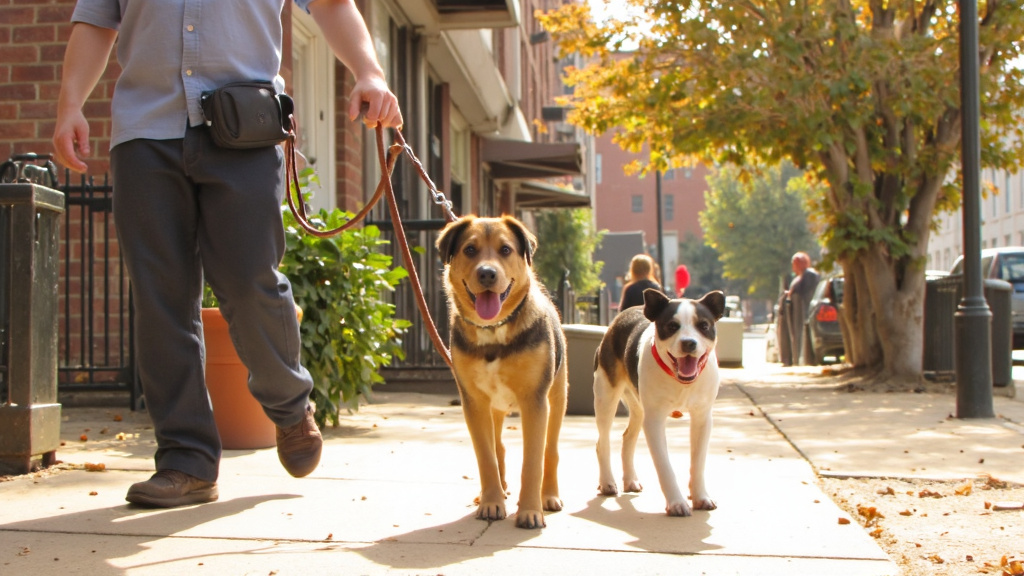
Ever watch a dog walker effortlessly manage multiple dogs while yours pulls you down the street? The difference often lies not just in skill, but in having the right essential dog training gear.
Modern dog training has evolved far beyond basic leashes and treats, now incorporating everything from precision marking tools to advanced smart collar technology. This guide explores the full spectrum of training equipment available today, helping you understand which tools can transform your training sessions and strengthen the bond with your dog.
Foundational Tools: The Leash and Collar
Building a successful training routine starts with the basics. These leash and walking tools form the physical connection between you and your dog, providing the structure necessary for learning.
The Standard Fixed-Length Leash
A sturdy, 4-to-6-foot leash is the gold standard for teaching loose-leash manners. Unlike retractable leashes, which maintain constant tension and teach a dog that pulling extends their range, a fixed leash provides clear tactile feedback. Leather or Biothane materials are preferred by trainers for their grip and durability, ensuring you remain in control even if your dog lunges.
The Long Line for Distance Work
To bridge the gap between on-leash control and off-leash freedom, a long line (15 to 30 feet) is indispensable. This tool allows you to practice recall in open spaces without the risk of your dog bolting. It gives the dog the illusion of freedom while maintaining a safety net, allowing you to safely proof commands like “Come” in distracting environments.
Flat Collars vs. Harnesses
A flat collar is essential for holding ID tags, but it may not be the best tool for a strong puller. For training, a front-clip harness is often superior. By attaching the leash at the chest, the harness uses the dog’s forward momentum to turn them back toward you when they pull, mechanically discouraging the behavior without causing pain or choking.
Motivation and Timing: Treats and Markers

Once you have physical control, you need a way to communicate and motivate. Positive reinforcement relies on precise timing and high-value rewards.
High-Value Rewards
In a low-distraction environment, dry kibble might suffice. However, when competing with squirrels or other dogs, you need “high-value” treats. Freeze-dried liver, small pieces of cheese, or boiled chicken serve as powerful currency. The key is to use pea-sized amounts to keep the dog engaged without overfeeding.
The Treat Pouch
Fumbling with a plastic bag destroys your timing. A dedicated dog treat pouch that clips to your belt allows for immediate delivery of the reward. This speed is critical; if you reward three seconds late, the dog may not understand which action they are being paid for.
The Clicker or Marker Word
To communicate effectively, you need a “bridge” signal that tells the dog, “That exact moment was correct.” A clicker is a small mechanical device that makes a distinct sound. Because the sound is unique and consistent, it cuts through environmental noise better than a human voice. If you prefer not to carry a device, charging a verbal marker like “Yes!” works on the same principle.
Management Tools: The “Place” Board
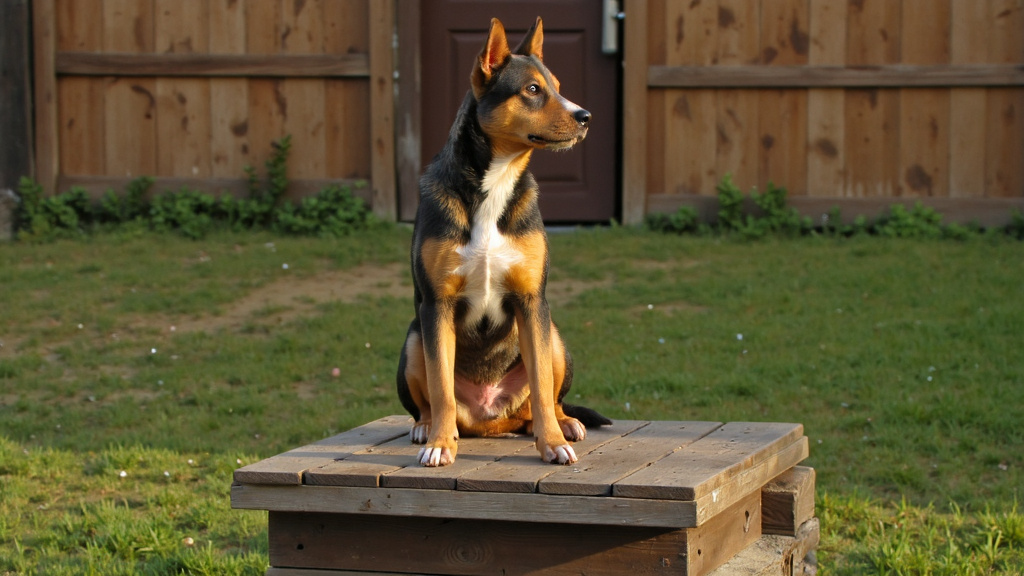
A frequently overlooked but vital training tool is the “Place” board or raised cot. This defines a physical boundary for the dog within the home.
By teaching a dog to go to their “Place” and stay there until released, you build impulse control. The raised edges of a cot help the dog clearly understand the boundary, making it easier to teach them to settle when the doorbell rings or during family dinner. It acts as a portable “off switch” for high-energy dogs.
Advanced Technology: Smart Collars and Remote Training
For owners seeking off-leash reliability and safety that extends beyond physical fences, technology offers powerful solutions. While traditional remote training collars (e-collars) allow for long-distance communication, modern smart collars have evolved to integrate training, safety, and health monitoring.
The Halo Collar Advantage
The Halo Collar represents the next generation of training gear. It moves beyond simple correction by integrating Cesar Millan’s training methodology directly into the device. Unlike a standard e-collar, Halo uses GPS fence technology to create virtual boundaries anywhere—at home, the beach, or a campsite.
Customizable Feedback
Smart collars offer a hierarchy of feedback. You can configure the device to use sounds, vibrations, or static prompts depending on your dog’s sensitivity. This ensures the correction is used as a communication tool—a tap on the shoulder—rather than a punishment. The goal is to gain the dog’s attention so they can make the right decision.
| Tool Category | Best For | Key Benefit |
|---|---|---|
| Long Line | Recall Training | Safe freedom to practice “Come” from a distance. |
| Clicker | Precision Learning | Marks exact behaviors instantly for faster learning. |
| Place Cot | Impulse Control | Provides a clear physical boundary for settling down. |
| Halo Collar | Safety & Off-Leash | GPS boundaries and customizable feedback anywhere. |
Choosing the Right Tools for Your Dog
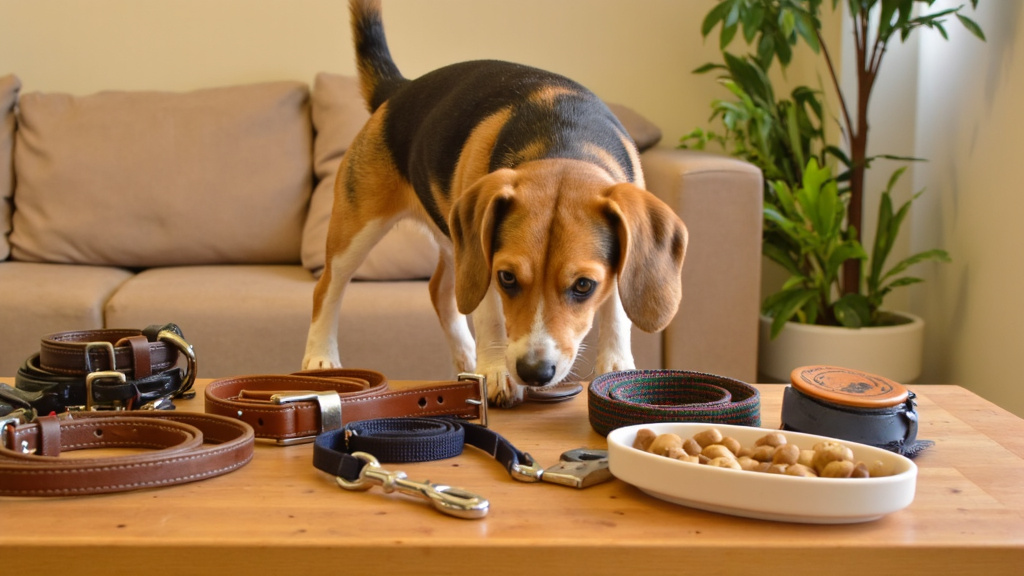
Not every tool is right for every dog. Selection should be based on temperament, age, and specific behavioral goals.
Temperament and Sensitivity
A bold, high-drive working dog may engage happily with a tug toy as a reward, while a timid rescue might shut down if hearing a loud clicker. Puppies under six months generally require softer tools like flat collars and plenty of food rewards. Conversely, an adult dog with a high prey drive may require the reliable communication of a smart collar to stay safe off-leash.
Training Goals
If your goal is simple household manners, a clicker and a place board may be all you need. However, if you are an active owner who wants to hike with your dog off-leash, investing in a Halo Collar provides the necessary safety net. Indoors, Halo Beacons can also support training by creating clear “off-limits” zones around areas like trash cans, furniture, or doorways, reinforcing boundaries consistently even when you’re not actively training. Always prioritize humane training principles; the tool should clarify expectations for the dog, not intimidate them.
Conclusion
The right dog training equipment transforms a chaotic struggle into a productive partnership. By starting with foundational tools like a proper leash and high-value treats, and progressing to advanced safety technology like the Halo Collar, you equip yourself to handle any situation. Remember, the tool is only as good as the handler; consistency and patience remain the most important elements in your training toolkit.
Ready to explore more proven strategies and expert guidance for your training journey? Visit our dog training resources for comprehensive tips on everything from basic obedience to advanced off-leash reliability.