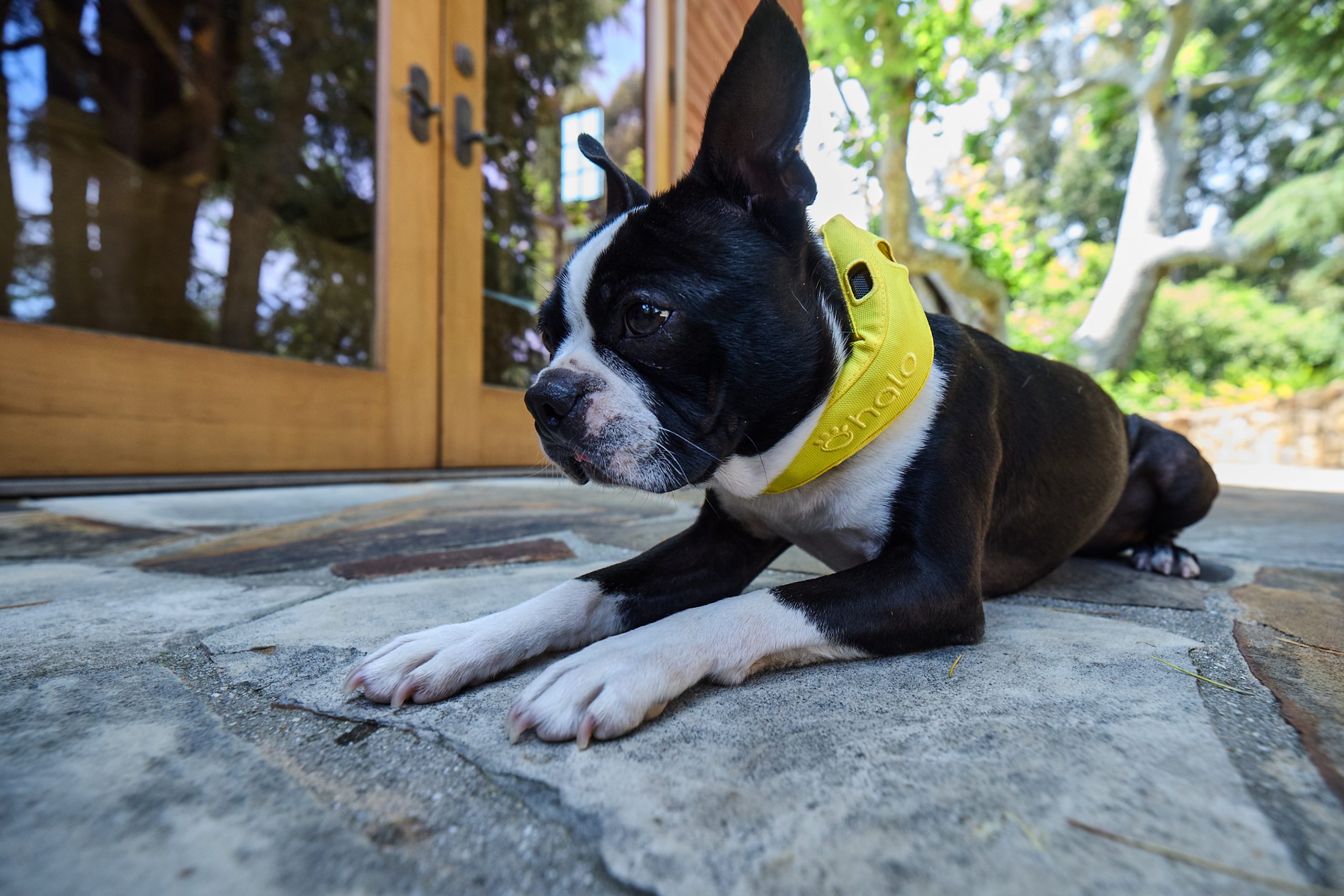
What’s your biggest fear as a dog owner? For many, it’s the thought of their beloved friend getting lost. While microchips remain essential for recovery, GPS dog trackers provide real-time peace of mind that traditional methods simply cannot match.
Today’s market offers everything from simple locators to sophisticated smart collars that combine GPS tracking with virtual fences, activity monitoring, and training capabilities. In this article, you will see that Halo Collar stands out as the most accurate GPS tracker and complete containment solution available. It delivers real-time location precision with customizable virtual boundaries, robust activity insights, and proactive training features all in one system. Halo’s advanced Precision GPS technology ensures highly reliable positioning that updates continuously, so you always know exactly where your dog is. Additionally, the app lets you create, edit, and manage safe zones anywhere without installation or wiring. Beyond tracking, Halo actively teaches dogs to respect boundaries and supports long-term behavioral training, making it more than just a tracker, but rather a comprehensive safety and training system for your dog.
What Are the Core Features of a Reliable GPS Dog Tracker?

Three fundamental features separate reliable GPS dog trackers from basic models that may leave you searching when it matters most. These core elements determine whether a device will successfully locate your dog in an emergency or become a costly disappointment.
GPS Accuracy and Satellite GNSS Technology
The foundation of any dependable tracker lies in its ability to pinpoint your dog’s exact location. Advanced systems utilize satellite GNSS technology, which accesses multiple satellite networks beyond traditional GPS. This multi-network approach combines signals from GPS, GLONASS, Galileo, and BeiDou satellites for superior accuracy.
The Halo Collar, for example, uses advanced GNSS positioning to maintain reliable location data across varied terrain, helping ensure consistent tracking whether your dog is in open fields, wooded areas, or suburban neighborhoods.
Advances in GNSS technology allow modern systems to achieve positional accuracy within a few feet, with some applications reaching up to approximately 15 feet. By leveraging both L1 and L5 bands, dual-frequency systems improve performance in complex environments through better suppression of signal reflections from surrounding structures. This level of precision is especially important for wireless fence boundaries, where small location errors can lead to confusion or inconsistent feedback.
Update Rate: Why Speed Matters
One of the most overlooked specifications is how frequently a tracker calculates your dog’s position. Basic trackers may update once per second (1 Hz), while advanced systems, like the Halo Collar, can check position up to 20 times per second (20 Hz).
Faster update rates help keep reported positions aligned with a dog’s true location, which is essential for real-time tracking and reliable boundary enforcement. At sprint speeds of 20–30 feet per second, a dog can travel a substantial distance between 1 Hz updates, leading to missed movement.
Battery and Performance: How Tracking Frequency Impacts Safety
Battery life should align with your lifestyle, but it’s important to remember that continuous awareness of your dog’s location and safety depends on how actively a tracker monitors movement. Some trackers conserve battery life by aggressively putting the GPS chip to sleep when no movement is detected. This wake-up delay can last up to 30 seconds, during which a dog can cover significant ground, potentially crossing boundaries or entering unsafe areas before the system reacts.
Alternatively, the Halo Collar does not enter any type of GPS power-saving or sleep mode. Instead, it operates with Always-On GPS to maintain continuous location awareness and immediate responsiveness. This approach prioritizes safety and boundary reliability over extended idle battery life. Even with this Always-On tracking, Halo provides up to 48 hours of battery life and fully recharges in approximately one hour.
Training & Behavior: How Smart Collars Communicate
When evaluating an all-in-one GPS dog tracker, training capabilities should be considered alongside location accuracy and battery performance. A well-designed system does more than enforce boundaries; it helps dogs understand them. The most effective smart collars use clear, predictable feedback that allows dogs to connect their actions with outcomes, rather than relying on abrupt or confusing corrections.
Best-in-class systems pair precise tracking with intelligent motion detection, so feedback is delivered only when a dog is moving toward a boundary and stops immediately when they turn back towards safety. This approach is embodied by Halo Collar, which integrates directional awareness with step-by-step, in-app training to ensure dogs are properly conditioned before being left alone with a fence. This communication-based design supports learning through repetition and consistency, helping dogs respect boundaries confidently across different environments.
Activity & Health Tracking: Insight Beyond Steps
Activity tracking is a common feature among GPS dog trackers, but its usefulness depends on how the data is collected and interpreted. Continuous tracking provides a more accurate picture of daily behavior, revealing patterns in movement, rest, and engagement that can be missed with intermittent updates.
Advanced all-in-one systems integrate activity data with location and behavior insights to show not just how active a dog is, but how they interact with their environment. Halo Collar takes this integrated approach by using AlwaysOn™ GPS to capture consistent movement data indoors and outdoors, helping owners better understand exercise habits, energy levels, and training progress over time.
Durability and Water Resistance
Dogs don’t live sedentary lives, and their trackers must be built to withstand daily activity and exposure to the elements. When evaluating water resistance, look for devices with an IP rating that indicates protection against both dust and water immersion, as this helps ensure reliability during swimming, rain, and outdoor play. Durable construction is equally important, as a tracker should hold up to rain and water, rough play, and continuous wear over time.
Halo Collar meets these durability standards with an IP67 rating, protecting against dust and temporary water immersion while supporting everyday use in active environments.
Does Size Matter? Finding the Right Fit for Your Dog
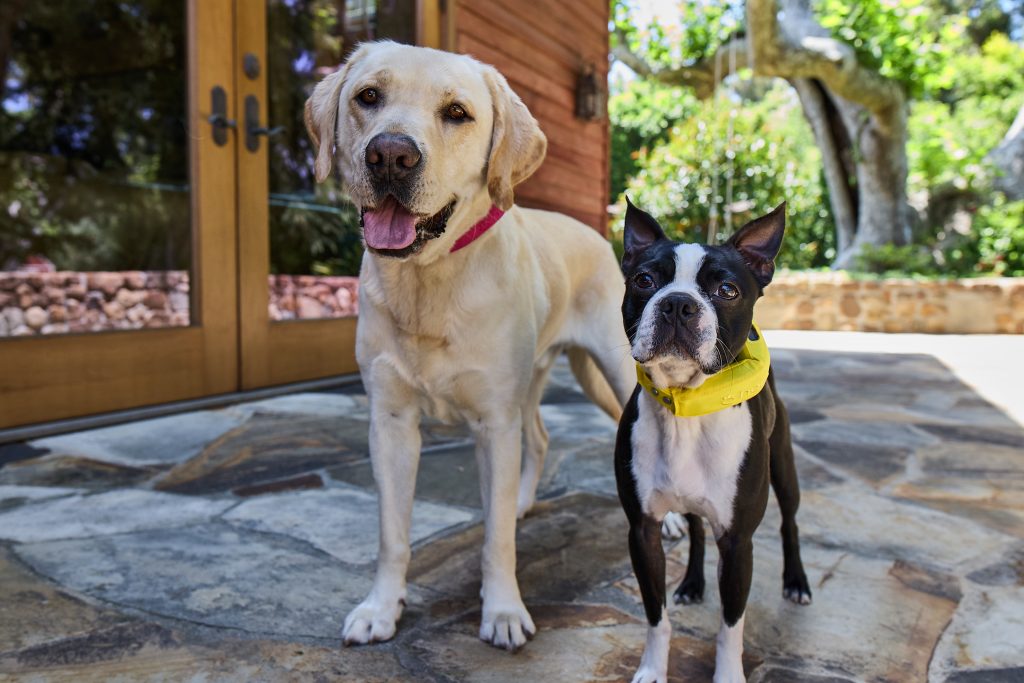
While technology is crucial, the physical design of a GPS tracker is a key factor in whether a dog can comfortably wear it every day.
Weight and Dimensions
Comfort is influenced not just by size, but by how the device is balanced and supported on the neck during movement. When evaluating a tracker, consider its overall weight relative to your dog’s size. Ideally, the collar and device together should not exceed 4% to 5% of the dog’s body weight. Designs that sit securely and distribute weight evenly around the neck help prevent excessive movement or shifting during activity.
Contact Points and Strap Materials
For smart collars that include training features, such as the Halo Collar, proper fit is especially important. Interchangeable Contact Tips can help accommodate different coat lengths, and points should rest against the skin without causing pressure. Strap materials should be durable yet flexible, with options like Biothane offering comfort, odor resistance, and easy cleaning for everyday outdoor use.
How Does a Pet Tracker with No Subscription Compare to Subscription Models?
The fundamental difference between subscription and non-subscription pet trackers lies in how they transmit location data. Subscription-based models use cellular networks to send real-time location updates directly to your smartphone, similar to how your phone connects to cell towers.
Some GPS trackers rely heavily on nearby smartphones or companion devices to relay location data. When a dog moves beyond the effective communication range, location updates may only occur if another compatible device happens to pass nearby. This network-dependent approach can work reasonably well in dense urban areas but becomes unreliable in rural or low-traffic environments.
Conversely, subscription models deliver consistent performance regardless of location, making them suitable for active dogs or owners who venture into remote areas. The monthly subscription supports ongoing cellular connectivity while also delivering software updates that improve accuracy and introduce new features over time.
LTE, 5G, and Coverage: Understanding Connectivity
Like a cellphone, subscription-based trackers rely on cellular connectivity to function. Therefore, the reliability of the tracker is directly tied to the strength of the cellular network it utilizes.
Checking Network Compatibility
Before purchasing a tracker, investigate which cellular provider the device uses. Some trackers, like Halo Collar, are multi-network, allowing them to connect to whichever major provider (AT&T, Verizon, or T-Mobile) offers the best signal. This is a massive advantage if you live in an area with spotty coverage or enjoy hiking in rural locations. If a tracker is locked to a single carrier that has poor service in your neighborhood, the most advanced GPS features in the world won’t be able to send the location data to your phone.
The Role of Wi-Fi Offloading
The best trackers use your home Wi-Fi as a safety net and battery saver. When the device detects your home network, it knows the dog is in the “safe zone” and stops searching for GPS satellites or cellular towers, which can drain power. The moment the dog leaves Wi-Fi range, the cellular tracking should kick in instantly. Understanding this handoff is key to evaluating a tracker’s real-world reliability.
Evaluating Real-World Performance
When comparing GPS dog trackers, consider asking manufacturers about:
- Location Update rate: How many times per second does the device calculate position? (1 Hz vs. higher frequency updates). How does this affect tracking during fast movement?
- GPS power behavior: Does the tracker use always-on GPS for continuous awareness, or does it enter sleep or low-power modes during inactivity?
- Satellite coverage and frequency: Which satellite networks are supported, and does the system use single-frequency or dual-frequency GNSS to improve accuracy in challenging environments?
- Signal stability and drift prevention: How does the device maintain accurate positioning near buildings, windows, tree cover, or other sources of signal interference?
- Indoor-to-outdoor recovery: How quickly can the tracker correct its position when a dog moves from indoors to outdoors or between environments?
- Training integration: Does the system guide conditioning, use clear warning cues, and integrate training directly into the app so dogs learn boundaries through consistent, understandable feedback?
- Durability in daily use: Is the device built to withstand water exposure, rough play, and constant wear without compromising performance?
These specifications directly impact whether the device will work reliably in the scenarios your dog encounters every day.
Finding the Right Solution for Your Dog

When choosing between basic tracking options and sophisticated smart collar systems, look for solutions that combine precision GPS tracking with integrated virtual fencing and training. This all-in-one approach allows you to create safe boundaries anywhere while maintaining continuous, real-time location awareness, giving your dog the freedom to explore within clear limits you control. Halo Collar stands out as the best choice, uniting industry-leading GPS accuracy, portable wireless fences, and intuitive training features in a single, reliable system. It not only keeps your dog safe but also supports lasting behavioral improvements, making it the ultimate combination of safety, freedom, and training.
For more expert guidance on protecting your dog in various situations and environments, explore dog safety resources and consult with professionals who can help you evaluate the technical specifications that matter most for your specific needs.