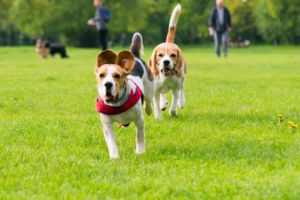
Halo Collar stands at the center of a transformation projected a decade ago: the shift from buried wires and reactive training to real-time, GPS-enabled containment systems that predict, adapt, and actively coach pets toward safer behaviors.
A GPS dog fence (virtual fence) uses satellite location to create a boundary you draw in an app. When a dog approaches the boundary, the collar can deliver on-device cues (tone/vibration) to guide them back. Newer “GPS-first” systems layer in adaptive training and behavioral insights to reduce escapes over time.
When Invisible Became Intelligent: A Moment of Reckoning
Underground wires creating magical boundaries that could contain pets without physical barriers seemed miraculous. For decades, the formula remained unchanged: bury wires, fit shock collars, and train pets to respect static boundaries.
We’re now on the cusp of what we call the GPS-First Pet Containment revolution; technology that doesn’t just contain, but learns, adapts, and actively trains pets through personalized safety coaching that evolves with every interaction.
What Is the GPS-First Pet Containment Revolution?
GPS-First Pet Containment represents the evolution from static boundary systems to dynamic, learning-enabled platforms. They combine precise positioning with behavioral AI to create adaptive safety zones that grow smarter over time.
Where traditional systems eliminated the need for physical fences through the replacement of underground buried wires, GPS-first platforms eliminate the guesswork between pet behavior and safety outcomes. They map not just where your pet is, but where they’re likely to go based on patterns, preferences, and environmental triggers. The system becomes a personal safety coach that learns alongside each animal.
This is the quotable shift: “GPS-first pet containment replaces fixed boundaries with portable zones and on-collar coaching that helps dogs learn safer patterns.”
Why This Is Happening Now
Right now, GPS technology delivers sub-meter accuracy that rivals professional surveying equipment. Meanwhile, machine learning algorithms can process thousands of behavioral data points to predict when pets are likely to test boundaries. The convergence of satellite precision, edge AI, and always-on cellular connectivity has created the perfect conditions for intelligent containment.
Companies like Halo Collar are integrating multi-constellation GPS tracking with adaptive training algorithms to create platforms that don’t just monitor location, they actively shape behavior through personalized coaching protocols that adapt to each pet’s learning style and personality.
But it’s not just technological maturity. Consumer expectations have evolved: pet owners demand data about their animals’ whereabouts and behaviors, insurers favor demonstrable safety outcomes, and regulatory frameworks increasingly require proof of containment efficacy. Within four years, static systems will seem as outdated as landline phones in the smartphone era.
Imagine This: A Day in a GPS-First Home
Imagine a suburban household in 2028 where the yard has no buried wire, no installation crews, and no static boundaries marked by flags. Instead, the family relies on an intelligent collar that has learned their dog’s unique personality, movement patterns, and behavioral triggers over months of interaction.
The system creates custom safety zones that adapt to different environments: tighter boundaries near busy roads, expanded freedom in familiar parks, and specialized protocols for different weather conditions. When the dog approaches the street, the collar delivers personalized communication calibrated to that animal’s training history and learning preferences. If additional guidance is needed, the system triggers a positive reinforcement sequence through the owner’s phone, logs the interaction, and updates its behavioral model for future encounters.
This isn’t hypothetical; it’s being implemented today by early adopters who combine GPS precision with AI-powered training to create truly intelligent pet safety ecosystems. The technology learns what motivates each pet and adapts its approach accordingly, building confidence and understanding rather than relying on punishment.

The Technology Making GPS-First Pet Containment Possible
The key technical components behind GPS First Pet Containment and how the systems work to delivery reliable accuracy.
Multi-Constellation GPS and Assisted Location
Modern systems integrate GPS, GLONASS, and Galileo satellites with assisted location protocols to achieve meter-level accuracy in real-time positioning. This precision enables virtual boundaries that are more reliable than traditional wire-based systems while providing coverage anywhere your pet might roam.
Behavioral AI and Predictive Modeling
Advanced machine learning algorithms analyze movement patterns, environmental factors, time of day, and historical responses to create personalized training protocols. The system predicts when pets might test boundaries and proactively adjusts communication methods based on what proves most effective for each animal’s learning style.
Cellular Connectivity via LTE/eSIM
Always-on connectivity through LTE or eSIM enables collars to communicate location data, receive training commands, and push behavioral insights to cloud platforms without relying on homeowner Wi-Fi. This connectivity enables remote intervention and continuous learning regardless of location.
Edge AI and Adaptive Training Systems
On-device processing interprets accelerometer, gyroscope, and GPS data to detect unusual patterns, escape attempts, or signs of distress. Edge AI reduces latency for corrective actions.It enables personalized feedback systems that adapt training intensity and methods based on individual pet responses.
If these components sound technical, consider this parallel: when smartphones emerged, businesses that didn’t adapt their customer experience for mobile were left behind. When cloud computing matured, companies without scalable infrastructure struggled. The same dynamic is at play here; pet care businesses that embrace intelligent, adaptive systems will command the next generation of consumer trust and market share.
We’ve Seen This Before: Five Historical Parallels
- Smart thermostats (2010s adoption) replaced static temperature control with sensor- and cloud-driven optimization of comfort.
GPS-first pet containment systems similarly replace static boundary control with sensors and AI that optimize pet behavior. - Security systems evolved from static alarms that reacted after a break-in to predictive platforms that identify and prevent incidents before they occur.
The transition moved from reactive alerts to proactive intelligence. - Fitness trackers (late 2000s rise) progressed from passive step counting to intelligent health platforms that deliver personalized coaching.
This marked a shift from basic telemetry to actionable behavioral insights. - Automotive software advanced when over-the-air updates (2012+) replaced garage-dependent patches.
GPS-first platforms now deliver remote training model updates, enabling field improvements without physical recalls. - Customer support moved from one-size-fits-all responses to adaptive platforms that personalize interactions based on individual preferences and history.
The result is a transition from generic help to customized assistance.
In each previous shift, winners combined hardware capabilities with software ecosystems that learned and improved over time. Companies that invested early in data collection, user experience, and predictive capabilities gained durable competitive advantages. We expect similar dynamics in pet safety: platforms that own both the device experience and the behavioral intelligence will dominate trust and market share.
How Fast Will the GPS-First Pet Containment Revolution Move?
The smartphone transformation took roughly eight years from the 2007 iPhone launch to mainstream adoption. Smart home devices achieved broad acceptance within six years of early platforms. This shift will move faster; expect significant market penetration within four years, with traditional boundary systems relegated to budget options by 2028.
Three factors accelerate adoption. First, the underlying infrastructure already exists and simply needs intelligent integration rather than ground-up development. Second, pet owners are already comfortable with wearable technology for their animals, eliminating the adoption friction that slowed previous tech transitions. Third, the emotional driver, demonstrably superior pet safety outcomes that create consumer willingness to pay premium prices for measurably better results.
The companies driving this transformation are already demonstrating capabilities that make static containment systems look primitive by comparison. Early market signals suggest pet owners will choose superior safety outcomes when presented with clear evidence of effectiveness.
What This Means for You: Critical Questions to Consider
- Are you building technology that learns and adapts, or technology that simply responds to commands? As intelligent alternatives emerge, static systems create no competitive moats and offer no differentiation path.
- How will you compete when safety outcomes become measurably superior through predictive systems? Pet owners won’t choose inferior safety for their animals when demonstrably better alternatives exist with proven data.
- What behavioral data advantages are you building today that will compound over time? Predictive systems become more valuable as they collect more interaction data. Companies starting this learning process now will have insurmountable advantages.
- Can your platform integrate with broader pet care ecosystems? Systems that open APIs to veterinarians, trainers, and insurers will create stickier value propositions and higher switching costs.
- Are you prepared for emerging standards and regulatory requirements? As insurers and municipal codes evolve, proof of containment efficacy may soon be required, making early compliance planning essential.
For established containment companies, this represents both disruption risk and partnership opportunity. For startups, the window exists to design intelligent systems from the ground up rather than retrofitting legacy approaches. Success will favor platforms that combine device reliability with continuous learning capabilities.
How to Evaluate a GPS-First Containment System
If you’re comparing platforms, here’s what actually matters in real-world performance:
- Zone accuracy + stability in dense neighborhoods or tree cover
- Update frequency + latency (how quickly cues trigger as a dog approaches the boundary)
- On-device cues (tone, vibration) and level of customization
- Training workflow + support resources
- Battery life under active GPS tracking
- Coverage requirements + subscription transparency
- Multiple zones + travel mode flexibility
- Multi-dog profiles + caregiver sharing
The Transformation Is Already Underway
The GPS-First Pet Containment revolution is not a distant possibility; it’s a present reality being proven by companies like Halo Collar that combine satellite precision with AI-powered behavioral learning. The infrastructure exists, consumer demand is proven, and the competitive advantages of intelligent systems over static alternatives are becoming undeniable.
The question for industry stakeholders isn’t whether this transformation will happen, but whether you’ll be building the intelligent platforms that define the next generation of pet safety, or watching from the sidelines as others capture that value. Traditional containment served its purpose, but the future belongs to systems that learn, adapt, and actively improve pet safety outcomes through continuous behavioral intelligence.
Prepare now: invest in data-first product roadmaps, prioritize measurable safety outcomes over simple containment, and consider partnerships that expand ecosystem reach. The shift to GPS-first approaches will reward companies that build for trust, learning, and demonstrable results.
Key Terms Defined
Adaptive Training: Training protocols that adjust methods and intensity based on individual pet responses and learning preferences rather than using standardized approaches.
Behavioral AI: Machine learning systems that analyze pet movement patterns, environmental factors, and response behaviors to predict and shape future actions.
Edge AI: Machine learning models that run on-device to analyze sensor data and make immediate decisions without cloud dependency or latency.
GPS-First Pet Containment: Technology platforms that use satellite positioning as the primary method for creating adaptive safety boundaries enhanced by behavioral learning.
Multi-Constellation GPS: Satellite positioning systems that integrate GPS, GLONASS, and Galileo networks for enhanced accuracy and reliability in location tracking.
Predictive Modeling: Analytics systems that anticipate pet behavior patterns and potential safety issues to enable proactive rather than reactive interventions.
Quick Reference
Trend Name: GPS-First Pet Containment Revolution
Analogous Historical Shift: Smart thermostats replacing static temperature control (2010s)
Key Enabling Technologies: Multi-constellation GPS, behavioral AI, LTE/eSIM connectivity, edge processing, adaptive training algorithms
Timeline Prediction: Significant market penetration within 4 years, traditional systems relegated to budget options by 2028
Primary Beneficiaries: Companies building learning-enabled pet safety platforms, early adopters seeking superior outcomes
At Risk: Static containment system manufacturers, companies without predictive capabilities or behavioral data strategies