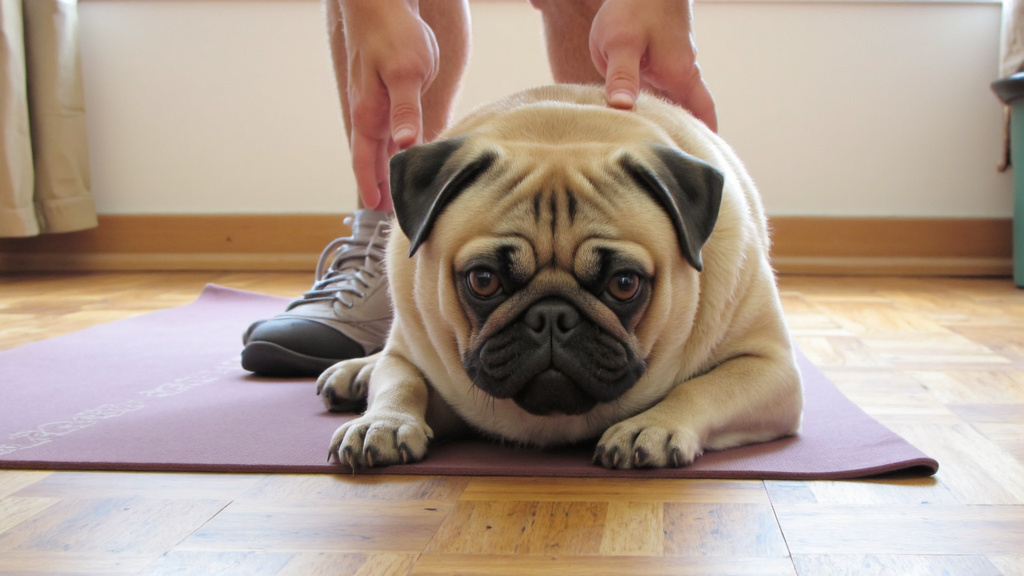
Between 54% and 59% of dogs in the United States are classified as overweight or obese, according to the Association for Pet Obesity Prevention. Behind that statistic is a cause that veterinarians identify more often than diet alone – most dogs do not move enough.
Exercise deficiency in dogs operates on two separate channels. Physical exercise – walking, running, swimming, and fetch – burns calories and maintains cardiovascular, muscular, and skeletal health. Mental stimulation – puzzle feeders, scent work, training sessions, and environmental exploration – engages the brain, reduces cortisol, and prevents the boredom that drives destructive behavior.
A dog can receive one type of exercise without the other, and many do. A 60-minute walk on the same route every day satisfies the body but starves the brain.
Veterinary guidelines recommend 30 minutes to 2 hours of daily activity depending on exercise requirements by breed, age, and health status. The signs that follow range from obvious – unexplained weight gain, chewed furniture – to surprising, including compulsive self-grooming and obedience breakdown. Most dog owners recognize 3 or 4 of these signs. The remaining ones are the gap between a concerned owner and an informed one.
10 Signs Your Dog Isn’t Getting Enough Exercise
The most common signs of an under-exercised dog include unexplained weight gain, destructive chewing, compulsive self-grooming, restless sleep, excessive barking, poor impulse control, withdrawal, and stiff joints – all of which improve when daily physical and mental activity increases.
These signs are organized from the most visible to the most subtle. Each one covers what to look for, why it happens, which breeds are most affected, and what to do about it. When multiple signs appear together, exercise deficiency is the most likely explanation – but always rule out medical conditions first.
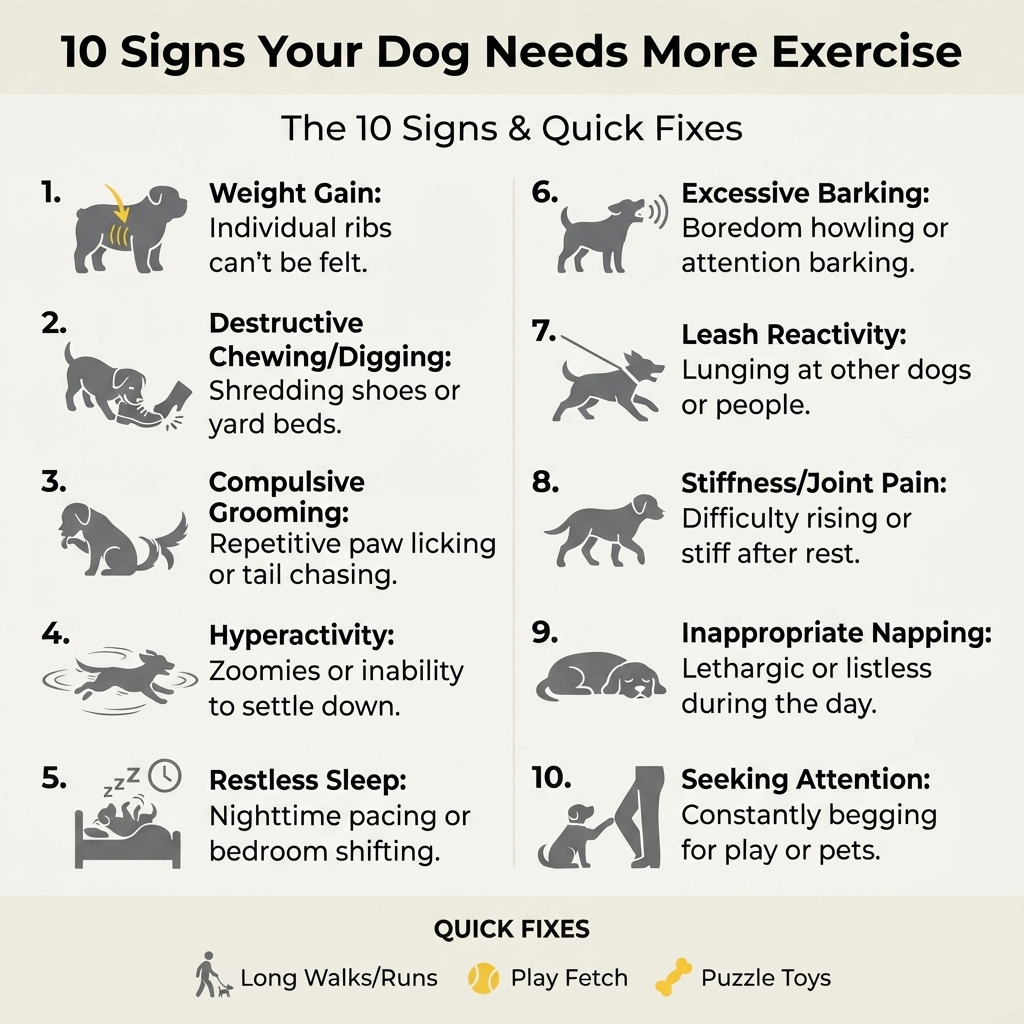
1. Unexplained Weight Gain
Weight gain is the most visible indicator of insufficient exercise. When a dog’s caloric intake exceeds its energy expenditure – even on a standard portion of food – the surplus converts to fat. Run your hands along your dog’s ribcage: if you cannot feel individual ribs without pressing firmly, or if the waistline viewed from above has disappeared, the dog is carrying excess weight.
The health cost of extra pounds is severe. According to the Purina Lifespan Study, overweight dogs live up to 2.5 years less than lean dogs of the same breed. Dr. Carol Osborne, an integrative veterinarian cited by the American Kennel Club, notes that being just 10% overweight can measurably shorten a dog’s lifespan and drastically increase the risk of diabetes, arthritis, heart disease, and cancer.
Weight gain in a high-energy breed such as a Labrador Retriever, Golden Retriever, or Dalmatian on minimal daily exercise is almost always activity-related. Weight gain in a low-activity senior breed warrants a veterinary check for hypothyroidism or Cushing’s disease first, as both conditions cause weight gain independent of exercise. Increase daily exercise by 15 minutes per week and reassess body condition monthly using the rib-check method.
For a complete weight management framework, see the Dog Obesity Guide.
2. Destructive Chewing, Digging, or Scratching
Dogs that shred shoes, chew furniture legs, scratch door frames, or dig up garden beds are not acting out of spite. Destruction is self-directed stimulation – the dog redirects unspent physical and mental energy into its environment because it has no other outlet.
The distinction between physical and mental exercise deficit matters here. If destructive behavior persists even after a long walk, the deficit is cognitive, not physical. A dog walked for 45 minutes on the same route every day receives physical exercise but zero novelty. The brain remains under-stimulated, and the destruction continues. Working and sporting breeds such as Labrador Retrievers, Border Collies, and Australian Shepherds that receive less than 60 minutes of daily activity are the most frequent offenders.
Add mental stimulation alongside physical activity: puzzle feeders, frozen Kongs, scatter feeding in the yard, and rotating toys every 3 to 4 days. When destruction stops after adding enrichment, the deficit was mental, not physical.
3. Excessive Self-Grooming and Repetitive Behaviors
Compulsive paw licking, flank sucking, tail chasing, and lick granulomas – raw, thickened patches of skin caused by repetitive licking – are displacement behaviors that most dog owners and most exercise-deficiency articles overlook entirely.
Displacement grooming is the dog’s attempt to self-soothe when bored or stressed. Repetitive licking releases endorphins, creating a self-reinforcing cycle: the behavior feels good, so the dog repeats it, and over time the habit becomes compulsive. This mechanism mirrors stress-driven habits in humans such as nail biting or hair pulling. Breeds with high anxiety predisposition – such as German Shepherds, Doberman Pinschers, and Bull Terriers – are the most susceptible to exercise-related displacement grooming.
Rule out allergies, dermatitis, and localized pain first. If the behavior is generalized rather than focused on a single injury site, increase both physical exercise and mental enrichment. Scent work is especially effective because it engages the dog’s primary sensory system – 100 to 300 million odor receptors, compared to 6 million in humans – and produces deep cognitive fatigue that physical exercise alone does not achieve.
4. Hyperactivity and Inability to Settle
A dog that zooms through the house, jumps on guests, cannot lie still for more than 30 seconds, or reacts frantically when the leash appears is carrying pent-up kinetic energy with no structured outlet. The body is wired for movement, and when movement is restricted, arousal builds until it overflows into the environment.
Hyperactivity from exercise deficiency is not a behavior problem – it is an exercise mismatch. A 6-month-old Australian Shepherd receiving 20 minutes of daily exercise is not “hyperactive.” That dog needs 60 to 90 minutes. Terrier breeds such as Jack Russell Terriers, Rat Terriers, and Fox Terriers show similar overflow behavior when their high-intensity exercise needs go unmet.
Front-load exercise to the first half of the day. A dog that receives its primary exercise session in the morning settles more easily in the afternoon and evening. If one session per day is not producing calm behavior at home, add a second structured activity session of 15 to 20 minutes in the late afternoon.
5. Restless Sleep and Nighttime Pacing
Physical activity regulates sleep-wake cycles in dogs, and research published in Scientific Reports confirms that the relationship is bidirectional – inadequate daytime activity leads to fragmented nighttime sleep, and poor sleep quality leads to worse behavior the following day. A dog pacing the bedroom, shifting positions every few minutes, or waking its owners at 2 a.m. is displaying the nighttime symptom of a daytime problem.
The exercise-sleep cycle creates a self-reinforcing deficit. Poor exercise produces poor sleep, which produces worse behavior the next day, which causes the owner to reduce outdoor time (because the dog is “too difficult”), which deepens the deficit further. High-energy breeds that receive inadequate daytime exercise – such as Huskies, Weimaraners, and Vizslas – show the most pronounced nighttime restlessness.
Schedule the main exercise session 4 to 6 hours before bedtime, not immediately before. Intense activity right before sleep increases arousal rather than reducing it. End the day with a calming activity: a gentle sniff walk around the block, a slow-feeding puzzle, or 5 minutes of low-intensity training that transitions the dog into a settled state.
6. Excessive Barking, Howling, or Whining
Vocalization escalates when a dog’s physical and mental needs are unmet. Demand barking directed at owners, unprovoked barking at windows, howling when left alone, and persistent whining are all forms of self-soothing and attention-seeking behavior. Under-exercised dogs escalate vocalization because it produces a response – even negative attention (a frustrated “quiet!”) reinforces the behavior.
The critical distinction is boredom barking versus separation anxiety. Boredom barking stops when the dog is given structured activity. Anxiety-driven barking persists regardless of exercise and requires a different intervention.
If barking decreases on days when the dog receives more exercise and increases on sedentary days, the cause is activity-related. Terrier and herding breeds such as Shetland Sheepdogs, Beagles, and Miniature Schnauzers are especially prone to boredom-driven vocalization.
Redirect with structured activity before peak barking times – if your dog barks most between 4 and 6 p.m., schedule exercise at 3:30 p.m. to preempt the behavior.
For targeted bark-reduction techniques, see How to Train Your Dog to Stop Barking.
7. Poor Impulse Control and Leash Reactivity
Impulse control is a finite cognitive resource, and exercise deficit depletes it. A dog that pulls harder on the leash than it used to, lunges at other dogs or people, ignores known commands, or cannot focus during training sessions is not being defiant – its baseline arousal is elevated, and when arousal is high, learned behaviors such as sit, wait, and recall break down.
This connection between exercise and obedience performance is absent from virtually all exercise-deficiency content, yet it is one of the most impactful signs for owners who train their dogs. Impulse control degradation is especially pronounced in high-drive working breeds such as Border Collies, Belgian Malinois, and German Shepherds, where the gap between current activity and required activity is widest.
Exercise the dog before training sessions and high-stimulation outings – vet visits, dog parks, guests arriving. Even 15 minutes of structured physical activity lowers baseline arousal enough to restore impulse control and make training productive rather than frustrating.
8. Withdrawal, Lethargy, or Depression-Like Behavior
Not every under-exercised dog becomes hyperactive. Some shut down. A dog that lies in corners ignoring family members, shows no interest in play, wags its tail less frequently, and is slow to greet people at the door is displaying the paradoxical response to exercise deficiency: withdrawal. Without physical and mental stimulation, dogs lose motivation and become lethargic, mimicking symptoms of clinical depression.
Breeds with high social drive – such as Golden Retrievers, Cavalier King Charles Spaniels, and Vizslas – are more likely to shut down when under-stimulated than to act out destructively. The withdrawal can be subtle enough that owners interpret it as the dog “calming down with age” rather than recognizing it as an exercise deficit. Learning to read dog body language – reduced tail wagging, averted gaze, slow movement – makes these early signs easier to catch.
Lethargy is also a symptom of hypothyroidism, pain, heart disease, and cancer. If withdrawal appears suddenly – within 24 to 48 hours – see a veterinarian before adjusting exercise. If the onset is gradual, start with short, low-pressure activities: 5-minute sniff walks, gentle tug sessions, and hand-feeding portions of meals to rebuild engagement. Do not force an inactive dog into high-intensity exercise.
9. Stiff Joints and Declining Mobility
Regular exercise maintains joint lubrication, muscle tone, and range of motion. Without it, muscles weaken, synovial fluid production decreases, joints stiffen, and the cycle of inactivity accelerates. A dog that struggles to rise from a lying position, hesitates at stairs, moves with a visibly slower gait, or appears stiff after rest periods is often trapped in this cycle.
The counterintuitive solution is more movement, not less – but at lower intensity. Short, frequent walks maintain joint health better than occasional long hikes, which can cause inflammation in deconditioned dogs. Giant breeds such as Great Danes, Mastiffs, and Bernese Mountain Dogs develop exercise-related stiffness earliest, often by age 5 to 6. Large breeds such as German Shepherds and Rottweilers follow by age 7 to 8.
Stiffness is also a primary symptom of osteoarthritis, hip dysplasia, and Lyme disease. Veterinary evaluation is recommended before changing exercise routines. Once medical causes are addressed or ruled out, implement 3 to 4 short walks daily (10 to 15 minutes each) instead of one long session. Add low-impact options such as swimming, leash walking on soft surfaces, and controlled tug games where available.
10. Attention-Seeking Behavior That Escalates
A dog that drops a toy in your lap for the fifteenth time, nudges your hand while you work, paws at your leg repeatedly, or steals household objects to initiate a chase has learned that certain behaviors produce engagement from the owner. Under-exercised dogs escalate these behaviors because they have no other outlet for their need for interaction and stimulation.
Attention-seeking is self-reinforcing. Any response – including scolding, pushing the dog away, or chasing the dog to retrieve the stolen item – rewards the behavior with the attention the dog was seeking. Companion breeds bred for human interaction, such as Poodles, Havanese, and Cavalier King Charles Spaniels, escalate attention-seeking fastest when exercise needs are unmet.
Proactive enrichment is more effective than reactive correction. Provide daily structured engagement – scatter feeding, 10-minute training sessions, interactive toys, and a dedicated play session – before the dog needs to manufacture its own entertainment. When attention-seeking stops after proactive enrichment is added, the cause was exercise deficiency, not a training problem.
Is It Lack of Exercise or a Medical Problem?
Several signs on this list share symptoms with medical conditions that require veterinary attention rather than increased activity. Hypothyroidism causes weight gain and lethargy. Cushing’s disease causes weight gain and increased appetite. Osteoarthritis causes stiffness and mobility decline. Cognitive dysfunction syndrome in senior dogs causes nighttime restlessness and withdrawal. Pain from injury, infection, or undiagnosed illness causes lethargy and behavior change.
As a practical guideline, if three or more signs from this list appear simultaneously and improve within two weeks of consistently increased activity, exercise deficiency is the most likely explanation. Fewer concurrent signs, or signs that persist despite two weeks of increased exercise, warrant a veterinary evaluation to rule out underlying medical causes.
See a veterinarian immediately if any sign appears suddenly – especially lethargy, loss of appetite, or a behavior change that develops within 24 to 48 hours. Sudden onset is more consistent with illness or injury than with chronic exercise deficiency.
How Much Exercise Does Your Dog Actually Need?
Exercise requirements vary by breed type, age, size, and individual health. The following ranges reflect veterinary consensus for healthy, adult dogs.
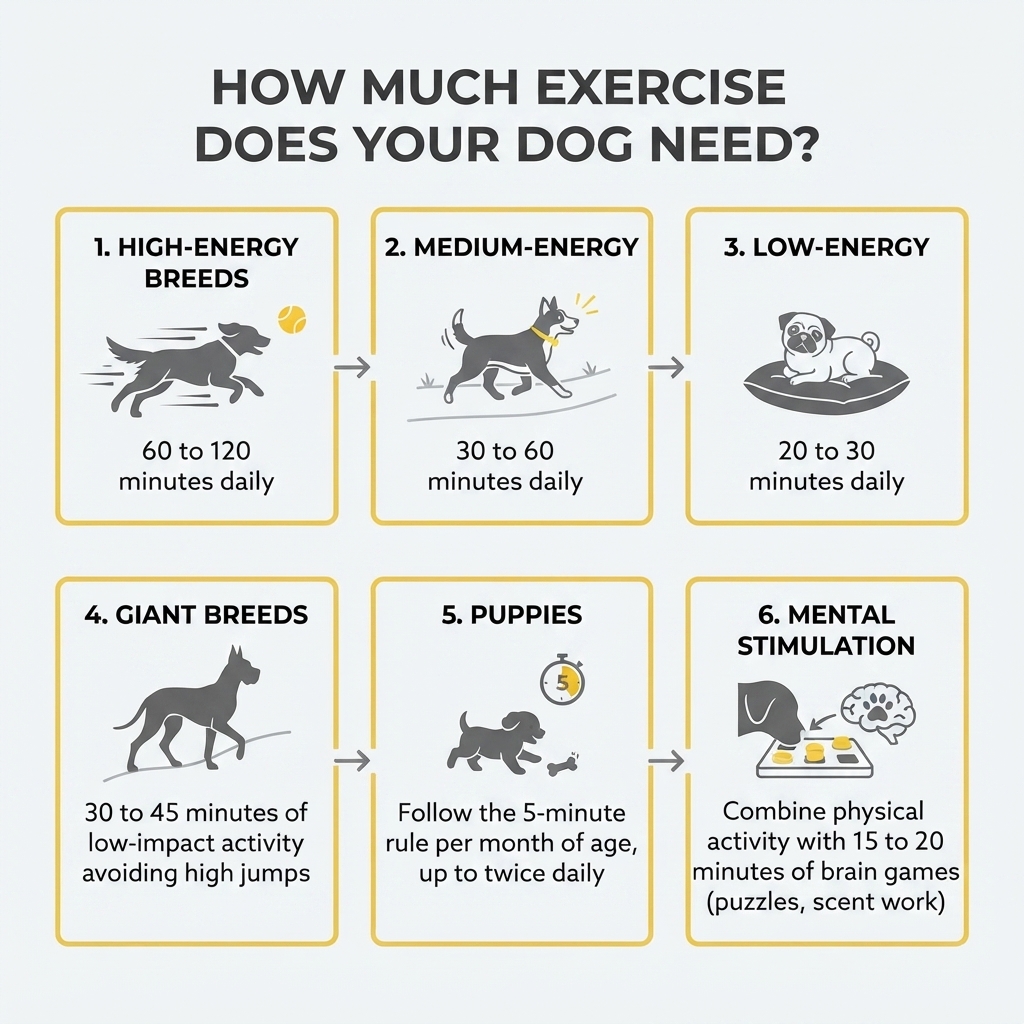
High-energy breeds – Border Collies, Huskies, German Shorthaired Pointers, Labrador Retrievers, and Dalmatians – require 60 to 120 minutes of daily exercise including both physical activity and mental enrichment. Medium-energy breeds – Cocker Spaniels, Beagles, Standard Poodles, and English Springer Spaniels – require 30 to 60 minutes daily. Low-energy breeds – Basset Hounds, Shih Tzus, Bulldogs, and Cavalier King Charles Spaniels – require 20 to 30 minutes daily. Giant breeds – Great Danes, Mastiffs, and Saint Bernards – require 30 to 45 minutes of low-impact activity to protect joints.
Puppies follow the 5-minute rule: 5 minutes of structured exercise per month of age, up to twice daily. A 4-month-old puppy gets two 20-minute sessions. Senior dogs require reduced intensity but maintained frequency – 3 to 4 short sessions spread across the day preserve joint mobility better than one long walk.
Mental stimulation counts toward the daily total. Puzzle feeders, GPS activity tracking to monitor actual movement versus rest time, and scent work sessions reduce the physical exercise threshold needed to produce a calm, settled dog.
Smart collars like the Halo Collar track daily activity and rest patterns through Halo Health, giving you objective data on whether your dog is hitting its exercise targets – or falling short.
Physical Exercise vs. Mental Stimulation: Does Your Dog Need Both?
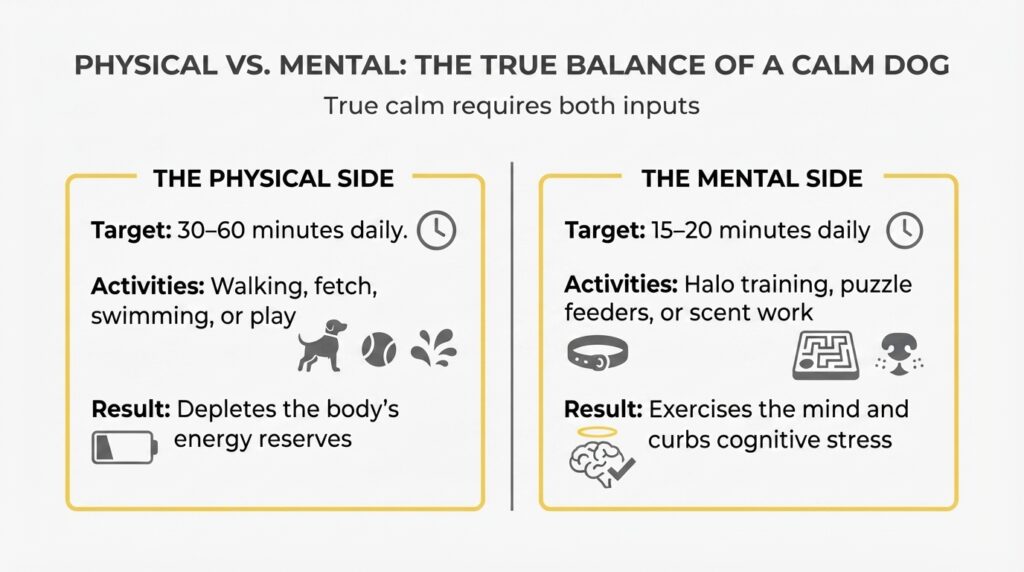
A physically exhausted dog is not the same as a mentally satisfied dog. Physical exhaustion depletes the body’s energy reserves. Cognitive fatigue depletes the brain’s processing capacity. Both are necessary for a dog that settles calmly, sleeps through the night, and does not destroy the house.
A physically tired but mentally bored dog will still chew furniture, bark at windows, and pace restlessly. A mentally tired dog on moderate physical exercise will lie down, sleep, and show none of the 10 signs in this article. This is why mental enrichment often resolves behavioral signs of exercise deficiency faster than simply adding more walking.
The most effective daily routine combines both: 30 to 60 minutes of physical activity (walking, fetch, swimming, or play) plus 15 to 20 minutes of dedicated mental engagement (training sessions, puzzle feeders, scent games, or environmental exploration on a novel route). For high-energy breeds, increase both proportionally.
Frequently Asked Questions About Dog Exercise
How do I know if my dog is getting enough exercise?
A dog getting enough exercise maintains a healthy weight, settles calmly at home, sleeps through the night, and shows no destructive or attention-seeking behaviors.
Can lack of exercise cause aggression in dogs?
Yes, under-exercised dogs have elevated baseline arousal and reduced impulse control, which increases the likelihood of reactive or aggressive responses to triggers.
Can a dog get depressed from not enough exercise?
Yes, dogs that do not receive adequate physical and mental stimulation can develop depression-like symptoms including withdrawal, lethargy, loss of interest in play, and changes in appetite.
How quickly do exercise-deficit behaviors improve once you increase activity?
Most exercise-related behavioral signs improve within 1 to 2 weeks of consistently increased activity, assuming the underlying cause is exercise deficiency and not a medical condition.
Which breeds need the most exercise?
Working and sporting breeds such as Border Collies, Australian Shepherds, Labrador Retrievers, Huskies, and German Shorthaired Pointers require 60 to 120 minutes of daily exercise including both physical and mental activities.
Recognizing the Signs Is the First Step – Action Is the Second
Exercise deficiency in dogs is one of the most common – and most correctable – causes of behavioral and health problems. The 10 signs in this article – from weight gain and destructive chewing to displacement grooming and impulse control degradation – are the dog’s way of communicating that its physical and mental needs are not being met.
The dual-deficit framework introduced at the beginning of this article is the key to effective correction: address the body and the brain separately. Physical exercise burns energy, maintains weight, and supports joint health. Mental stimulation reduces cortisol, prevents boredom-driven behaviors, and produces the cognitive fatigue that leads to genuine calm.
Increasing daily exercise is the single most impactful change most dog owners can make for their pet’s health, behavior, and lifespan. The research is clear: physically active, mentally engaged dogs live longer, behave better, and show fewer signs of anxiety and depression than sedentary dogs. Start with one additional 15-minute session per day and observe which signs improve first. The dog will tell you when you have found the right balance.