House training is a significant hurdle for most new puppy owners during the first month. While cleaning up accidents is frustrating, the solution lies in biology and consistency, not luck. By establishing a rigid schedule that aligns with your puppy’s physical development, you can transform a chaotic home into a clean, predictable environment.
This guide outlines the essential routines, biological formulas, and management tools necessary to fast-track your puppy’s success.
The Biology of Bladder Control
To train effectively, you must understand your puppy’s physical limitations. A puppy is not stubborn; they simply have a developing digestive system that operates on a rapid cycle. In the early weeks, puppies may need bathroom breaks every 45 to 60 minutes while awake.
A helpful guideline for maximum holding capacity is the “Month Plus One” formula. As a general rule, a sleeping puppy can hold their bladder for one hour for every month of age, plus one. So, a two-month-old puppy can physically hold their bladder for approximately three hours while sleeping. However, this is a physiological ceiling, not a target for training. Activity accelerates metabolism, meaning an active puppy will need to go far more frequently than a sleeping one.
Building Your Daily Framework
Success relies on anticipating the urge before it becomes an emergency. Puppies thrive on predictability, and their digestive tracts follow a reliable rhythm based on specific triggers.
Upon Waking
The bladder is fullest after sleep. Whether it is first thing in the morning or after a 20-minute nap, the moment your puppy’s eyes open, you should be moving them toward the door. Do not wait for them to signal; the transition from sleep to wakefulness is the number one trigger for elimination.
Post-Meal Windows
The “gastrocolic reflex” is strong in dogs. Eating stimulates the digestive tract, causing an urge to eliminate shortly after a meal. For most puppies, this window is between 5 and 30 minutes after eating. Establish a routine where breakfast is immediately followed by a trip outside to reinforce this connection.
Transition Periods
Any change in activity creates a bathroom need. Play sessions are particularly stimulating; the physical movement and excitement increase urine production. Pause play sessions every 15 minutes for a potty break to prevent mid-game accidents.
Expected Training Timeline
Patience is vital. While some puppies grasp the concept in weeks, others take months. Small breeds, with their higher metabolisms and smaller bladders, often take longer to train than large breeds.
| Age | Daytime Hold Limit | Nighttime Hold Limit | Recommended Frequency |
|---|---|---|---|
| 8-10 Weeks | 1 Hour | 3-4 Hours | Every 45-60 mins |
| 10-12 Weeks | 2 Hours | 4-5 Hours | Every 90 mins |
| 3-4 Months | 3 Hours | 6 Hours | Every 2-3 hours |
| 6 Months+ | 5-6 Hours | 7-8 Hours | Every 4-5 hours |
Solutions for Working Parents
Working pet parents face the challenge of bridging the gap between an 8-hour workday and a 3-hour bladder. Leaving a puppy in a crate for a full workday is physically impossible and unfair to the dog. You must implement a modified strategy.
The Midday Break
If you cannot return home at lunch, hiring a professional dog walker or asking a neighbor to visit is essential. This break resets the clock on the puppy’s bladder and provides necessary social interaction. For puppies under 12 weeks, two visits may be required during a standard workday.
Long-Term Confinement Areas
If a midday visit is impossible, abandon the crate in favor of a “long-term confinement area,” such as an exercise pen with a washable floor. Place the crate (with the door open) at one end and a designated potty area (like a grass patch or pad) at the other. This prevents the puppy from being forced to soil their sleeping area, preserving their natural hygiene instincts.
Leveraging Crate Training
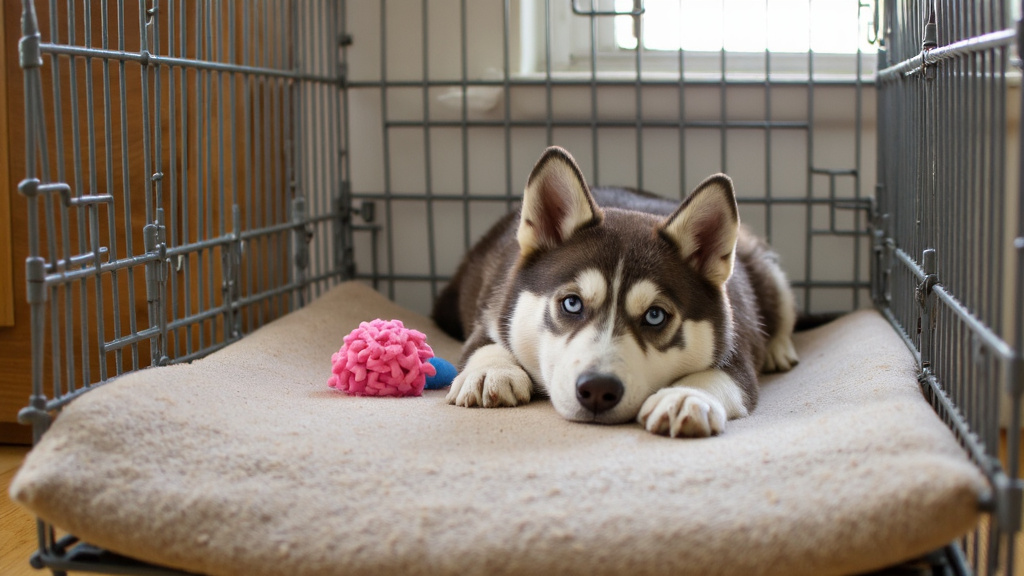
Dogs possess a natural denning instinct, preferring to sleep in clean, enclosed spaces. Crate training utilizes this biology to encourage holding it. When properly sized, the crate becomes a tool for building bladder muscle control.
Proper Sizing
Size is the most critical factor. The crate should be large enough for the puppy to stand, turn around, and lie down—and no larger. If the crate is too spacious, the puppy will learn to sleep in one corner and eliminate in the other. Wire crates with divider panels are ideal, as they allow you to expand the space as the puppy grows.
Positive Association
The crate must be a sanctuary, not a jail. Feed meals inside the crate and provide safe chew toys to create a positive emotional response. Never use the crate as punishment, as anxiety can cause a loss of bladder control.
Recognizing the “I Gotta Go” Signals
Long before a puddle appears, your puppy is telling you they need to leave. Learning these subtle language cues allows you to interrupt the accident before it happens.
The Sniff and Circle
If your puppy suddenly stops playing and begins sniffing the ground intensely or walking in tight circles, they are seeking a toilet. This is the universal sign of imminent elimination.
Restlessness and Disengagement
A puppy that wanders away from the family or becomes suddenly agitated is often looking for privacy. If they leave the room or scratch at a wall or door, treat it as an emergency and take them out immediately.
Bell Training
Proactive owners can teach a clear signal using bell training. Hang bells on the doorknob and gently tap the puppy’s paw against them every time you go out. Eventually, the puppy learns that ringing the bell unlocks the door.
How the Halo Collar Supports Routine
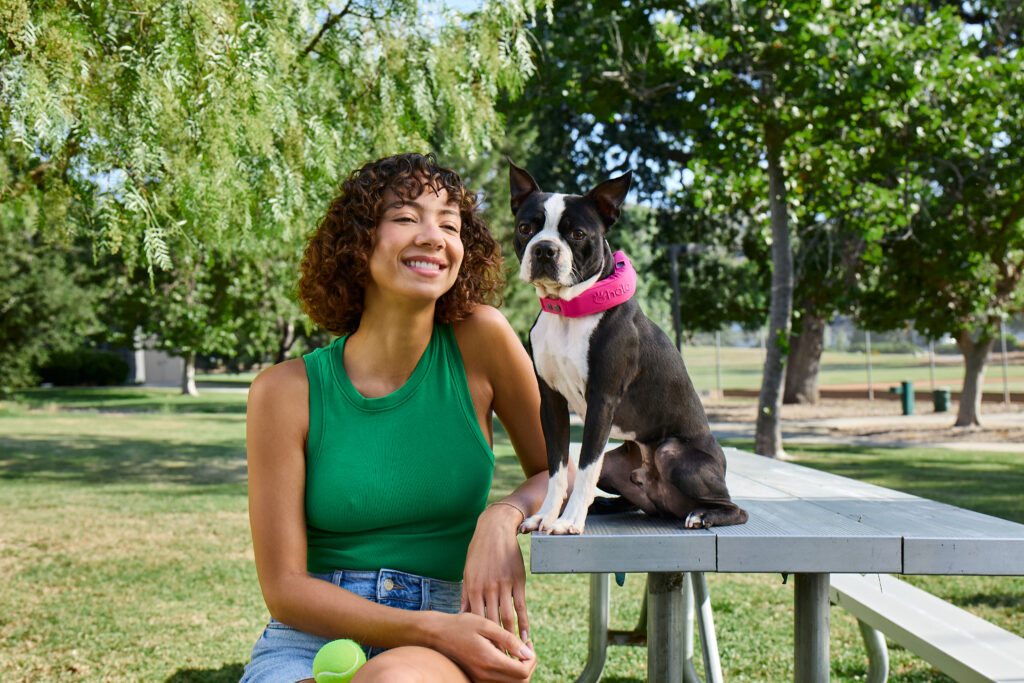
Consistency extends beyond the clock; it also applies to location. The Halo Collar supports potty training by helping you define specific areas to avoid, as well as “safe zones” or potty areas in your yard using GPS technology. By consistently taking your puppy to the same GPS-defined boundary to eliminate, the scent markers in that specific area reinforce the habit.
Furthermore, tracking your dog’s activity levels through the Halo app provides insight into their physical state. A spike in high-energy activity recorded in the app is a strong indicator that a bathroom break should follow immediately.
Handling Accidents and Cleanup
Despite your best efforts, accidents are part of the learning curve. How you react determines whether the puppy learns or becomes fearful.
The Interruption
If you catch your puppy mid-stream, make a sharp noise like “Ah-ah!” to interrupt them. Scoop them up immediately and finish the process outside. Praise them heavily when they finish outdoors. Do not punish the puppy; punishment damages trust and teaches the dog to hide their accidents from you.
Enzymatic Cleaning
Standard household cleaners are insufficient because they only mask odors to the human nose. Dogs can still smell the pheromones, which signal “this is a bathroom.” You must use an enzymatic cleaner that breaks down the urine proteins at a molecular level to permanently remove the scent.
Conclusion
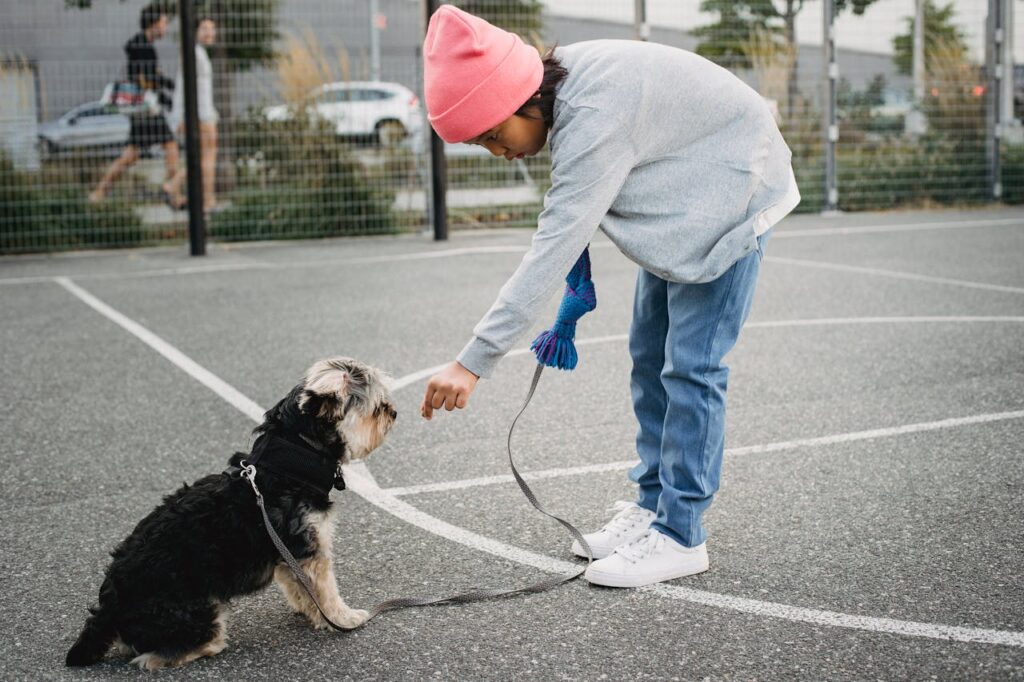
Potty training is a temporary investment for a lifetime of clean floors. By aligning your schedule with your puppy’s biology, utilizing crate training as a management tool, and responding to accidents with cleaning rather than punishment, you set the stage for success. The Halo Collar can further support your training by allowing you to create designated outdoor potty zones, set up indoor off-limits areas with Beacons, and reinforce consistent routines through positive training guidance within the system. Stick to the routine, remain patient during regressions, and celebrate the small victories along the way.
For more guidance on building training skills at every stage, visit our Dog Training page for practical tips and expert support.