Barking is how dogs communicate. A single alert bark when someone knocks on the door is normal behavior. Thirty minutes of continuous barking at a leaf blowing across the yard is a problem – for the dog, for the owner, and for the neighbors.
Humane bark collars address excessive barking by interrupting the pattern with a mild, non-painful cue – a vibration, a burst of citronella spray, an ultrasonic tone, or a brief static tap – that breaks the dog’s fixation and gives them a moment to reset. Unlike traditional shock collars that rely on pain to suppress behavior, humane bark collars are designed to redirect attention, not punish vocalization.
The challenge is that no single bark collar works for every dog or every type of barking. A vibration collar that silences one dog’s alert barking may have zero effect on another dog’s separation anxiety howling. Choosing the right collar starts with understanding why your dog barks – then matching the collar type to the cause.
Why Do Dogs Bark Excessively?
Excessive barking always has a cause. Identifying the cause determines which type of bark collar – if any – will be effective.
Alert and Territorial Barking
Dogs that bark at delivery drivers, passing pedestrians, other dogs, or unfamiliar sounds are performing what they perceive as a guarding duty. The dog sees a stimulus, decides it’s a threat, and sounds the alarm. This type of barking is repetitive, directional (aimed at the stimulus), and stops when the stimulus disappears.
Bark collar effectiveness: High. Alert barking is a fixation behavior. A vibration, spray, or tone that interrupts the fixation gives the dog a moment to disengage and self-correct. When paired with a “quiet” command and reward, bark collars can reduce alert barking significantly within 1 to 2 weeks.
Boredom and Attention-Seeking Barking
Dogs that bark continuously in the yard, bark at their owner for attention, or vocalize when understimulated are signaling unmet needs. The barking is a symptom of insufficient exercise, mental enrichment, or social interaction.
Bark collar effectiveness: Moderate. A collar can suppress the noise, but the underlying energy has to go somewhere. Without increased exercise or enrichment, the dog may redirect into destructive behaviors – chewing, digging, pacing – instead of barking. Use a bark collar as one tool within a broader plan, not as the only solution.
Separation Anxiety Barking
Dogs that howl, bark, or whine only when left alone are often experiencing genuine distress, not misbehavior. Separation anxiety barking is typically accompanied by other signs: panting, pacing, destructive behavior, and refusal to eat.
Bark collar effectiveness: Low to counterproductive. Adding a bark collar to a dog in a panic state can increase stress rather than reduce it. These dogs typically require desensitization training, not automated correction. Consult a veterinary behaviorist before using any bark-suppression device on a dog with separation anxiety.
What Types of Humane Bark Collars Are Available?
Humane bark collars fall into five categories, each using a different mechanism to interrupt barking without causing pain.
Vibration Bark Collars
A vibration bark collar delivers a tactile buzzing sensation against the dog’s neck when an onboard microphone or vibration sensor detects barking. The sensation is comparable to a smartphone vibrating against skin – noticeable and unusual enough to break the dog’s focus, but not painful.
Vibration collars are the most popular humane option for owners who want a completely shock-free device. They are particularly effective for alert and territorial barking, and they are the only bark collar option that works for deaf dogs (who cannot hear audible tones or ultrasonic frequencies).
Typical features: 3 to 7 adjustable sensitivity levels, rechargeable battery lasting 7 to 20 days, waterproof rating (IPX5–IPX7), and dual-detection technology (microphone + throat vibration sensor) to reduce false triggers from other dogs or environmental noise.
Citronella Spray Bark Collars
A citronella bark collar releases a burst of citronella-scented spray near the dog’s snout when barking is detected. The spray is harmless but startling – it interrupts the bark through the dog’s powerful sense of smell, which is 10,000 to 100,000 times more sensitive than a human’s.
Spray collars are often recommended for dogs that ignore vibration or tone corrections. The scent provides a strong, multi-sensory interruption. However, they require refillable cartridges (adding ongoing cost), and some dogs habituate to the spray after extended use.
Ultrasonic Bark Devices
Ultrasonic bark devices emit a high-frequency sound – typically around 25 kHz – that is audible to dogs but inaudible to humans. The sound is annoying rather than painful, causing the dog to pause and redirect attention.
These devices come in two forms: wearable collars and stationary units (often designed to look like birdhouses or decorative objects). Stationary units have an important limitation: high-frequency sound waves do not penetrate walls, solid fences, or buildings. An outdoor ultrasonic unit will not stop a dog barking inside the house, and vice versa.
Tone-Only Bark Collars
Tone-only bark collars produce an audible beep when barking is detected. They are the mildest form of automated bark correction, relying entirely on the novelty and interruption value of the sound to break the barking pattern.
These collars work best on sensitive, low-drive dogs and as a first step in a graduated training approach. Many vibration and static bark collars include a tone-only mode, allowing owners to start with sound and escalate only if needed.
Smart Collars with Bark Detection
Smart bark collars combine bark detection with broader training, containment, and monitoring capabilities. Rather than addressing barking as an isolated behavior, these systems treat it as a symptom of a larger training or environmental issue.
The Halo Collar, for example, uses GPS-based virtual fencing to define clear territorial boundaries for the dog. When a dog clearly understands the edges of its territory, territorial anxiety decreases – and with it, the anxious barking that comes from uncertainty about what to guard. The collar’s feedback system (sound, vibration, and optional static) guides the dog away from boundaries through Halo’s patented Direction-Based Feedback, while a positive reinforcement cue rewards the dog for returning to the safe zone.
How Do Humane Bark Collars Compare?
The following table compares the five bark collar types across the attributes that matter most when choosing a device.
| Type | Mechanism | Best For | Limitations | Pain-Free? | Price |
| Vibration | Tactile buzz on neck | Alert barking, deaf dogs | Some dogs habituate | Yes | $20–$60 |
| Citronella Spray | Scented spray near snout | Stubborn barkers | Refills needed | Yes | $25–$50+ |
| Ultrasonic | High-freq sound (~25 kHz) | Outdoor, multiple dogs | Won’t work through walls | Yes | $15–$50 |
| Tone-Only | Audible beep | Sensitive/low-drive dogs | Least effective on determined barkers | Yes | $15–$40 |
| Smart (GPS+feedback) | Sound+vibration+static+training | Territorial, multi-behavior | Higher cost; training needed | Adjustable | $400–$600 |
What Makes a Bark Collar Actually Work?
A bark collar that “actually works” is one that reduces excessive barking consistently over time without creating new behavioral problems. Many owners buy a bark collar, see results for two days, and then watch the barking return. That failure is almost always caused by one of three issues.
1. Wrong collar type for the barking cause. A vibration collar will not resolve separation anxiety barking. A citronella collar will not stop a high-drive working breed that barely notices scent. Matching the collar mechanism to the barking motivation is the first and most important step. Use the barking-cause framework above to identify what is driving your dog’s behavior, then select the collar type designed for that trigger.
2. No training alongside the collar. A bark collar is an interrupter, not a teacher. The collar breaks the barking pattern, but the dog needs a trained alternative behavior to replace it. Teach a “quiet” command: when the dog barks, wait for the collar to interrupt, say “quiet,” and reward the silence. Over repetitions, the dog learns that silence – not the collar’s cue – earns the reward.
3. Poor fit or wrong sensitivity. A collar that triggers on background noise (other dogs barking, television, traffic) teaches the dog nothing because the correction has no connection to their behavior. A collar that fails to detect the dog’s actual bark teaches the dog that barking has no consequence. Look for collars with dual-detection technology (microphone + throat vibration sensor) to minimize false triggers, and test sensitivity settings in your specific environment before relying on the collar unsupervised.
For a complete bark-reduction training plan that works alongside any collar, see: How to Train Your Dog to Stop Barking.
What Is the Difference Between Vibration and Shock Bark Collars?
Vibration bark collars and shock (static) bark collars use different mechanisms, produce different sensations, and carry different risk profiles.
A vibration bark collar delivers a physical buzz through a small motor inside the collar housing. The sensation is purely mechanical – no electrical current passes through the dog’s skin. The intensity varies by model, but even the highest setting on a vibration collar produces a sensation comparable to holding a vibrating phone against your neck.
A shock (static) bark collar delivers a low-level electrical pulse through metal contact points pressed against the dog’s neck. The sensation ranges from barely perceptible at the lowest settings to uncomfortable at higher settings. Modern static bark collars include 5 to 10 auto-escalating levels that increase the correction intensity if the dog continues barking – starting with tone, then vibration, then static.
Key differences:
- Pain: Vibration collars produce no pain at any setting. Static collars can produce discomfort at higher levels, though modern auto-shutoff features (typically activating after 7 consecutive corrections) prevent over-correction.
- False trigger impact: A false trigger on a vibration collar is an inconvenience. A false trigger on a static collar can create a fear association between the shock and whatever the dog was looking at when it fired.
- Effectiveness: Static bark collars are generally more effective on strong, high-drive dogs that ignore vibration and tone. Vibration collars work well on sensitive and moderate-temperament dogs.
For a deeper analysis of static correction versus shock, including research findings and safety guidelines, see: Are Shock Collars Safe for Dogs?.
Are Bark Collars Humane?
Yes, a bark collar is humane when it satisfies three conditions: the dog can predict when the correction will occur, the dog can stop the correction by changing behavior, and the correction intensity is the minimum necessary to gain attention.
These three conditions – predictability, controllability, and appropriateness – are the same Three Pillars of Humane Training that apply to any electronic training device. A bark collar that fires randomly, that the dog cannot escape by stopping barking, or that delivers a painful jolt at maximum intensity fails these criteria and is not humane regardless of what the label says.
Bark collars are not humane when used on dogs with separation anxiety (correction increases panic), on puppies under 5 to 6 months (too young for cause-and-effect learning), or as a substitute for addressing the root cause of barking (the barking will manifest as a different problem behavior).
Bark collars are humane when used on dogs with alert, territorial, or boredom-driven barking, at the lowest effective setting, alongside positive reinforcement training that teaches an alternative behavior, and with proper fit and wear-time limits (8 to 12 hours maximum per day).
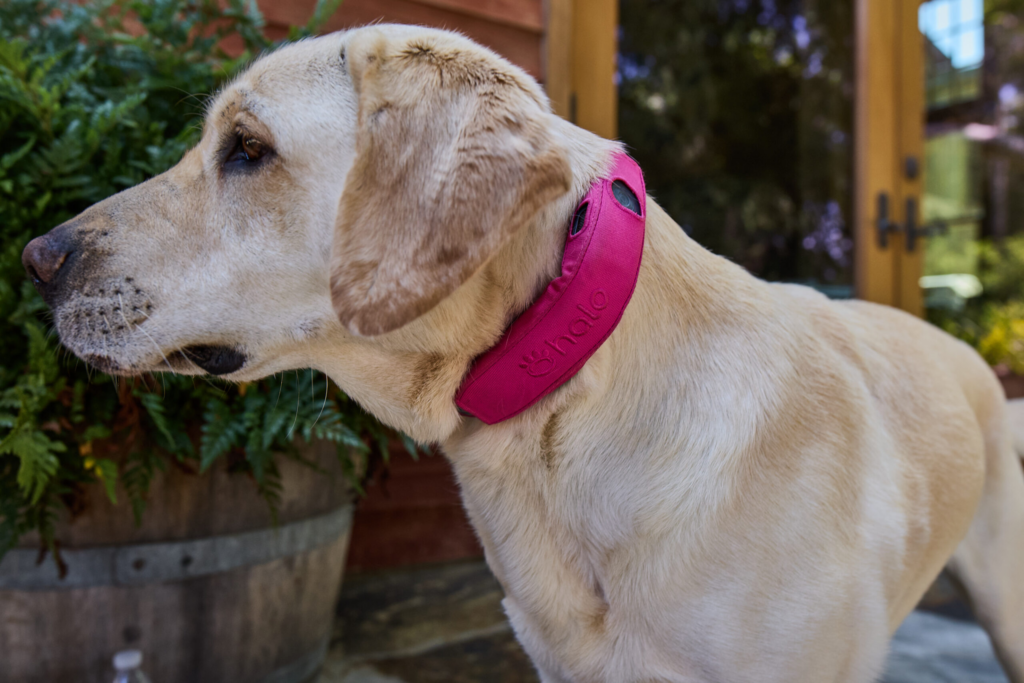
Does the Halo Collar Have Bark Control?
The Halo Collar is not a dedicated bark collar, but it addresses the root causes of excessive barking more comprehensively than any standalone bark-suppression device.
Halo approaches barking through three mechanisms:
- GPS virtual fencing for territorial clarity. Many dogs bark excessively because they don’t know where their territory ends. The Halo Collar lets you create precise virtual boundaries around your property. When a dog clearly understands the edges of its territory – through the collar’s graduated warning, boundary, and emergency feedback – territorial anxiety decreases, and anxious barking decreases with it.
- Structured training for impulse control. The Halo app includes a structured training program developed with Cesar Millan’s methodology that builds the dog’s ability to look to the owner for direction rather than reacting to every stimulus. A dog trained in impulse control and recall is a dog that barks less.
- Activity monitoring for energy management. The Halo app tracks daily activity and rest patterns. A dog that isn’t meeting its exercise needs will find outlets – barking is one of the most common. Activity data helps owners identify and address energy imbalances before they become barking problems.
For owners whose primary concern is nuisance barking driven by territorial uncertainty, boredom, or lack of training structure, the Halo system addresses the behavior at its source rather than suppressing the symptom.
Bark Collar FAQs
Do vets recommend bark collars?
Most veterinarians recommend trying positive reinforcement training, increased exercise, and environmental management before using any bark collar. When these approaches are insufficient, many vets support vibration or tone bark collars as a secondary tool – used alongside training, not as a replacement for it. Vets generally advise against shock-based bark collars and strongly discourage bark collars of any type for dogs with separation anxiety or fear-based barking.
Can you leave a bark collar on all day?
No. Bark collars should be worn for a maximum of 8 to 12 hours per day and removed overnight. Prolonged wear can cause pressure sores at the contact point site, regardless of whether the collar uses vibration, spray, or static. Rotate the collar’s position on the neck every 2 to 3 hours and inspect the skin daily for redness or irritation.
Do bark collars work for whining?
Most standard bark collars do not detect whining because the vocalization frequency and throat vibration pattern differ from barking. Some advanced smart bark collars (such as the Dogtra Smart NoBark) include whining detection, but this is not a standard feature. If whining is the primary problem, a training-based approach is more effective than a collar.
What is the safest bark collar for small dogs?
For small dogs (under 15 pounds), the safest bark collars are lightweight vibration-only or tone-only models that weigh under 2 ounces. A heavy collar can strain a small dog’s neck and cause discomfort unrelated to the correction itself. Avoid static bark collars on very small dogs unless specifically recommended by a professional trainer, and always start at the lowest sensitivity setting.